The Children of the Boom Generation Talk About What it Means to Them

El Pais had a couple articles this week on the Boom. The most interesting were the brief quotes from younger writers reflecting on what the Boom has meant to them, good or bad. I like to see a few criticisms of the terms and celebrations of certain elements. (emphasis mine)

Damián Tabarovsky (Argentina, 1967)

El boom retoma la ilusión de que el escritor latinoamericano tiene que tener algo de for export, de very typical (Bolaño es el último avatar del boom) con algunas gotitas de denuncia social y pasteurización de tradiciones locales. A la vez, introduce la novedad de que para ser escritor, o aún peor, hombre de letras, hace falta tener a una Carmen Balcells, o alguien como Carmen Balcells, o a muchos como Carmen Balcells; expresa el momento en que Barcelona comenzó a volverse sede del poder económico editorial en castellano; informa sobre la necesidad del mercadeo de izquierda como paradigma de la figura mediática del escritor latinoamericano (García Marketing, como lo llamaba Fogwill). Lamentablemente no aprendí demasiado de esas cosas. O por la negativa, tal vez sí, mucho. Algo más: hace poco releí Pedro Páramo y Tratados en La Habana, casi antagónicos y ambos notables.

Yuri Herrera (México, 1970)

Quizá lo primero es lo que los mismos escritores del boom aprendieron de los modernistas: que la voluntad de estilo define la mirada sobre la realidad y la fuerza de su narrativa. Que la del boom, entre otras cosas, adolece de ser una lista compuesta casi exclusivamente por hombres. Que un fenómeno mercadotécnico a veces solo es eso, y a veces se aprovecha de algo evidente, como que la mejor literatura en lengua española ya se estaba escribiendo en el continente americano. Que un buen escritor no necesariamente es una autoridad moral: algunos de los que escribieron las mejores novelas del siglo XX también plagiaron el trabajo de otros, sostuvieron amistades con dictadores, justificaron invasiones injustificables y subordinaron sus opiniones políticas a las necesidades de sus patrocinadores. Que una buena novela sobrevive a las mezquindades de sus autores e inclusive a su propio éxito.

Andrés Neuman (Argentina, 1977)

Ninguna etiqueta explica la realidad, pero algunas la mutilan hasta volverla incomprensible. De eso que llamamos boom aprendí el abismo entre los rótulos y las obras. ¿Qué tiene que ver Lezama con Onetti? ¿Por qué García Márquez (1927) y Vargas Llosa (1936) sí, mientras Puig (1932) no? ¿Hasta cuándo maestros como Di Benedetto o Ribeyro seguirán fuera de la foto? ¿Por qué no figuran poetas, habiéndolos brillantes? ¿No resulta sospechoso que ni siquiera Elena Garro, Silvina Ocampo o Clarice Lispector aparezcan en tan viriles listas? De eso que llamamos boom admiro la ambición estética de sus autores, que me hace pensar en la infinitud de la escritura; y recelo de sus mesianismos políticos, que me hacen pensar en la patología del liderazgo. Entre tanta generalización, dos décadas de textos extraordinarios. Tan grandes que merecen ser leídos como por primera vez, desordenando los manuales.

Antonio Muñoz Molina has an interesting memory of meeting Onetti, a writer who is not usually listed in the boom.

And on the publication of Luis Harss’ collection of interviews,  Los nuestros, with Boom era writers, there is a lengthy profile and excerpt.

All the Boom one needs for the week.

Down the Rabbit Hole by Juan Pablo Villalobos – A Review

Down the Rabbit Hole
Juan Pablo Villalobos
Farrar, Straus and Giroux, 2011, 70 pg

The voice of a child has the power to undercut all the foolish tropes of adult life. Handled well it can reframe one’s perception of an idea, done badly and it can descend into cloying sentimentality that is no better than didactic moralizing. Juan Pablo Villalobos in Down the Rabbit Hole has taken on the tricky task of balancing a child’s voice against the violent world of the narco, attempting to find the absurd in a culture whose surreal violence and savagery has become come to dominate Mexican life.  Using the voice of a younger child (it is unclear how old he is and Villalobos has noted that was intentional), Villalobos narrates the story of a precocious son of a drug boss that is a once funny, ridiculous, and horrifying.

The power of the voice in Down the Rabbit Hole is that it takes what has become so common place and shocks one again with the freshness of its observations. Tochtli, the boy, is one part savant one part drug king pin. His wisdom, though, comes from his narco side, so he is given to constructing his world with narco ideas. The most absurd are his digressions on how people die because they have orifices. If you have a large orifice you will die, if you have a small one you might live. The orifices, naturally, come from guns, and the boy has theorized and a whole science of death without relying of ballistic terms. His strange way of describing the world comes from his isolation within his father’s mansion. He only talks about six people with any sense of closeness, although he states early on that he knows 13 or so people. Disturbingly he has seen close to 20 corpses and at least the last moments of a man who peed himself out of fear. His father never lets him see the actual killing, but the boy has been close enough that he thinks making orifices and feeding corpses to their pet tigers and lions is perfectly logical.

He is still a boy, though, and is full of boyish ideas. His favorite movie is the Way of the Samurai and he walks around the mansion in a dressing gown in lieu of  Japanese clothing and refuses to talk because a samurai is a figure of mystery and control. Throughout the book he talks about his desire for a Liberian pygmy hippopotamus. His father even takes him to Liberia to find one. It is the most absurd on the many absurd things the boy asks for. It makes perfect sense: in a world where there are no limits, how ridiculous can one’s desires get. Still, he also collects hats (pith helmets, sombreros and any other kind of useless hat), something simple that kids fixate on and wear at the most inappropriate times. Villalobos never misses a chance to contrast the child against the narco, and in one horrifying statement, Tochtli mentions that you shouldn’t wear your hat while creating orifices because you can get blood on them and they are hard to clean.

What runs throughout the book is parody of all the pop culture tropes that surround the drug lords. Villalobos turns every cliché into a a joke when Tochtli reinterprets what is supposed to be a macho culture of bling and power. Reinterpreted through Tochtli the drug lords don’t seem as powerful, but just ridiculous clichés. Everything that he and his father know seem to come from movies, whether they are samurai or gangster. They don’t live the life of gangsters so much, as imitate the life of gangsters. Where does the culture of the drug lords come from: within, without, or a reinforcing mix of popular culture and gang life? The elevation of these tropes to the level guide to life for small boys makes the whole culture absurd and horrifying. If all you have are these shallow images with which to build yours life, then you turn become a movie cowboy or samurai.

The book isn’t without it’s hard edges. Tochtli continually calls anyone who is week faggot and like Huck Finn it is a narrow line between art and stereotype, which Villalobos handles well. Similarly, the trip to Liberia could have been an occasion for easy charactures  of Africa. Since Tochtli’s world is so small, he has no chance to see beyond his father and friend. It keeps Liberia at a distance and the hipo hunt paints the narcos as just more outsiders coming to exploit Africa and return nothing. They are so consumed in their own world, they don’t see people, they see the bullet holes in buildings and spend their time counting them. It is Liberia that is father from violence than Mexico, yet the narcos think they are the enlightened ones. The contrast is forceful and pulling the narcos out of their mansion, weakens them and shows how unimportant they are away from their compounds.

Down the Rabbit Hole is one of those books that perfectly captures the absurdity of a way of life that has caused so much death and destruction. The humor and the voice are disarming, but they also have the power to avoid humanizing the gangsters. They are just creatures who act according to script. Villalobos has mentioned that he initially wrote the book from the point of view of the father, but it didn’t work. Had he done that he would have had a much more difficult task. Moreover, his book would have probably been subsumed in the tidal wave of naro literature instead of becoming a fresh and exciting novel.

Felisberto Hernández Profiled in La Jornada

I recently attended a reading by Juan Pablo Villalobos and unsurprisingly a question came up about his influences. He brushed aside the Boom writers, which he had read when he was younger. What he said interested him more were the less well known, and stranger fiction of writers from before the Boom generation. Of many of the authors he mentioned, Felisberto Hernández from Uruguay was one. Fortunately, Felisberto Hernández has been published in English so you can find his works rather readily. This week in a timely piece of publishing, La Jornada has several long and interesting profiles dedicated to his work.

Cuando murió Felisberto, en 1964, se evocaba el tamaño de su ataúd que no pasaba por la puerta. El “burlón poeta de la materia” del título de Ángel Rama era un señor apenas sesentón pero ya veterano para la época, gran comedor de papas fritas en platos enormes. “Felisbertote”, lo llamaba Paulina Medeiros en sus cartas de amor, atravesadas todas ellas por el erotismo y la infantilización. Es que el niño que quería “hacerle abedules al brazo de la maestra” no sólo no perdió esa condición asociativa y juguetona con el lenguaje, sino que la convirtió en el centro de su discurso literario. Ese narrador-niño también quería levantarle las polleras a las sillas, atisbar sus cuerpos y “entrar en relación íntima con todo lo que había en la sala”, “dispuesto a violar algún secreto”. El mayor encuentro entre la erotización infantil de la mirada y los objetos construidos está en Las Hortensias, donde el narrador se atreve a todo a partir de la teatralización de la serie de muñecas que son elaboradas para él y para su mujer, en un juego a lo Buñuel, a lo García Berlanga, en donde el individuo es derrotado por la realidad ficticia que él mismo creó.

Esa doble perspectiva: la realidad sensorializada hasta el extremo y la libertad asociativa y no culposa propia de un niño, constituyen el toque Felisberto, parte de lo que Italo Calvino consideraba una novedad sin antecedentes. No hay relato suyo, ni mínimo ni relativamente extenso, que no esté comandado por una perspectiva sensorial. El cuento “Nadie encendía las lámparas” es una muestra impecable de relato donde no pasa nada, todo hecho de climas, de cercanías mentales y de un abrupto final en el que queda suspendida la tenue acción de una tertulia y la imagen de una mujer de cabellos esparcidos cierra lo que para otros narradores realistas debería ser un comienzo: “Pero no me dijo nada: recostó la cabeza en la pared del zaguán y me tomó la manga del saco.” Zaguán, luz mortecina porque nadie encendía las lámparas, mujer recostada, silencio, leve contacto de aproximación: esto suena a tango, pero también a Robbe-Grillet, a Antonioni y a ensueño proustiano. Por esos años, Onetti había publicado La vida breve y Armonía Somers La mujer desnuda. Rastrear las cercanías y distancias entre los tres sería un buen ejercicio de comprensión comparada.

I found this piece of marketing at Amazon, but I think it does hint at where he comes from.

Lands of Memory presents a half-dozen wonderful works by Felisberto Hernández, “a writer like no other,” Italo Calvino declared, “like no European or Latin American. He is an ‘irregular,’ who eludes all classifications and labellings—yet he is unmistakable on any page to which one might randomly open one of his books.”

Andrés Neuman Interviewed on His New Book

ABC has an interview with Andrés Neuman about his new book, Hablar solos. It does sound interesting. The story is about a family (son, father, and mother) and how they deal with the limits of existence. He plays with ways in which loss is written about, alternating between happy and sad narrators, and one who cheats on the other. Each voice shades the other:

-Alternando ternura y crudeza, su novela se desplaza de la infancia a la perversión, de la familia al duelo. Una novela sobrecogedora que indaga en las relaciones entre Tánatos y Eros, planteando una pregunta de profundas consecuencias: ¿cómo afecta la enfermedad a nuestra forma de leer y de vivir el sexo?

-Es una novela en la que se mezclan voces muy festivas, la del niño Lito, con voces muy dolorosas, como la de Mario, que es la voz de alguien que agoniza. Pero, además, Elena, madre y esposa, es el personaje más conflictivo e importante de la novela, que cuida a un enfermo grave: su marido. A veces el conflicto de los cuidadores es tan o más complejo que el del enfermo. Se mezclan voces muy festivas, como la de Lito, con muy dolorosas y doloridas, como la de Mario, la voz de alguien que agoniza. Pero, además, hay un personaje, Elena, bella, que vive el placer y el dolor al mismo tiempo.

Alfonso Zapico Wins the Premio Nacional de Cómic for His Book on Joyce

Alfonso Zapico has won the Premio Nacional de Cómic forhis book on Joyce. It is a book that is about the significance of Joyce and his contemporaries in the avant guard. It is based on exhaustive investigations. You can read an excerpt in Spanish here (pdf).

Dublinés no es una biografía al uso y va más allá, asegura su editor Fernando Tarancón: “Zapico traslada allí lo que significó Joyce en su época y para la vanguardia. Él hizo una exhaustiva labor de investigación”. Además de Dublinés, Zapico ha publicado La ruta Joyce, un cuaderno de viaje por los lugares que recorrió Joyce. Se trata de un dibujante que bebe de la escuela francesa y en la obra ganadora utiliza un trazo más realista.

Según el crítico Álvaro Pons, Zapico se inmiscuyó en el mundo del cómic sin haber pisado un fanzine antes, “sin haber hecho nunca antes una historieta comercial, se lanzó a contar una historia con viñetas, a pelo y sin más armas que papel, lápiz y muchas, muchas ganas e ilusión. Una fórmula habitual en los que comienzan, pero que no suele estar acompañada del ansiado éxito”, escribió en marzo de 2011 en este periódico.

Si viviéramos en un lugar normal (If We Were to Live in a Normal Place) by Juan Pablo Villalobos – A Review

Si viviéramos en un lugar normal (If We Were to Live in a Normal Place) (English title: Quesadillas)
Juan Pablo Villalobos
Aanagrama, 2012, 188 pg

 Si viviéramos en un lugar normal is the second offering from Juan Pablo Villalobos’ in his loose trilogy the failures of Mexico. Villalobos isn’t interested in heavy and overwrought  realism that all the problems Mexico faces might inspire. Instead,  Si viviéramos is a black comedy often dry, but always making fun of the politicians and well to do that control Mexico’s politics. At the same time, the futile gestures of those who disagree are also a source of humor. It is a humor that paints a Mexico that is neither functioning nor magical, but questions all the tropes of Mexican society.

Orestes, Oreo for short, is one of 8 children who live in a small home on the outside of a small town during the 80’s when Mexico had severe financial problems. His father is a teacher at a preparatory school whose big passion is to shout at the TV during the news programs calling all the politicians that appear corrupt. Orestes spends much of his time wondering why they are so poor. Their home is outside of town and made of the cheapest materials and they have very little. In a theme Orestes returns to over and over, they eat quesadillas of varying quality depending on how much money the family has and how bad inflation is. The family even has a whole cheese rating scale depending on the type of cheese they can afford. The town is a hopeless place with long lines for food, an ineffectual police department, and an occasional rebellion that is so badly run and easily put down that years later the symbols of the rebels are still painted on walls because no one cares.

Against that back drop Orestes has a series of adventures that show how dysfunctional everything is. When the family gets new neighbors, rich Poles who build a giant house next door, Orestes is both awed by their immense wealth and his firs taste of Oreos, resentful that his parents haven’t done anything to remedy the situation, and completely unsure how he should behave. Yet the voice is immature, lashing out at anyone that has kept him from getting money. He has an innocence that runs up against its own powerlessness and can only resort to saying everything is fucked up.

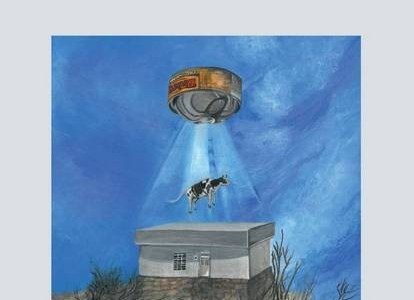
Villalobos throws a wide attack and makes fun of religion and the culture of religious peregrination. At one point Orestes runs away from home to go to the hill where his older brother says space aliens have landed before and kidnapped their younger bothers. They march out their with a group of religious pilgrims to a shrine. Its an obvious substitution of one deus ex machina for another. It also smashes any fantasy of magical realism the reader might have. In Si viviéramo there is nothing romantic, just one absurd disappointment after another. The idea of family does not fare well either. The brothers always fight, the grandfather refuses to help at a critical moment, and when his twin brothers disappear Orestes is so nonplussed, it is hard to believe he has brothers.

Those disappointments are not only thrust on the characters from the out side, but withing, as if even given a chance to succeed, Mexico will screw it up. Towards the end of the novel the Polish family suggest Orestes’ father sell their home so a new housing development can be built. It would be the payout Orestes has been waiting for, but his father refuses. It is a futile gesture, because the government just moves in and destroys the house (it was not his land to begin with) and they are homeless and broke. If it was bad enough that political power is against them, when offered a chance to profit the family refuses. Yet they are unable to make a sensible response. There is no way out for the family, because they are unable to find a way out. They are so used to the situation they just accept it.

Those disappointments, though, can make the novel feel episodic, which might be a better way to structure realistic novel since lives are just a series of episodes. However, when it comes to concluding it all the little episodes don’t tie together. It is not necessary that everything come together, but the episodes don’t really go anywhere. It’s as if Villalobos got to a certain point and said to himself, I need to finish this. He does it in his dryly comedic fashion as a UFO comes to reunite the family. It is a ridiculous conclusion, but one that is no more ridiculous than a work of magical realism. The difference is Si viviéramos treats Mexico in less exotic terms. It is a reality informed by the then and now, the fallow pop culture of Omni magazine and cowboy movies. When looked at as a whole, the conclusion makes sense, but during the reading, working your way through each episode, knowing that the pages are running out and the episodes just keep plying on, the conclusion is a sudden stop. Had he been able to take the novel father somehow, to go beyond the comedy that feels superficial at times, he could have really written something interesting. As it is, the book feels a little light. Perhaps taken together with this first book and the as yet unwritten third, it will all make sense.

Andres Neuman’s New Novel

Andres Neuman’s newest novel came out about a week ago. It is a departure from Traveler of the Century in that it is about three people: a dying man, the woman who takes care of him, and their son. In some ways it follows on some of the stories he wrote in Hacerse el muerto (read my review). In addition to the write up of the novel, this article also talks about his relationship with Roberto Bolaño.

Estas vivencias traumáticas han dirigido sus pasos hacia Hablar solos (Alfaguara). Una novela breve, concisa, rauda. Dolorosamente placentera. Fulminante como los pensamientos, desgranados en capítulos en primera persona, de sus tres protagonistas: el moribundo, su cuidadora y el hijo fruto del amor que han compartido y que se desvanece. Porque lo que logra Neuman, en última instancia, es una disección, urgente en las formas y trascendente en el fondo, del amor: de su enfermedad, de su tratamiento, de su agonía y pérdida.

En los orígenes de Hablar solos se encuentra también La muerte de Iván Ilich, de Tolstói. O, más bien, la voluntad de darle la vuelta a aquella narración. De convertir al expirante en objeto y traer a quien lo asiste a un primer plano. “En la road movie o el road book clásico se narra una experiencia masculina. Desde Ulises en la Odisea a Cormac McCarthy. Hay una exclusión, que ha atravesado todas las épocas, del rol de la mujer. Ese rol, como mucho, es el de Penélope: esperar al héroe. Es lo que tantas veces se les pide a las mujeres y a los personajes femeninos: que sean insoportablemente abnegados ”. Por eso, su protagonista femenina se convierte en una suerte de “Doctora Jekyll & Lady Hyde de los cuidadores, una madre preocupadísima por la seguridad de su hijo, una esposa totalmente leal y una cuidadora incansable que, al mismo tiempo, termina siendo una mujer infiel”

Lorenzo Silva wins the Planeta Prize

Lorenzo Silva with his book Los guardias civiles has won the Planet Prize. It is a huge prize 150,250 Euros, plus the book is published in every country that Planeta distributes. Since Spanish language authors tend not to be published outside their countries that is a big deal.

Hay que asegurar el tiro en tiempos de crisis. Por eso ayer en Barcelona, la 61ª edición del Premio Planeta hizo gala de su ticket triunfal, predilecto, de fino laboratorio: escritor de notoriedad en el género al alza —ahora la novela policiaca— y finalista reconocido por su presencia en los medios, a poder ser la televisión. Y así, el ganador ha sido el madrileño Lorenzo Silva, padre de la pareja de la Guardia Civil Bevilacqua y Chamorro, cuya séptima entrega se titula La marca del meridiano y le ha reportado 601.000 euros.

The Thousand Autumns of Jacob De Zoet by David Mitchell – A Review

The Thousand Autumns of Jacob De Zoet
David Mitchell
Random House, 2010

In reading David Mitchell’s The Thousand Autumns of Jacob De Zoet I kept coming back to one question: what is the purpose of historical fiction? For a writer like Mitchell, it is more than just a nice backdrop with which to overlay an author’s own fantasies of the past. That kind of novel is better called a historical romance than a historical fiction, and little better than the average genre work more interested in plot and adventure. Mitchell is to good an author for that kind of simplicity. He’s more interested in recovering the past and it’s that recovery of a lost something that marks many historical novels. The line between recovery and fantasy, though, is not large and it is easy to move between the two and creating worlds that are only the dream of the foreigner. As José Emilio Pacheco noted, “the past is a different country. They do things differently there.” That otherness should not dissuade the creation of historical fiction, but should be a question ever with the reader. If history itself is capable of projecting the present on the past, then the novelist with the imperative of fiction demanding characters and plot has an even greater task. The issue is even more complicated when an author writes about another culture that has often been misunderstood. And Mitchell, in writing about Japan of the late eighteenth century, has undertaken a complicated and difficult task to balance the exploration of the past with a narrative that fits a modern sensibility.

The Thousand Autumns, at its most basic, is a story of cultures, perhaps not clashing, but learning about each other with all its attendant misunderstandings. Jacob De Zoet is a Dutch clerk on the Nagasaki trading post at the end of the 18th century. A good half of the book is given over to the interchange between the Dutch and the Japanese, how commerce is more or less welcomed, while closer ties such as learning Japanese or travel within Japan are strictly forbidden. In this sense, The Thousand Autumns is at its best showing a historical dynamic and reconstructing a way of life that few would have experienced yet has had profound influence on history. Of particular note is the contrast between the scientific ideas of the westerners and those of the traditional, one might says superstitious. It is an idea that has been explored before and historical fiction about the age of discovery cannot be without it. It could be dangerous ground, too, suggesting a superiority in one side or the other, but Mitchell is even handed in showing the two sides as they were. It didn’t hurt to have one of the central characters be a Japanese midwife (and an outcast) who has opened up to the sciences, which gives the reader a way to bridge the two cultures. Since the Duch are prevented from entering into Japan, Orito Aibagawa the midwife is the device to allow the west into Japan, both in a metaphoric sense as the one who seems the closest to the Dutch, and in narrative terms as the one whose life within Japan the reader gets to follow.

The idea of a clash of cultures creates problems, though, when the story moves into Japan and it becomes a tale of courtly intrigue and sexual slavery. Mitchell frames the story as an elaborate game of Go. It is here that the book becomes a great page turner full of clever tactics as De Zoet and Aibagawa each try to defeat the evil lord abbot of a temple that keeps disadvantaged women as sexual slaves and kills their children and the women when they get too old. It makes for good reading, but it is a stretch too far, as if that clash of cultures is at its apotheosis: the abbot who has no scruples vs. the light of reason. I have no idea if such a temple ever existed. It doesn’t matter. The exploration of the two peoples is side tracked by a samurai tale. It is as if Mitchell ran out of ideas about what the trading life would really be like. Perhaps one of the problems is that since Japan was walled off from the rest of the world for so long, a story about the interaction between the Dutch and the Japanese would necessarily suffer for lack of material. One of the more interesting threads left undone is Jacob De Zoet’s Eurasian son who is just a footnote, but whose story would be quite interesting. Perhaps one of the problems is that since Japan was walled off from the rest of the world for so long, a story about the interaction between the Dutch and the Japanese would necessarily suffer for lack of material.

The question remains, then: what is the purpose of history fiction? For Mitchell it is as much curiosity as something to recover. What you see in The Thousand Autumns is an author trying to get at the complexities of cultures meeting. In some ways he succeeds. The end of the book with its showdown with the British frigate and De Zoet’s subsequent use of that even to strengthen relations with Japan is strong. Yet the complexities of it all are reduced to a few encounters: science vs tradition; the politics of trade; and the perceptions of each others cultures as evidenced in some of the scenes between the Dutch and the Japanese translators. It is disappointing because The Thousand Autumns of Jacob De Zoet is an otherwise well written novel. And in the end the answer to this historical fiction is, the fascination is in the exoticism of time as well as place. The past is exotic and it is hard to resist its temptations and not loose one’s self in the details (Mitchell is restrained enough not give us every single detail he’s learned). Mitchell is surely a talent, but I think he could stretch a little farther.

Elena Poniatowska on the Tlatelolco Massacre

La Jornada has a lengthy piece from Elena Poniatowska about the Tlatelolco Massacre. La noche de Tlatelolco is one of her most important books and a new, updated version has been brought out. The massacre was a pivotal moment in Mexican history, one that showed Mexico had a long way to go on civil rights.

Cuarenta y cuatro años más tarde, el 11 de Mayo de 2012 surgió un movimiento que tomó por sorpresa a nuestro país con su espontaneidad y su frescura: #YoSoy132, y Ciudad de México sacudió sus telarañas y su desesperación y todos respiramos mejor. Nació “una pequeña República estudiantil”, como lo dice Carlos Acuña.

Durante esos cuarenta y cuatro años, ¿qué había pasado en el país? Después de Gustavo Díaz Ordaz, Luis Echeverría impuso a López Portillo; éste impuso a De la Madrid, quien a su vez impuso a Salinas de Gortari por encima del verdadero ganador, Cuáuhtemoc Cárdenas. Seis años más tarde, su candidato, Luis Donaldo Colosio, fue asesinado en Tijuana, el 23 de marzo de 1994, en Lomas Taurinas, Tijuana, y este crimen propició el asenso al poder de Ernesto Zedillo, quien a su vez le entregó la banda presidencial a Vicente Fox, del PAN (partido de oposición), que defraudó a los mexicanos como habría de hacerlo su sucesor, Felipe Calderón. (Una joven estudiante del #YoSoy132 refutó a la candidata del PAN, Josefina Vázquez Mota, y le dijo que cuando ella hablaba de estabilidad económica tenía que recordar que “vivimos en un país con 52 millones de pobres y 7 millones de nuevos pobres en este sexenio: 11 millones en pobreza extrema”.)

Durante estos cuarenta y cuatro años surgió una ciudadanía nueva, alerta, crítica y desencantada, cuyo punto de referencia era la masacre del 2 de octubre de 1968. Varios jóvenes se convirtieron en guerrilleros, varios maestros rurales inconformes canjearon la pluma por el fusil y se refugiaron con sus seguidores en la sierra de Guerrero. (Habría que recordar la mejor novela de Carlos Montemayor, Guerra en el paraíso.) El gobierno persiguió a los contestatarios y conocieron la tortura. A doña Rosario Ibarra de Piedra le “desaparecieron” a su hijo Jesús e inició el movimiento Eureka con otras madres que gritaban: “Vivos se los llevaron, vivos los queremos.” Los desaparecidos mexicanos eran aún más invisibles que los argentinos, porque México había sido el refugio de todos los perseguidos políticos de Chile, de Argentina, de Uruguay, de Guatemala; ¿cómo podía entonces encerrar a sus opositores? El gobierno negaba que hubiera tortura, “separos” y cárceles clandestinas.

October Words Without Borders: Oil

The October issue of Words Without Borders is out now. The issue theme is Oil featuring authors from oil producing countries and others talking about the impact of oil. In addition to poetry, fiction and essay, there are a couple of graphic pieces that look good.

This month we explore the role of oil in the international landscape. Oil transforms nations, links disparate political and social ideologies, breeds conflict, and drives governmental and corporate policy; our writers show how this force, both blessing and curse, shapes lives and literature around the world. We begin with an essay by political scientist Michael L. Ross connecting oil wealth and national development. Russian Booker nominee and award-winning short-story writer Alexander Snegiryov presents the (show) business of oil in Russia. In two graphic pieces, Lebanon’s Mazen Kerbaj mourns what’s left of his pillaged country, and Italy’s Davide Reviati grows up in the shadow of Ravenna’s ominous petrochemical plant. Translator Peter Theroux shows how Abdelrahman Munif’s great Cities of Salt runs on oil. Afrikaans star Etienne van Heerden’s solitary South African experiences hydrofracking firsthand, while science fiction writer Andreas Eschbach’s stolid loner taps a sixth sense for oil. In two tales of oil workers, Argentina’s María Sonia Cristoff and Germany’s Anja Kampmann explore solitude, madness, and other occupational hazards. And poet Stephen E. Kekeghe protests the draining of Nigeria.

Granta en Español 13 Featuring Mexican Writing + New Bolaño

The new Granta en Español has or is about to come out. It is featuring writers from Mexico in an edition that focuses on narco lit and anti narco lit, in a kind of battle of opposites. From El Pais

Siempre ha estado ahí pero, en los últimos años, se ha visto eclipsada por la repercusión mediática y editorial de la violencia y el narcotráfico. La literatura mexicana nunca se ha desprendido de los temas eternos: amor, muerte, ambición, venganza y la exploración de la condición humana en sus múltiples vertientes. Es verdad que el contexto influye en la obra de los autores, pero la mayoría ha elegido la ficción más allá de la realidad despiadada y desalmada para adentrarse en otros mundos, aunque parezca que los mexicanos solo escriben de violencia. Una especie de forzado duelo temático: narcoliteratura contra no-narcoliteratura.

“No puedo concebir un país cuya literatura esté ocupada por un solo tema: la crónica del narco. Sería extrañísimo, una especie de cárcel mental”, señala la escritora Verónica Murguía (México, 1960). “Vivir aquí equivale a pensar mucho en el narcotráfico, pero no necesariamente escribir de ello. Me parece normal que haya escritores que se ocupen de otros asuntos en otros registros”.

It does sound interesting although I don’t like fragments. Usually they read flat. And I’m not so sure I like the inclusion of Sandra Cisneros. Nothing against Cisneros, but I know who she is already.

In the same edition is a previously unpublished piece from Bolaño

Dos miradas sobre la vida de Roberto Bolaño: una personal y otra intelectual. Dos piezas rescatadas de su archivo y cedidas por sus herederos a la revista Granta en español en el número 13, dedicado a la otra literatura mexicana: la de la no violencia. Textos que sirven, al haber estado el escritor chileno tan vinculado a México, para conectar la literatura del pasado de aquel país con la del presente.

Javier Cercas New Book Reviewed at El Pais

El Pais has a review of Javier Cercas’ newest book, Las leyes de la frontera. It is another work of historical fiction where he tries to understand what a historical person was like. It sounds more fictive than the last book, Anatomy of an Instant. He intended to write a book about EL Zarco, a criminal figure from the 60s, revealing all the lies that have been said about him, but it turned into something larger and more encompassing of the criminal world that Francoism fostered.

Casi todas las novelas tratan de cómo su autor se encontró con ellas y cómo luego fue contándoselas a sí mismo, antes de hacerlo a los demás. Muchos relatos no hacen explícitas estas dos frases del proceso pero, desde el Quijote, bastantes otros detallan esos preliminares. No creo que tal cosa resuelva la identidad escurridiza de lo que se ha dado en llamar autoficción, ni tampoco que agote la forma de narrar de Javier Cercas, tan cercana a este marbete que parece hecho a su medida. El autor explícito de Las leyes de la frontera es sólo un interrogador sin nombre que surge para provocar y enhebrar las confesiones de un abogado penalista de éxito, un director de prisión y un policía, ambos dos al borde del retiro. El motivo: saber de la vida y la leyenda de Antonio Gamallo, alias El Zarco, al que todos ellos conocieron. La sustancia moral y la estrategia literaria que todo esto comporta lo aclara el entrevistador cuando dice al director de la cárcel: “Al principio, la idea era esa, sí: escribir un libro sobre El Zarco donde se denunciasen todas las mentiras que se han contado sobre él y se contase la verdad o un trozo de la verdad. Pero uno no escribe los libros que quiere, sino los que puede o los que encuentra y el libro que yo he encontrado es ese y no es ese […]. Lo sabré cuando termine de escribirlo”.

Javier Cercas’ Latest Novel

El Pais has an advance of Javier Cercas’ newest novel, titled Las leyes de la frontera (The Laws of the Border). It is about growing up in Franco’s Spain during the 60’s while a middle class began to grow but there was still great inequality. You can read the first chapter at El Pais also.

“El origen remoto de Las leyes de la frontera es cuando yo tengo 10 o 12 años y vivo en unos bloques de pisos de clase media recién levantados en el extrarradio de la ciudad, justo al lado del río. Una tarde, el utillero del equipo de balónmano del barrio nos lleva al otro lado del río y desde ahí veo otro mundo. Hay unos barracones donde se vivian miles de personas en una miseria espeluznante. Esa imagen se me queda clavada en la retina. Vi que a unos 150 metros de donde yo vivía había un mundo que no se parecía en nada al mío. Ese es el origen del libro: qué pasaba ahí, en algo tan cerca y tan lejos de mi casa al mismo tiempo”.

Guatemalan Writer Rodrigo Rey Rosa Profiled in El Páis

El Páis has an excellent, must read profile about the Guatemalan writer Rodrigo Rey Rosa (lately El Páis hasn´t seemed so must read). I hadn´t heard about him before but as someone who lived in Guatemala for a little bit his work sounds interesting. Bolaño mentioned him as an important author. A few of his books have been published in English.

Sentado en la cafetería de un hotel madrileño, Rey Rosa es a la vez parco, delicado y rotundo, como sus libros, escritos en una prosa sin materia grasa y que rara vez, es el caso, sobrepasan las 200 páginas. El suyo es un estilo sin adornos, pero no frío, en todo caso, “una enorme cámara frigorífica en donde las palabras saltan, vivas, renacidas”, según la descripción de Roberto Bolaño, que siempre señaló a su colega como uno de los grandes narradores de su generación. Títulos como Piedras encantadasCaballeriza, El material humano o Los sordos han ido pintando poco a poco el mural de contrastes de la Guatemala actual, pero Rey Rosa insiste: ni plan ni tesis. “Hay quien divide a los escritores en dos: los que tratan de explicar algo y los que tratan de explicarse algo. Yo soy de la segunda clase. No sé más que el lector al que estoy hablando. Escarbo mientras escribo”.

[…]

¿Y qué puede hacer la literatura? “En mi caso, enterarse”, responde Rey Rosa. “No creo que la literatura tenga grandes efectos, pero sí puede desatar una reflexión. Un trabajo de ficción serio puede ser un instrumento de conocimiento, no sociológico ni etnológico, simplemente humano. El hecho de tratar de explicarse las cosas ya afecta. No soy optimista y no quiero decir que sea algo bueno, pero sí que la actitud de querer entender cambia la percepción de la realidad. Sobre todo desde el punto de vista de los que somos parte del sistema queramos o no, los que estamos bien, los que vivimos… Quien más quien menos, ahí estamos todos y somos una minoría: yo, los lectores de mis libros… a ellos sí que puedo incomodarles un poco. Eso es lo único que puedo hacer. Sugerir cierta autocrítica. En estos ejercicios narrativos míos hay una especie de autocrítica como clase”. Y añade entre risas: “Pertenezco a una clase bastante desagradable. Supongo que lo que marca la diferencia es decir: pertenezco a ella, pero no me siento cómodo”.

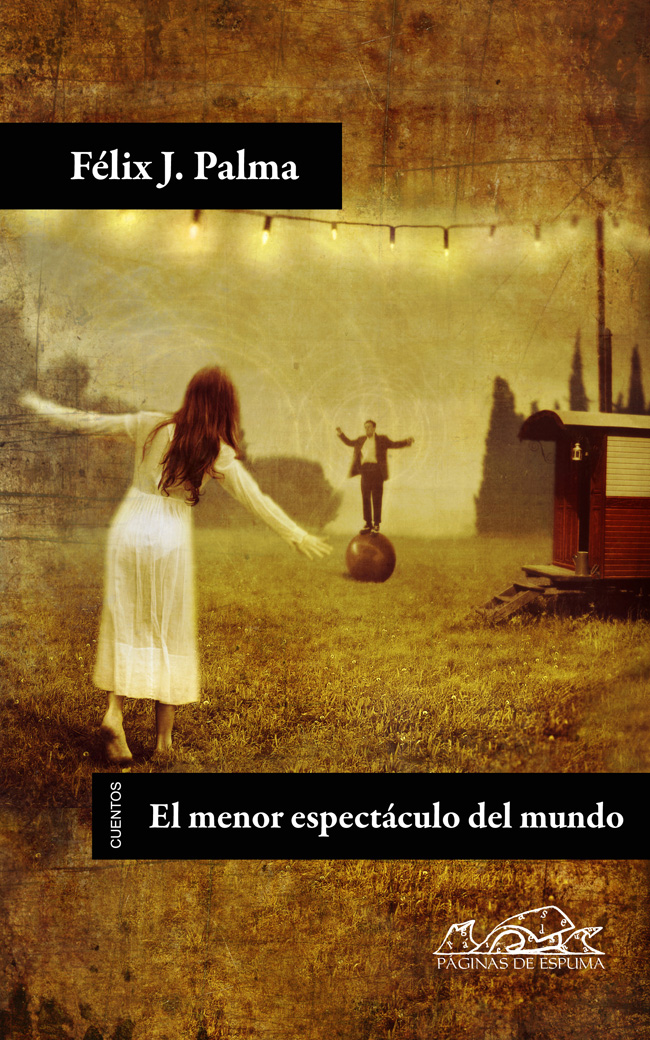
El menor espectáculo del mundo (The Smallest Show on Earth) by Félix J. Palma – A Review

El menor espectáculo del mundo (The Smallest Show on Earth)
Félix J. Palma
Páginas de Espuma, 2010, pg 203

Félix J. PalmaThe Spanish novelist and short story writer Félix J. Palma is probably best known as a thriller/sci-fi/fantastical/historical fiction writer who’s The Map of Time spent some time on the NY Times best seller list. I’m not sure if how well any of those categories work in describing him, but his 2010 collection of short stories El menor espectáculo del mundo (The Smallest Show on Earth) is in a different vain, focusing on the little details of life, the smallest show on earth. However, that smallest show tag is a little misleading because several of the stories are adventures that are just confined to a small space. Still, Palma is attentive to the disappointments and unsaid despair that surround his characters and command of language, expressed in elegant sentences and solid images mark him as a skilled writer.

His skills as a writer are apparent from the opening story, El país de lasMuñecas (The Country of Dolls):

A aquellas horas de la noche, el parque infantil parecía un cementerio donde yacía enterrada la infancia.

At that time of the night, the playground looked like a cemetery where childhood had been buried.

It is an arresting image that begins a story of a girl who looses her doll and her father, like Kafka, writes the daughter a letter each day as if he were the doll. His reinvention of the doll story parallels the story of his failing marriage and the fable for the girl becomes not only the dream that will never be realized for the child, but it is an illusion the father would like to have also. But the doll story is just a story and the narrator can only wish for what he cannot have. It is a typical strategy for Palma to show the illusion of these little shows and then leave the characters aware that those illusions are not real. While The Country of Dolls blends his power of language and his appreciation for literary culture, it also ends disappointingly as the narrator, in crime fiction fashion, destroys the destroyer of his illusions and kills his wife.

Palma also has a good sense of humor which he shows quite well in Margabarismos. The narrator is a looser who has taken to spending his time in  La Verónica a dive bar near his home that his wife will never search for him in. One day, he sees a note on the bathroom wall that says he will be hit by a car. He doesn’t believe it, but as he leaves the bar a car hits him. He wakes to see his wife waiting for him and he realizes they have grown apart and he would like her back. Once he gets out of the hospital he returns to the bar’s bathroom to look for the message. It has changed, though, and the writer is his late uncle who has the power to see the future six months of the narrator. They hatch a plan to win his wife back and each step displays a humor based on the clumsy desperation of a man who wants his wife back and has to depend on an unreliable ghost. Without the humor–the idea of finding messages in the bathroom–the story would be flat. Again, Palma takes the desperation of the lonely man and turns a comic ghost story into a moment to explore relationships.

He develops that same theme in Una palabra tuya a story that starts with the narrator’s wife’s last words before leaving the house: can you fix the lamp. When he goes into the closet he gets trapped and through a series of events his daughter ends up being the captive of the desperate upstairs neighbor. Ultimately, he performs his role as a father and saves the child. When his wife returns she says, couldn’t you have fixed the lamp? Of course the joke is he has scaled a wall, saved his daughter, and evaded a crazy woman, just like a superhero. And like the smallest show on earth, the narrator has gone unnoticed.

The best story of the Bibelot  takes that hidden heroism of the every day and gives it a less adventurous spin. An encyclopedia sales man finds himself mistaken for the son of an old woman. He doesn’t want to play the role but when she said he hasn’t been by for her last few birthdays he relents. He knows he’s making her happy until her daughter calls. She tells him to leave immediately because her son is dead. He agrees and apologizes and on his way out he meets a neighbor who tells him the daughter also died. Here, again, he has a character doing a simple act, one that is inconsequential to everyone but the old woman. In this story it is not just one person participating in these little shows. It is the most successful story because it avoids the episodic feel that some of the earlier mentioned stories. It also has an excellent ending that is neither a twist or a joke. It is his most humane story.

All of Palma’s stories have excellent writing and show a good story teller in action. His ability to show the human failures that go unnoticed, although occasionally hit with a misplaced levity, is strong. With these strong stories it would be great to see more of his non “genre” writing.

My Review of The Future Is Not Ours: New Latin American Fiction at the Quarterly Conversation

My review of The Future Is Not Ours is up at the Quarterly Conversation. This came out last week but I´ve been off line for a while.

The Future Is Not Ours: New Latin American Fiction edited by Diego Trelles Paz

The Future Is Not Ours: New Latin American Fiction edited by Diego Trelles Paz

Review by Paul Doyle

Editor Diego Trelles Paz notes in his solid and lengthy introduction to The Future Is Not Ours that this trend was first evident with the writers born in the ’60s, especially those of the McOndo and Crack groups, spearheaded by Alberto Fuguet and Jorge Volpi, respectively. Both as a reaction to the constraint imposed by the writing of the Boom, and to the political climate, writers gave up on the “total novel,” which tried to capture the whole of a country. While Paz oversells the importance of events like the fall of the Berlin Wall, the murders in Juarez, Mexico, and the terrorist attacks on September 11, 2001, in shaping the writers and works in this collection, there is a clear awareness of the dysfunctional world they inherited. Paz claims “one can recognize the rather nihilistic conviction with which each writer confronts the disillusionment that” uses cynicism and indifference to avoid disappointment. Having seen so many failures, there is only so much one can say about a nation.

Children in Reindeer Woods by Kristín Ómarsdóttir – A Review

Children in Reindeer Woods
Kristín Ómarsdóttir
Open Letter, 2012, pg 198

There’s a war. It doesn’t matter where or why, but soldiers are fighting it. One of them, a paratrooper, lands on a remote farm, killing all the women and children with a quick spray of his machine gun.

So begins the Icelandic author Kristín Ómarsdóttir’s Children in Reindeer Woods. It is a strange novel full of unnamed locations and events that feel familiar at every turn. After the killing that starts the novel the paratrooper, Rafael, makes himself at home and begins life of a farmer and dedicates himself to taking care of the only survivor of the attack, the Eleven-year-old Billie. Rafael is a brute, not so much in the sense of his willingness to use violence, but in his unrefined behavior. Certainly he kills when ever someone threatens his existence on the farm, but he is also an uneducated man filled with strange ideas. Billie, on the other hand, is not a worldly child, but one that seems to have a practicality about her, even if that practicality is wrapped in fables.

Rafael and Billie inhabit the farm together, each learning to understand the other. Rafael is aways tender with her, yet also warns her not to use the phone or go into the kitchen where she could get a knife. Despite their domestic tranquility, there’s a threat of violence. When tax collectors come to the farm Rafael wastes no time in killing them. Billie isn’t horrified, but doesn’t appreciate the killing. Her reaction is indicative of something that runs throughout the book–a kind of muted fear and recognition of reality.  Is Billie in great danger? Is Rafael as caring as he seems? As the book progresses their lives entwine more and more: Billie relating the stories of her father the puppet; Rafael taking her with him on futile car trips and to destroy cars, gas stations, or anything that could let the world intrude on them.

Children in Reindeer Woods has the feeling of a fable within a fable. The narration is stripped down, but describes a child like state, as if what you are seeing is a reflection of Billie’s inner state. The narration can be see in the stories she tells about her parents. Her father is a puppet who looses his arm easily and is writing a work of jurisprudence and her mother is nurse who takes care of them. Something is aways amiss with them though. Billie is uncertain but describes what we’d recognize as alcoholism. It makes for beautiful language and Ómarsdóttir, as rendered by Lytton Smith, evokes a magical world that both child and adult can recognize, but is completely unreal:

Her navel protruded like a bullet. Her mother believed that the navel would retreat when Billie entered puberty, when the egg in the ovary wanted to be impregnated. Then the ovaries would haul the navel and the umbilical cord in so they could later cast the cord out from the womb with anew shoot hanging on it. But until then her navel would push out because it was still invisibly tied to its headquarters…

The idea of seeing the story through Billie’s eyes also can help understand Rafael’s strange perception of the world. For example, talking to Agnes Elisabet, a nun who happens on the farm and who sleeps with Rafael, they have the following exchange:

“Can nuns commit suicide?”

“Nuns can do everything. May I play it for you, my love?”

“Why did she commit suicide?”

“My love, why does the sun shine? Do you know the answer?”

“Because otherwise nothing would live.”

“It’s surely good to commit suicide when one has given up on getting attention.”

The conversation is naive, as if the solder had no inner life, had been raised only to kill. Rafael may only be a boy of 18 or 19 as many soldiers are, still as unformed as Billie. Between the two explanations,  Ómarsdóttir sees the war, its unsaid location and unstated purpose, as little more than a pointless exercise. Removing the players from the battle leaves them as they truly are: children. Children in Reindeer Woods is a fable can be irritating for its occasional “childishness”, but the depth and beauty of the language and her ability to create characters that express futility is such an enchanting way, make it one of the more surprising reads I’ve come along for some time.

Metro: A Story of Cairo by Magdy El Shafee – A Review of a Censored Graphic Novel from Egypt

Metro: A Story of Cairo
Magdy El Shafee
Metropolitan Books, 2012, pg 95

Magdy El Shafee’s Metro: A Story of Cairo is the much anticipated publication in English of the Egyptian author’s banned work. When published in 2008 it was banned for “offending public morals” and remains banned despite the change in government. The offending public morals is one of those classic phrases of despotic regimes and rarely do the artists condemned with those words actually offend anything but the regime’s sense of invincibility. Given the profound changes that have swept over Egypt in the last year and a half, Metro, which was written and baned several years before those events, has taken on not only the voice of protest it has always had, but also a document of the problems that led to the Arab Spring.

The story itself is rather simple: two young software developers Shehab and Mustafa who get shafted on a business deal by a corrupt businessman. They are broke and a friend of theirs, an old man, tells him he is going blind. The two men decide to steal the money using their electronic know-how. It fails but on the way out of the building they come upon a government official demanding a payoff from the head of the bank. In one of those great lines that catches the flavor of the whole book the banker says,

Collateral, your excellency? What collateral? You honor us by taking our loan…

Running parallel to the story is a murder that the boys witness and try to solve . The murder brings them into the ins and out of corruption. The police are untrustworthy, the press is week, and no one seems to care. At one point the one of the boys says,

People are numb. Nothing has any effect on them. They put up with so much, they just say. “Well, that’s how things are in this country of ours.”

And to illustrate that the last third of the novel breaks out into a violent protest march that is  broken up by government thugs pretending to be protesters. It is a prescient part of the book, foretelling the types of protests that were to happen a few years later.

Shafee’s Egypt is burdened down by corrupt politicians, unreliable  police, businessmen who’ll cheat you every chance they get knowing there is no recourse to complain if they are connected, and an economic system that is so dependent on payoffs that it is virtually impossible to start a new business. When the young men try to sell their software they are completely blocked by inaccessibility to funds and corruption. Their only hope is to steal, or to immigrate. To show this complete collapse of possibilities their friend, an old merchant, has given up and has taken to begging. But his begging is just as corrupt and what he says has nothing to do with his economic circumstances. It is impossible to trust anyone when the only way to succeed is to cheat, to steal and to lie. It is a truth that not only fills almost every encounter in the book, but one that Shehab will find even destroys his closest illusions.

Metro is written as a noir with  Shehab narrating in much the same way. He opens the book saying, “We’ve spent our whole lives in this cage, but two weeks ago, when the bars began to close in, things became clearer. Our eyes were opened and we made a decision.” Shehab is a modern outsider, both a hacker and a ninja-like figure who welds a staff like Bruce Lee, one of his heroes. Since computing can be mysterious hacking makes for the perfect type of priestly warrior, one whose special skills allow him to combat the abuses of society. He is a mix of Batman, Philip Marlow, and a Shaolin monk. It can be a stultifying image, one that takes away from the brutal realities he is describing. What saves the book is that almost no one gets what they want. As with all noir the power isn’t necessarily in the reality, but the but the power to show all the corrupt elements of a society at once, even if that creates mythic heroes that lead to their own escapist fantasies.

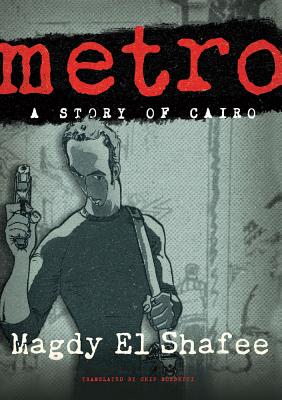
The art work of Metro is much like that of the cover photo. Occasionally, a guest artist will do a page or two in a completely different style. Many frames are rough and still have the original pencil tracings. It all leads to an impression of a hurried and unfinished place. He also shifts his style to accentuate the comedic as when he draws the beggar in his comic moments. The most polished moments are during the protests when the wide sweep of violence are shown in sweeping gestures, more abstract and more brutal. They were the most effective sequences in the book.

Overall its a fascinating book that still has its roots in the comic, but whose power comes from criticisms. It will be interesting to see if without the urgency of the times, the story will still stand up and not turn into a noir that does not have the power to evoke a society on the edge.

You can read an interview with Shafee at Arab Lit in English.

Interview with Juan Casamayor Editor of Páginas de Espuma at Página 12

Página 12 has an interview with uan Casamayor Editor of Páginas de Espuma, one of my favorite publishers right there with Open Letter. They specialize in short stories and have published some great works by some of the best in short stories (see my reviews of Navarro and Neuman). The interview talks about the press, its history, and the craziness of the publishing industry, which functions in Spain much like it does in the US.

–Un latiguillo frecuente, dicho por muchos editores, es que los libros de cuentos no venden. ¿Qué diría para desmontar este “mito” o prejuicio?

–El primer hecho incontestable es que trece años después una editorial que empezó partiendo de una pareja que decide buscar un hueco muy especializado ya no es una editorial pequeña por facturación. Páginas de Espuma está facturando en torno a los 800 y 900 mil euros; es una facturación fuerte. Las cifras son públicas. Los libros de cuentos se venden. Otra cosa es que se quiera vender cuentos. Si partes de la filosofía que el libro de cuentos es un descanso de novelista o una cláusula de un contrato, el posicionamiento ya no comercial sino editorial es endeble para vender el libro. Yo hago giras en España por catorce ciudades con un libro de cuentos. Además tenemos un premio de 50.000 euros al mejor libro de cuentos que compite con cualquier premio de novela. Claro que para esto me busqué a alguien que tuviera la plata para poder financiarlo. Ribera del Duero está muy contenta con este premio porque ha posicionado su marca de origen de un vino en un mundo cultural que les ha interesado mucho. No tengo otra vía de ingresos. Aunque mis padres son médicos, soy un poco espartano. Y si bien me dieron un poquito de dinero para arrancar con la editorial, vivo exclusivamente de lo que dan los libros. Algo tiene que vender el cuento para mantener Páginas de Espuma, ¿no?