Daniel Sada’s Casi Nuca to be Published in April 2011

Three Percent has some information on the Mexican author Daniel Sada’s book Casi Nunca (Almost Never) that is coming out in English in 2012. It is a book I’ve been meaning to read for some time (I own a copy). I probably won’t read the English version too, but it will take some skill to translate Almost Never as Sada is a master stylist among other things and the book won the Herralde Prize for Fiction.

This Rabelaisian tale of lust and longing in the drier precincts of postwar Mexico introduces one of Latin America’s most admired writers to the English-speaking world.

Demetrio Sordo is an agronomist who passes his days in a dull but remunerative job at a ranch near Oaxaca. It is 1945, World War II has just ended, but those bloody events have had no impact on a country that is only on the cusp of industrializing. One day, more bored than usual, Demetrio visits a bordello in search of a libidinous solution to his malaise. There he begins an all-consuming and, all things considered, perfectly satisfying relationship with a prostitute named Mireya.

A letter from his mother interrupts Demetrio’s debauched idyll: she asks him to return home to northern Mexico to accompany her to a wedding in a small town on the edge of the desert. Much to his mother’s delight, he meets the beautiful and virginal Renata and quickly falls in love—a most proper kind of love.

Back in Oaxaca, Demetrio is torn, the poor cad. Naturally he tries to maintain both relationships, continuing to frolic with Mireya and beginning a chaste correspondence with Renata. But Mireya has problems of her own—boredom is not among them—and concocts a story that she hopes will help her escape from the bordello and compel Demetrio to marry her. Almost Never is a brilliant send-up of Latin American machismo that also evokes a Mexico on the verge of dramatic change.

Architecture in Uniform: Designing and Building for the Second World War – A Review

Architecture in Uniform: Designing and Building for the Second World War
Jean-Louis Cohen
Editions Hazan, Paris (July 26, 2011) 448 pages

This is a beautiful book that tries to examine every aspect of architecture and architects during World War II. With rich photos and drawings it shows the war in a completely different light. The book is at its best in describing the projects that were created specifically for the war, ranging from the great industrial plants of Willow Run that produced a bomber every hour at the height of the war, the design of fortifications, and the how architects worked with the military. For example, architects went to create exact copies German and Japanese homes for the American military so they could perfect an incendiary bomb, which led to the development of napalm. The homes were replicas all the way down to the furniture and the paint. That attention to detail was needed in creating the massive factories that produced war material. And the included photos of the massive plants that filled the Midwest and the West coast of the US show that powerful blend of industry and design. It could also lead to the frivolous as American airplane factories were camouflaged with fake streets and homes on their roofs, while large runways sat just to the side. I’m not sure who they were fooling.

Among the curiosities were the plans for various types of bomb shelters. The Germans had above ground beehive structures that only served to suffocate victims when the firestorms that were the hallmark of heavy bombing consumed all the surrounding oxygen. The British plans for London were equally strange and only when the reality of nightly German bombing raids be came apparent was part of the population given access to the metro system. Interestingly, only about 10% of Londoners used the metros for safety.

Cohen also looks at the roles architects played in the development of German facilities, including slave labor factories and concentration camps. Unsurprisingly, architects many from the best schools, were active participants in the design and construction of the camps. And fitting bureaucratic men were more interested in what traditions of the design of the camp buildings and surrounding facilities would draw on, than who was actually happening in the camps. Albert Speer was the highest profile of such men and Cohen points out they all tried in someway or another to justify such work with the all too common, I didn’t know what was happening.

I would have preferred more about these specific elements, especially how they shaped the war. Unfortunately, he concentrated on elements such as housing for war workers. While probably interesting for architects, non architects will find it a little tedious. The only thing that real stuck out when looking at the designs for workers is just about every example was some form of cul-de-sac, an escape from traditional grid. There was something in the generation that just couldn’t handle a square block.

The biggest draw back of the book for a non architect is he spends so much time talking about architects. One chapter is give to listening dozens of architects and what they did in the war including those who served in uniform. And while Walter Gropius is important (even I know that) his actual impact on the war seems rather small for the amount of ink he receives. It’s as if Cohen wanted to include the activities of every architect even if they didn’t do much during the war. Part of the issue is that many of the buildings described in the book were never built. Either there wasn’t any money, fortunes changed (especially true for Germany), or the military just didn’t see the utility of an initiative.

Despite these draw backs, even for the non architect the photos and the sections directly about initiatives for the war make the book interesting, one of those arcane volumes that can give subtle meaning to even over analyzed events.

Boeing Plant Seattle Camouflaged

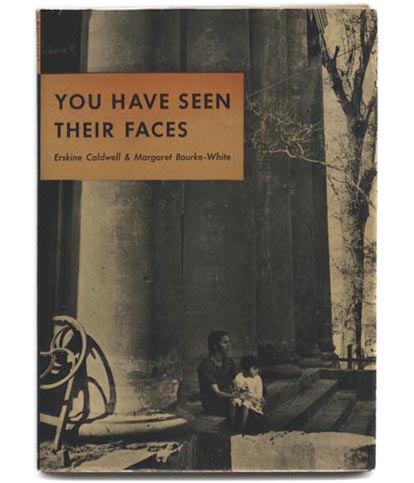
You Have Seen Their Faces by Erskine Caldwell and Margaret Bourke White – A Review

You Have Seen Their Faces
Erskine Caldwell, text
Margaret Bourke White, photos
Modern Age Books, Inc NY,
1937 55 pg

You Have Seen Their Faces was a radical book in its time. Perhaps it would still be if time didn’t make it easy to say, good thing things aren’t like that now. The Great Depression started over 80 years ago, and distance between the images, the clothes not only out of fashion, but archaic, the Dorthea Lange-like scenes of run down shacks have long passed from the  landscape, and the chain gains that were common place of the south no longer exist. Still there is something in the book that is more than an earnest examination of the conditions and remedies of the depression in the south, something that resonates today. It is a book that tried, despite its flaws, to describe America not only as it tried to deal with economic hardships, but the color line to paraphrase W.E.B. Dubois.

In You Have Seen Their Faces Caldwell and White attempt to document the lives of share croppers and tenant farmers in the deep south. Although the Great Depression was the impetus for the work, Caldwell shows a broader interest in just the poor. He isn’t out to document just those who’ve been thrown off the land during hard times. He want’s to see what is the root cause. What is it that perpetuates the endless lives of poverty and toil without hope that afflicts both white and black farm workers.

Caldwell delivers his criticism over a series of chapters describing both the sharecropping and tenant farming system. In his hands they are nothing more than virtual slavery. For black farmers it is slavery in all but name. The farmers had to borrow from the plantation store to start the farm, naturally they would  become indebted, and if they tried to leave local law enforcement would force them back to the plantation for failure to pay. It was a system for black farmers that offered no hope of escape. For white tenant farmers there was almost as little hope. They were a little bit more free, but they always owed money and, according to Caldwell, were given worse land than black farmers to foment racial tension.

Charges such as those are what make the book strong stuff.  His best insight on race is the about the channeling of the poor white rage towards blacks who were poorer, but held up as a menace that had to be put down. And for all the repression the white farmers were just as poor. Juxtaposed with quotes from whites that are predictably concerned with justifying lynchings, beatings and the imposition of Jim Crow, his analysis is extremely harsh, and for the times, strong. One of that generation’s great failing was the covering over of racial problems, something that would have to wait until the 50s for the starting of any form of broader acknowledgement. Cadwell for sure, did not hesitate to describe the system.

Caldwell was a good observer and knew the conditions of the farmers well. For a modern reader, one of the thing that catches his eye is the destruction of the land. He describes how the tenant farmer is given a piece of hill to farm and at first he gets a descent crop, but after a few seasons the unprotected soil is washed away and nothing is left but sand and futility. Top soil was a big problem during the depression, as it is today. It is that kind of detail that makes the book resonate still.

The photos, as you can see from the two included here, are arresting, part of that depression era style that seemed to find the deepest crags in even the youngest faces. They are, for the most part, documentary in nature and do show the hard living that ages people prematurely. There are more than a few pictures of shacks that are papered with magazines or newspaper pages. In all the photos from the era and earlier, though, you have to be careful with assuming something is of the moment, a true spontaneous moment caught on film. And it is to the credit of the book the White describes her process (and every single camera she used), which in most cases is anything but spontaneous. Usually Caldwell would talk to the participants for a while, often an hour or more, and when she saw the image she was looking for she took it. There is a reality in the images, but it is consciously composed.

That composure leads the weaknesses of the book. The first, and most egregious, is the captions for the photos. As the authors clearly state at the beginning of the book they are not quotes from the participants, but “are intended to express the authors’ own conceptions of the sentiments of the individuals protrayed; they do not pretend to reproduce the actual sentiments of these persons.” The quote in the above photo isn’t too bad, but some are just dumb, and at worse paternalistic and playing on stereotypes. The ones of African Americans sitting by a river with the caption “Just watching the Mississippi roll by,” seems the most egregious.

It is that paternalism that weakens the book, diffuses its strength. Caldwell is writing an essay about the south, something he knows well, but he doesn’t have the voices of the south. He holds it distant, talks about it in the plural. Occasionally he comes in close to describe a farmer but he can’t stop from analyzing and ultimately offering a solution (something along the lines of farm support, which was introduced but in practice did not reach the people he was writing about).

Still the fundamental problems of the tenant farmer have been transferred to the migrant farmer and the shacks given to them. Agricultural slavery? Try the tomato industry in Florida (Tomatoland: How Modern Industrial Agriculture Destroyed Our Most Alluring Fruit). Times have changed, photos to color, but the  issues remain.

It’s Nobel Time – Time for American to Feel the Annual Naval Gazing Pain?

It is Nobel Prize time again and the requisite articles about the insular nature of American writing are making their annual appearance. As someone who reads an awful lot from around the world and in original languages, I’m, of course, predisposed to enjoy this latest addition to the perennial hand wringing fest. Since I find most tips for writers tedious and have been making a move away from the realism of experience in Carver, etc, that had been held up as the model of good writing when I was coming up, I enjoyed the barbs thrown. Are the criticism justified? I don’t know. The problem I always have is the books usually don’t sound that interesting. Yet another middle class family saga: yawn. Of course that is a problem, because that’s exactly where I come from. At least I didn’t live in a suburban hell (and all suburbs are hell).

What do you think of these kind of articles?

From Salon:

But if we don’t win yet again, we are at fault. America needs an Obama des letters, a writer for the 21st century, not the 20th — or even the 19th. One who is not stuck in the Cold War or the gun-slinging West or the bygone Jewish precincts of Newark — or mired in the claustrophobia of familial dramas. What relevance does our solipsism have to a reader in Bombay? For that matter, what relevance does it have in Brooklyn, N.Y.?

The critical establishment was split on the award to Toni Morrison, but the Nobel Academy knew precisely what it was doing when it cited her “visionary force, [which] gives life to an essential aspect of American reality.” You struggle through “Beloved,” but you reach an understanding you didn’t have before. Can you honestly say that about Oates’ “We Were the Mulvaneys”?

[…]

Our great writers choose this self-enforced isolation. Worse yet, they have inculcated younger generations of American novelists with the write-what-you-know mantra through their direct and indirect influence on creative programs. Go small, writing students are urged, and stay interior. Avoid inhabiting the lives of those unlike you — never dream of doing what William Styron did in “The Confessions of Nat Turner,” putting himself inside the impregnable skin of a Southern slave. Avoid, too, making the kinds of vatic pronouncements about Truth and Beauty that enticed all those 19th-century blowhards.

As Bret Anthony Johnson, the director of the creative writing program at Harvard, noted in a recent Atlantic essay, our focus on the self will be our literary downfall, depriving literature of the oxygen on which it thrives: “Fiction brings with it an obligation to rise past the base level, to transcend the limitations of fact and history, and proceed skyward.” This sentiment is a sibling to Wallace’s anger — and both have a predecessor in T.S. Eliot’s 1919 essay “Tradition and the Individual Talent,” where he called art “a continual extinction of personality.”

Spanish Language Fiction In English for 2011 – Via Three Percent

Three Percent has updated their translation database for 2011 (you can see the whole list here (Excel file)). But I thought it would be interesting to look at just the Spanish language fiction, especially if you don’t have Excel. Many of the names are familiar such as Bloano, Volpi, Aira, Castellanos Moya. I recognize Felix J Palma from Spain and even own one of his books. But there are many I don’t recognize at all.

Titles AuthorFN AuthorLN Country TranslatorFN TranslatorLN Publisher Genre Price Month
Seamstress and the Wind Cesar Aira Argentina Rosalie Knecht New Directions Fiction 12.95 June
My Two Worlds Sergio Chejfec Argentina Margaret Carson Open Letter Fiction 12.95 July
Prose from the Observatory Julio Cortazar Argentina Anne McLean Archipelago Fiction 18 June
Kamchatka Marcelo Figueras Argentina Frank Wynne Black Cat Fiction 14.95 May
Vertical Poetry: Last Poems Roberto Juarroz Argentina Mary Crow White Pine Poetry 16 June
Seconds Out Martin Kohan Argentina Nick Caistor Serpent’s Tail Fiction 14.95 Apr
Passionate Nomads Maria Rosa Lojo Argentina Brett Alan Sanders Aliform Fiction 14.95 June
Sweet Money Ernesto Mallo Argentina Katherine Silver Bitter Lemon Fiction 14.95 Oct
Purgatory Tomas Eloy Martinez Argentina Frank Wynne Bloomsbury Fiction 17 Nov
Secret in Their Eyes Eduardo Sacheri Argentina John Cullen Other Press Fiction 15.95 Oct
Scars Juan Jose Saer Argentina Steve Dolph Open Letter Fiction 14.95 Dec
Dark Desires and the Others Luisa Valenzuela Argentina Susan Clark Dalkey Archive Fiction 15.95 May
Third Reich Roberto Bolano Chile Natasha Wimmer FSG Fiction 25 Dec
Tres Roberto Bolano Chile Laura Healy New Directions Poetry 24.95 Sept
Lizard’s Tale Jose Donoso Chile Suzanne Jill Levine Northwestern University Press Fiction 24.95 Oct
Chilean Poets: A New Anthology Jorge Etcheverry Chile various various Marick Press Poetry 16.95 Apr
Absent Sea Carlos Franz Chile Leland Chambers McPherson & Company Fiction 25 June
Shadow of What We Were Luis Sepulveda Chile Howard Curtis Europa Editions Fiction 15 Feb
Good Offices Evelio Rosero Colombia Anne McLean New Directions Fiction 12.95 Sept
Secret History of Costaguana Juan Gabriel Vasquez Colombia Anne McLean Riverhead Fiction 26.95 June
Anima Jose Kozer Cuba Peter Boyle Shearsman Books Poetry 20 Feb
Micrograms Jorge Carrera Andrade Ecuador Alejandro de Acosta Wave Books Poetry 16 Nov
Tyrant Memory Horacio Castellanos Moya Honduras Katherine Silver New Directions Fiction 15.95 June
Afterglow Alberto Blanco Mexico Jennifer Rathbun Bitter Oleander Press Poetry 21 June
Destiny and Desire Carlos Fuentes Mexico Edith Grossman Random House Fiction 27 Jan
Three Messages and a Warning Eduardo Jimenez Mayo Mexico various various Small Beer Fiction 16 Dec
Negro Marfil/Ivory Black Myriam Moscona Mexico Jen Hofer Les Figues Poetry 15 Sept
Love Poems Jaime Sabines Mexico Colin Carberry Biblioasis Poetry 16.95 Oct
In Spite of the Dark Silence Jorge Volpi Mexico Olivia Maciel Swan Isle Press Fiction 28 Jan
Origin of Species and Other Poems Ernesto Cardenal Nicaragua John Lyons Texas Tech University Press Poetry 21.95 Apr
Reasons for Writing Poetry Eduardo Chirinos Peru G. J. Racz Salt Poetry 15.95 Jan
Against Professional Secrets Cesar Vallejo Peru Joseph Mulligan Roof Books Poetry 14.95 Apr
Fire Wind Yvan Yauri Peru Marta del Pozo Ugly Duckling Poetry 14 Feb
I’m a Box Natalia Carrero Spain Johanna Warren AmazonCrossing Fiction 13.95 July
Waiting for Robert Capa Susana Fortes Spain Adriana Lopez HarperCollins Fiction 14.99 Oct
Traitor’s Emblem Juan Gomez-Jurado Spain Daniel Hahn Atria Fiction 24.99 July
Scale of Maps Belen Gopegui Spain Mark Schafer City Lights Fiction 14.95 Jan
Exiled from Almost Everywhere Juan Goytisolo Spain Peter Bush Dalkey Archive Fiction 13.95 Apr
Nijar Country Juan Goytisolo Spain Peter Bush Lumen Books Fiction 15 May
Barcelona Noir Adriana Lopez Spain Achy Obejas Akashic Books Fiction 17.95 May
Map of Time Felix Palma Spain Nick Caistor Atria Fiction 26 June
No World Concerto A. G. Porta Spain Rhett McNeil Dalkey Archive Fiction 15.95 Oct
Procession of Shadows Julian Rios Spain Nick Caistor Dalkey Archive Fiction 13.95 May
Lost Angel Javier Sierra Spain Carlos Frias Atria Fiction 25.99 Oct
A Bit of Everything Juan Valera Spain Johanna Warren AmazonCrossing Fiction 13.95 Feb
Dona Luz Juan Valera Spain Kenneth Evan Barger AmazonCrossing Fiction 13.95 Feb
Never Any End to Paris Enrique Vila-Matas Spain Anne McLean New Directions Fiction 15.95 May

Borge’s Wife Demands Agustín Fernández Mallo’s “The Maker Remake” Be Taken Off The Shelves

Moleskine Literario pointed me to this ridiculous bit literary guardianship. María Kodama, Borges widow, is demanding the Agustín Fernández Mallo’s El Hacedor (de Borges). Remake (The Maker by Borges. Remake), be taken off the shelves. It is an ironic position since Borges is well known for postulating that works can be expanded by others and reworked. You can read the brief note below and see an interview with Mallo about the book here. On the face of it, though, it sounds like an over sensitive widow. You can read a note at El Pais too.

María Kodama ha forzado a retirar El Hacedor (de Borges). Remake de Agustín Fernández Mallo de las librerías, según nos informan fuentes cercanas al autor. El libro, y damos eco a continuación a la información recibida, dejará de existir tal y como ahora está concebido. Por cuestiones legales, no se puede contar con detalles más específicos. Lo que aquí se está censurando no es un plagio, sino una técnica literaria, similar a la que se valen los dj cuando samplean una trompeta de Charlie Parker para una sesión (algo que, por cierto, también está siendo criminalizado).

Aunque aún no hemos podido contrastar a fondo la información con Agustín Fernández Mallo ni con la editorial Alfaguara, queremos hacernos eco de este atropello. Resulta tristemente paradójico que esto suceda con una obra que revisita y homenajea a Borges, un autor que siempre gustó de investigar el tema del plagio y el juego de espejos que se produce entre los textos de los autores a lo largo de la historia. Que María Kodama haya dado este paso nos parece triste, incongruente y condenable.

Interviews with the Translators of César Aira at the Market Place of Ideas

The Market Place of Ideas podcast has a great interview with three of César Aira’s translators. Definately worth a listen if you are interested in César Aira, translation, or how the various traditions in writing in Spanish is different than those of the United States and how that shapes the market for translation.

11.09.21. Colin Marshall talks to Chris Andrews, Katherine Silver, and Rosalie Knecht, English translators of the Argentine novelist César Aira, whom some readers in the Anglosphere are now finding as exciting as Borges. Despite having published over fifty books since 1975, Aira has only recently broken into English with novels such as An Episode in the Life of a Landscape Painter, How I Became a Nun, Ghosts, The Literary Conference, and the new The Seamstress and the Wind that showcase his ability to balance the fine-grained observational detail of with outlandish fantasy and the methodical work habits and genre sensibilities of a mainstream author with the experimentalism and caprice of the avant-garde.

Los últimos percances (the Latest Misfortunes) by Hipólito G Navarro – a Brief Review

I just finished the Los últimos percances (the Latest Misfortunes) by Hipólito G Navarro, which marks the last of the three books with in the short story collection by the same name. Written in 2005, it is his last collection of new work, although El pez volador, a selection of the stories from this book, came out a year or two ago. I can’t say much about the book as I am writing an article about his stories, but I can say this continues his experimental approach to short stories that I’ve been commenting on for the last few months. I think El aburrimeiento Lester (The Boredom, Lester) is my favorite volume in the collection, but this certainly has some funny and inventive stories such as 27/45 and La cabeza nevada (the snowy head). One thing I did notice is that his stories have gotten shorter and more dense. While Los tirgres albinos had a section of micro-stories (micro relatos in Spanish), in los ultimos, it was more pronounced. It has been a great pleasure to read all these stories and I’m still thinking of ways to sum them up, besides the sloppy “experimental”, which is only so useful.

New Andrés Neuman Book Coming October 2011 from Paginas de Espuma

Andrés Neuman, one of the Granta youngsters and one of the few short story writers in the collection, has a new book of short stories coming out in October 2011 from Paginas de Espuma. I can’t say I know much about it, but I did find his stories interesting in the Granta book.

From the publisher:

Una silla esperando a alguien que no llega. Un zapato con memoria. Una madre que corre en sueños. Una pareja enamorada de lo que no hace. Un psiquiatra atendido por su paciente. Una moneda volando en un hospital. Una mujer que se excita con Platón. Dos ensayistas en el baño. Un político perseguido por revolucionarios invisibles. Un asesino cubista. Un mundo donde los libros se borran. Un fusilado que piensa. Monólogos. Mirones. Todo esto, y más, vive en Hacerse el muerto.

En estos nuevos cuentos, Neuman explora el registro tragicómico hasta las últimas consecuencias, desplazándose de lo conmovedor a lo absurdo, del dolor de la muerte al más agudo sentido del humor. Breves piezas que buscan, simultáneamente, la emoción y la experimentación. Un trabajo atrevido con el estilo, la voz y la temporalidad. Una impactante serie de reflexiones sobre la pérdida como manera lúcida de intensificar la vida, de interpretar nuestra asombrada fugacidad.

And the supper short book trailer:

Excerpt of Daniel Sada’s Upcoming Novel at Letras Libres

Letra’s Libres has and excerpt of the Mexican novelist Daniel Sada’s upcoming novel. I’m not sure what to say about the excerpt other that it shows the masterful use of language that all his works exhibit. Excerpts don’t do much for me.

Entender la esencia de la costumbre, traerla a capítulo, por conveniencia oculta. La maña del amor naciente: ¿cuál, que pueda detectarse? Y Ponciano pensó en Noemí… esa obligación casual, siendo un modo de aquellar las circunstancias que el destino diseñó para ellos. Decirlo sin tapujos ante doña Elvira: ¡Noemí! Sí, aquellar, pues, las minucias amables. Y esa idea cuajó con hartura, masa que abarca todo lo que chispea, lo abarca para sofocarlo y ¡ya!

Entonces “con permiso”, ya no abundar en otros conceptos. Lo subjetivo ¡al diablo! Más bien adueñarse de una ilusión concreta que se afila… ¡Noemí!… Y sin decir “agua va” Ponciano subió a su habitación dejando a doña Elvira entrecejada, ella se quedó con tres palabras oblongas en su mente: “amistad”, “amor”, “convivencia”: un trío circular girando como una sutil rueda de la fortuna, chiquita, luminosa, poco más, poco menos, al fin una versión de luz que sí, que ya: tal alcance, tal emblema allegado… Alcance de acueste, mejor dicho: allá, donde el sol pegaba enteramente en la cama de Ponciano. Un revestimiento blanco. Pues no había más que cerrar la cortina para que lo verdefloreado transparente se impusiera. Se impuso sobre –como un simulacro de sombra–: la cama: invitación, ociosidad: una conveniencia que quisiera ser tan fresca como una fruta y, ay, primero tocar… Es que la duda, es que lo caliente aún. Pero de rato se dio el acueste deseado para pensar con gran desplazamiento sobre lo vivido en Sombrerete, amén de seguir viviendo qué monotonías: allí, lo esperado: la cotidianeidad trabajadora y punto… y nada… Ponciano pensó –cuando se removía con gozo en el colchón– que había habido pacto entre Noemí y Sixto; que tal vez su examigo le había dicho a ella lo del asesinato remoto en el que ambos habían participado; le dijo que en cualquier momento la policía los arrestaría, anduvieran donde anduvieran; que tanto él como Ponciano tenían los días contados; que necesitaban protección mientras tanto, por lo cual –¡ya!– atando cabos: Sixto le había recomendado a Noemí que invitara a Ponciano a vivir a su casa, dándole, asimismo, chamba y, como remate, dándole vacaciones nada más por tener la edad que tenía. Protección, casi arropamiento. Entonces: más amor que amistad, ¡la interpretación! Entonces el ánimo para saber si era eso… tan grande… amor que nace y camina…

Interview with Tahar ben Jelloun in El Pais

El Pais has a good interview with Tahar ben Jelloun that covers his newest book in Spain El retorno (The Return), how his writing reflects the of immigrants, and how the Arab Spring has been reflected in his works. Normally, I don’t post interviews in Spanish with non Spanish speaking authors, because it doesn’t make much sense to me. But this one is interesting. He makes a quick reference to Andalucia in relation to his newest book which was kind of charming.

PREGUNTA. La de

El retorno,

Tahar, es una historia triste, muy triste, ¿no le parece? RESPUESTA. Es una historia triste, por supuesto. Le pasa a un marroquí, pero, tiempo atrás, podría haberle pasado a un español, un portugués o un italiano, y hoy podría pasarle a un peruano o un chino. Es la historia de alguien que ha dedicado toda su vida al trabajo, un trabajo que, de alguna manera, le protegía, le daba cierta seguridad interior. Y de un día para otro, ya no hay trabajo, ya no hay seguridad, se queda desnudo, sin saber qué hacer con su jubilación. Es patético pero es verdadero. He conocido a gente así, gente de una tristeza desesperada. Para los trabajadores nacidos en este país, para los franceses, la jubilación puede ser una oportunidad para hacer cosas que no podían hacer, como practicar deporte, viajar, desarrollar una afición, pero un inmigrante puede quedarse repentinamente vacío.

P. Cierto,

El retorno

no es solo un libro sobre la jubilación, trata de la jubilación no deseada de un marroquí emigrado a Francia. Mohamed no hacía aquí otra cosa que trabajar, vivía en este país como en una burbuja. Y lo más horrible es que cuando vuelve a Marruecos descubre que ha perdido a sus hijos

R. Sí, Mohamed, que ha sido muy cuerdo en Francia, se vuelve loco al regresar a Marruecos. Construye en su aldea una casa surrealista, inhabitable. Se gasta todo su dinero en esa casa, intentando materializar el sueño de unidad familiar que tenían sus padres y abuelos, un sueño de hace un siglo. Y se va hundiendo en la locura.

Manuel Rivas Profiled in El Pais

The Spanish Galician writer Manuel Rivas is profiled in El Pais. He has several books in English, including the The Carpenter’s Pencil: A Novel of the Spanish Civil War. It seems I tried reading a book of stories by him but wasn’t exactly impressed, but I can’t remember the name of the book.

Si Manuel Rivas (A Coruña, 1957) tuviera que elegir un lugar para escapar del mundanal ruido no elegiría la isla desierta o el rincón bucólico de la montaña en el que muchos pueden pensar, él escogería una pequeña sala del Museo del Prado en la que se encuentran cuadros de pequeño formato de pintores como Corot, Degas o De Nittis. Seguramente hay algún vínculo entre esa elección y la búsqueda del escritor por lugares especialmente íntimos para trabajar. “Me gustan mucho los rincones y por eso incluso dentro de mi propia casa tengo un pequeño espacio, una especie de cueva en la que suelo refugiarme para escribir”, explica Rivas, quien vive en un piso alto cercano a la céntrica plaza de María Pita en A Coruña. Sin embargo, ese refugio no le impide moverse para conocer otros lugares y realidades. “El escritor debe hacer dos cosas: escribir y andar, pero hacerlo a la manera de Chaplin, como un vagabundo”, señala. Frente al tópico que indica que el escritor y sobre todo el poeta encuentra la inspiración en la naturaleza o en las personas y cosas que le rodean, Rivas prefiere la soledad de un espacio íntimo para construir sus libros y artículos. Eso no significa que no aproveche la cercanía de su casa a la costa para escaparse en cualquier momento a los acantilados cercanos y respirar el perfume del mar. […]

Javier Marías – I don’t play tricks that’s why I write in first person

Javier Marías was at the Hay festival and was interviewed by Juan Gabriel Vásquez. El Pais offers a summation of their conversation. The most interesting thing out of the article is his statement, “I don’t play tricks, that’s why I write in first person.” Interesting statement, but first person is a trick too. Since I haven’t read any of his works, I guess I can’t say how that strategy works in practice.

Las difusas, cambiantes, dubitativas, etéreas y ondulantes voces de la narrativa de Marías tienen un componente líquido y obsesivo. Tanto, que Constanza es un nombre que, de haber nacido mujer, le habría hecho justicia. Por la perseverancia, por el empecinamiento, por esa tendencia al aislamiento consagrado a la literatura tan marcado en él. Valga un ejemplo técnico. “No hago trampas. Por eso escribo en primera persona. [Emphasis mine] Es una decisión que tomé hace tiempo, en 1986, con El hombre sentimental y desde entonces no he dejado de buscar maneras de sortear las dificultades que me supone”, aseguró.

Lejos queda hoy del solvente y académico Marías el chaval de 19 años que escribió Los dominios del lobo. Ahora, con 60, algunos le siguen llamando el “joven Marías”. Y lejos está él de renegar de aquella primera novela. “Es mi obra más divertida”. Una reivindicación de la imaginación y el territorio del escritor frente, dice él, “al daño que nos hizo el realismo social”. Desde entonces hasta ahora han pasado 40 años y un recorrido de éxito constante, la búsqueda de un estilo basado en la indagación interior, la verdad íntima, la especulación como manera de conocer la verdad que le ha llevado a la conclusión de que la novela es un arte de reconocimiento: “Lo mismo que otros géneros lo pueden ser de conocimiento, la novela lo es de reconocimiento. Y digo esto en cuanto a que nos permite saber cosas que sabíamos, pero no teníamos idea de ellas hasta que no las leemos en una novela”. Una gran verdad que le ha llevado a afirmar también, como recordaba Vásquez, “que el ser humano necesita conocer lo posible además de lo cierto y lo que pudo ser, además de lo que fue”.

Translation Round Up: Tips for Translators, How Google Translate Works

Arabic Literature (in English) has been running a series of interviews with translators about what one should and shouldn’t do. The translators translate from more than just Arabic, but also Spanish, and poetry. It is a great feature. I found the one for about Spanish translations fascinating, in part because one of the translators has already translated works by María Shua who I just discovered the other day. Read the full interview here.

from Lisa Carter

1. Love the work

You are about to spend an inordinate amount of time with any literary translation, so make sure you love it. You can love the text itself, the style, the author, the opportunity the project presents, the editor, the publisher, any number of things. Just remember that initial attraction to the work as the weeks and months pass, when the challenge becomes daunting, when you doubt yourself or your ability. Remember to love the work.


from Andrea G. Labinger

5. For Spanish translators or others whose source language has many regional variations: Find good regional dictionaries, including lexicons of slang. In my arsenal, for example, are: El diccionario etimológico del lunfardo (Argentine slang) by Oscar Conde, Francisco J. Santamaría’s Diccionario de mejicanismos [sic] and a number of country-specific online dictionaries.

You can find a few more articles here about poetry , picture books, and Arabic translations.


David Bellos had an interesting article in the Independent about how Google Translate works: it use translations made by people. As someone who once seriously considered studding computational linguistics, it is both fascinating and disappointing. In some ways the machine can’t really do it. And that’s especially obvious when it tries to translate the indirect object pronoun of the romance languages. (via Scott)

The corpus it can scan includes all the paper put out since 1957 by the EU in two dozen languages, everything the UN and its agencies have ever done in writing in six official languages, and huge amounts of other material, from the records of international tribunals to company reports and all the articles and books in bilingual form that have been put up on the web by individuals, libraries, booksellers, authors and academic departments.

[…]

A good number of English-language detective novels, for example, have probably been translated into both Icelandic and Farsi. They thus provide ample material for finding matches between sentences in the two foreign languages; whereas Persian classics translated into Icelandic are surely far fewer, even including those works that have themselves made the journey by way of a pivot such as French or German. This means that John Grisham makes a bigger contribution to the quality of GT’s Icelandic-Farsi translation device than Rumi or Halldór Laxness ever will. And the real wizardry of Harry Potter may well lie in his hidden power to support translation from Hebrew into Chinese. GT-generated translations themselves go up on the web and become part of the corpus that GT scans, producing a feedback loop that reinforces the probability that the original GT translation was acceptable. But it also feeds on human translators, since it always asks users to suggest a better translation than the one it provides – a loop pulling in the opposite direction, towards greater refinement. It’s an extraordinarily clever device. I’ve used it myself to check I had understood a Swedish sentence more or less correctly, for example, and it is used automatically as a webpage translator whenever you use a search engine.

Short Story from Hipólito G. Navarro at La nave de los locos

The fine literary blog La nave de los locos has an unpublished short story from Hipólito G. Navarro a writer whose work I like. Although, I wouldn’t call this a story so much as a meditation or a reflection. That is often the case with very short stories. They aren’t so much a story with some action then a resolution, but a reflection what might have happened.

The first paragraph:

BALANCE

A un tigre, así sea albino, nunca le da por contar sus rayas. Tener algunas de más o de menos sobre la piel es asunto que le trae bastante al fresco….

25 Latin American Authors You’ve Never Heard of But May Some Day

El Pais pointed me to the La Feria del Libro de Guadalajara (México) which is presenting 25 Latin American authors who are not well known out side their country but have great potential. Looking over the list, I can see that I don’t recognize any of them. You can read their bio’s and a piece of their work at the fair’s site.

The authors are (via El Pais)

Juan Álvarez (Colombia, 1978), Luis Alberto Bravo (Ecuador, 1979), Andrés Burgos (Colombia, 1973), Fabián Casas (Argentina, 1965), Miguel Antonio Chávez (Ecuador, 1979), Carlos Cortés (Costa Rica, 1962), Francisco Díaz Klaassen (Chile, 1984), Jacinta Excudos (El Salvador, 1961), Nona Fernández (Chile, 1971), Fernanda García Lao (Argentina, 1966), Ulises Juárez Polanco (Nicaragua, 1984), Roberto Martínez Bachrich (Venezuela, 1977), Emiliano Monge (México, 1978), Javier Mosquera (Guatemala, 1961), Diego Muñoz Valenzuela (Colombia, 1956), Enrique Planas (Perú, 1970), María Eugenia Ramos (Honduras, 1959), Luis Miguel Rivas (Colombia, 1969), Giovanna Rivero (Bolivia, 1972), Hernán Ronsino (Argentina, 1976), Pablo Soler Frost (México, 1965), Daniela Tarazona (México, 1975), Dani Umpli (Uruguay, 1974), Eduardo Varas (Ecuadro, 1979) y Carlos Oriel Wynter Melo (Panamá, 1971).

Any one heard of them?

Less Well Known Spanish Authors Who Should Be Well Known – Acording to El Pais

El Pais ran an article on authors who should be more well known in Spain. In some ways it is a bit of a your not telling me anything surprising: some authors are more famous than others. However, the list of authors is interesting. I haven’t read any of these, although I know a few of the names, such as Tusquets (she is related to the publishing house), Chribes, Giralt Torrente, and of course Barba. They make quite a bit of Javier Cercas, noting that perhaps his pre Soldiers of Salamis works was better, i.e. the work before he was famous. It isn’t a claim I can refute, but it is one I’ve heard before. Any how, there is a nice list of authors and works at the end.

The other interesting fact is only 58% of Spaniards read once a week. Considering read could mean anything, that is low.

Hoy es el amanecer de un mundo dual, impreso y electrónico, donde sólo el 58% de los españoles dice leer al menos una vez a la semana. Donde la resonancia de los escritores tiene varias vías cuyas repercusiones entran dentro de un “enigma sociológico”, según J. Ernesto Ayala-Dip, crítico literario de Babelia. “Hasta Soldados de Salamina, Javier Cercas era un autor de minorías, con novelas y cuentos publicados. ¿Era mejor el Cercas exitoso que el Cercas minoritario? No me atrevería a afirmarlo, incluso creo que una novela como La velocidad de la luz es superior a Soldados de Salamina, pero el éxito no se repitió. Así que me parece que lo más sensato es seguir escribiendo al irrenunciable dictado de un proyecto narrativo y dejar que la suerte juegue su papel. Así lo siguen haciendo autores tan minoritarios como dueños de una sólida poética: Javier Tomeo, Juan Eduardo Zúñiga, Luciano G. Egido, Ramiro Pinilla, Menchu Gutiérrez, Justo Navarro, J. A. González Sainz, Julián Ríos, Gonzalo Hidalgo Bayal, Irene Gracia, Vicente Molina Foix, José Carlos Llop y Esther Tusquets. Así como su relevo en Juan Francisco Ferré, Javier Saiz de Ibarra, Marta Sanz, Manuel Vilas, Andrés Barba o José Ovejero”.

Lecturas (Readings)

Jaume Cabré, Yo confieso (Destino). Francisco Ferrer Lerín, Familias como la mía (Tusquets). Gonzalo Hidalgo Bayal, Conversaciones (Tusquets). Justo Navarro, El espía (Anagrama). Irene Gracia, El beso del ángel (Siruela). Menchu Gutiérrez, El faro por dentro y La niebla (Siruela). Ramiro Pinilla, Cuentos (Tusquets). Andrés Trapiello, Apenas sensitivo (Pre-Textos). Esther Tusquets, Pequeños delitos abominables (Ediciones B). Juan Eduardo Zúñiga, Brillan monedas oxidadas (Galaxia Gutenberg). Andrés Barba, Muerte de un caballo (Pre-Textos) y Agosto, octubre (Anagrama). Nuria Barrios, El alfabeto de los pájaros (Seix Barral). Joaquín Berges, Vive como puedas (Tusquets). Marcos Giralt Torrente, El final del amor (Páginas de Espuma) y Tiempo de vida (Anagrama). Luis Magrinyà, Cuentos de los 90 (Caballo de Troya) y Habitación doble (Anagrama). Antonio Orejudo, Un momento de descanso (Tusquets). Javier Pérez Andújar, Todo lo que se llevó el diablo (Tusquets). Isaac Rosa, La mano invisible (Seix Barral). Marta Sanz, Black, black, black (Anagrama). Francesc Serés, Cuentos rusos (Mondadori).

Tin House 49 – Cesar Aira Interview and Excerpt, Ben Okri, Kelly Link, and Oliver Broudy – A Review

Tin House issue 49, The Ecstatic, arrived last week and in a fit of diligent reading I finished it off in a week’s time, I’m rather pleased with this. Anyway, the issue, as always, had some high points and some forgettable pieces. What I was most exited with was Scott Eposito’s interview with Cesar Aira which was quite good (unfortunately it is not available on-line). Scott is a good reader and had some great questions to for Aira. Most interesting is his way of working which is a revisionless writing that only continues until he is uninterested or his idea is exhausted. (He does spend a day or so per page, so it isn’t exactly revisionless writing). The review and the excerpt did make me want to read his work. The excerpt which will be out in 2012 was interesting, more than most excerpts, is about a Panamanian government official who writes a master piece by accident. It has potential and I am interested in knowing where he is going with it. The only thing that annoyed me was that tedious statement that says the only way you can enjoy something is in the original language. Not true and rather limiting. I wish writers would stop with this kind of nonsense. There are limits, but there is no other way for most of us to read the world.

The interview with Ben Okri was interesting, if a little too much about NY. It is on-line but you’ll have to a little diffing to find it. The short story from Kelly Link called the Summer People was very good. A mix of the fantastic and the surreal about a young woman who is the care taker for the mysterious inhabitants of an old house. They are never seen, but communicate telepathically giving her their wishes. Anytime she does something they reward her with fantastically create objects, often wind up toys of undescrible complexity. But they are a strange people who though never seen are described in terms of queens and workers, as if they were a form of bee. Link was able to build a fascinating and complex world that has no explanation and though cannot exist, seems like it just could. My only criticism is it was filled with southernisms and while I’m not against them it seems as if they were more stereotypical than real. I haven’t been to the south in years, so I don’t know if they are real, but they felt a little forced.

Finally, Oliver Broudy’s non-fiction piece about a kung fu master who is running a school to train the next masters of white crane style was great. As someone who grew up on kung fu, to read about a man who has gathered a handful of students in a ten year course of study, living a monkish lifestyle of training and asceticism was fascinating. He told the story, in part, from the perspective of a poor young American who seemed the most unlikely to finish the training. The conflict between the easy American life, even in a run down part of Pennsylvania that has no future, and the hard work of kung fu is an almost insurmountable tension. In many ways, it is evocative of problems facing the nation.


Ana María Shua – Interview Video in English, Short Stories, and Other Things

Now that I’ve read a little of Ana María Shua’s newest book, I can say I liked some of it. Some of the circus stories were OK, others such as Evolución del Circo were quite interesting. The blog La nave de los locos has a couple more excerpts of her work.

The Spanish culture program also had an interview with her: El ojo crítico – Ana María Shua y su circo de relatos breves – 09/09/11 . It was a good interview and they go over why she wrote a circle of stories about circuses.

Finally, Revista de Letras has this video from Shua explaining her early life, especially the dictatorship in Argentina. It is in Spanish with English subtitles.

Guadalajara by Quim Monzo – A Review


Guadalajara
Quim Monzo
Open Letter, 2011, 125pg

Quim Monzo is a joker. A literary one, but a joker all the same. In Gasoline, his last work to make it into English, that humor was sour and lacked direction (see my review). Consequently, I had some trepidation that Guadalajara would succumb to the meandering obsessions that were neither fun nor interesting. Fortunately, Guadalajara is immanently readable and the stories show that his reputation as an inventive short story writer is well deserved. His stories all have an undercurrent of humor often coming from the retelling of well known stories. It is in subverting of the heroic or even just the humanistic that Monzo makes his black commentaries on human behavior, usually to great effect. But Guadalajara also reveals a writer interested in extending and playing with the stories that are literary common places, and in doing so constructing his own enigmas and dilemmas; counter enigmas that stand on their own but enrich the familiar.

In Outside the Gates of Troy he creates an alternate story of the Trojan Horse where Ulysses and his men wait day after day for the Trojans to drag the wooden horse into the walls. But the Trojans are to smart or suspicious and the men slowly die, alone, weak, unable to leave the horse. Ulysses holds on to the futility and can only cover his ears to avoid the groans of his men. Instead of heroism, we have the desperate futility of hanging on to a plan that will not work. Bravery sounded good, but Ulysses is left with nothing and so has to hope for something that will never come. Plugging his ears doesn’t save the men like it would in the Odyssey, it is a disappointment.

In a similar line, Gregor flips Kafka’s Metamorphosis and writes it from the prospective of a cockroach who becomes a man. The process of becoming a man is a discovery: the new sensations, the new physical attributes, the freedom to roam among the humans. But it is a heartless self discovery as he becomes a true human and purposely squashes his family under foot, because to be human is to be amongst one’s own kind, but to also destroy the foreign. For Monzo, Gregor could do little but squash his family, because that is the nature of transformations, you become something else, you are not both.

You see that thought, too, in Family Life, which describes a family where young boys when they come of age, have part of their finger cut off. Some boys go willing into the ritual because that is what one is expected to do, a few are resistant, but they internalize the cutting and in future generations expect others to have their fingers cut. Eventually, though, one boy refuses because he wants to be a musician and the family lets him escape the punishment. But that act of kindness also destroys the tradition and without tradition the family slowly grows apart. Given the power of tradition to hold groups together, the question here is which was worse? Or does that even matter since this is just what happens? With Monzo you have the sense that it is a once a problem, but inevitable. Although, like some of the stories in Merce Rodereda, tradition is too often evoked to excuse the powerful.

Monzo also likes to lean to the surreal. In Centripetal Force he describes an apartment building whose residents cannot leave by themselves. If someone comes to visit, they can leave with them, but if they try the same feat latter they find themselves in an endless loop. It is a contagious feature of the building and when “the man” (he often does not name his characters) is rescued by firefighters, the firefighters become trapped within the building. Its a comic and surreal story, but that Centripetal Force is all pervasive and the man who can’t leave his apartment, is really just an extreme compression of most people’s lives: the daily return to home, that centripetal force everyone has.

He also likes to play with the way people interpret events through the media. In  The Lives of the Prophet and During the War he builds realities based on the rote generics that fill the media during war or great calamity. During the War Monzo narrates the start of a war, but what war is it really? The descriptions that describe the war are almost a template of how wars should be reported. During the War has the strange honor of being devoid of description, or actual specific content, such as place, but feels as if the war is real because it is a narrative seen so many times. His writing style underscores that nicely since Monzo is a spare writer and the bland description of the war starting makes it even more darkly funny.

Despite its short length, Guadalajara is filled with stories like these that are funny, dark, and enigmatic. They also feel fresh, a reinvestigation of the short story that sometimes feels rote and repetitive. He is well deserving of his reputation of one of Spain’s best short story writers.