The New Boom: Latin American Non-Fiction?

I actually don’t like terms like the Boom, but El Pais had an interesting conversation about a new collection coming out from Alfagrara: Antología de crónica latinoamericana actual. (You can read an excerpt here – the 42 page introduction) It is an anthology of stories from newspapers and magazines that focus on the way journalistic writing has developed as its own art form among Spanish speaking journalists. I know there have been many excellent journalists in the past so I don’t want to over state the boom idea. But the focus on journalistic narrative, apparently, has undergone a resurgence of interest. The name English speakers might recognize is Alejandro Zambra. El Pais explains the phenomenon:

1. De acuerdo,  la palabra boom huele. ¿Lo dejamos en “explosión controlada de la crónica latinoamericana”? Lo dejamos. Pero también diremos que en los últimos años han proliferado en América Latina las revistas, las colecciones, los talleres y hasta los premios dedicados a la crónica. Además, ahora se publican en España dos amplias selecciones dedicadas a ese género híbrido que llaman periodismo narrativo. Hoy mismo llega a las librerías Antología de crónica latinoamericana actual (Alfaguara), coordinada por Darío Jaramillo Agudelo. El 1 de marzo lo hará Mejor que ficción. Crónicas ejemplares (Anagrama), a cargo de Jorge Carrión. El próximo sábado Babelia -que ya dedicó una portada al género– se ocupará de ambos libros y del fenómeno que representan. Hoy Papeles Perdidos ofrece dos crónicas incluidas en la selección de Jaramillo: El sabor de la muerte, del mexicano Juan Villoro, y Bob Dylan en el Auditorium Theater, del dominicano Frank Báez.

Cuentos para el andén #3 Out Now

Cuentos para el andén #3 is out now. I didn’t find it as interesting as the first two. The stories in the second one were quite good. At least with this issue there is a short story form Max Aub, an author who I have read only in novel form. I can’t say I was knocked out by his story, but it was worth reading nonetheless.

¿POR qué me juzgan? ¿Con qué derecho? Todos ustedes son funcionarios, luego elévenme un monumento; y que acabe mi vida con la gloria que merezco.

Jueces son, luego funcionarios, dependientes de superiores; el ministro en el altar mayor, el subsecretario a la derecha y el oficial mayor a la izquierda. No juego con las palabras. Jamás jugué. Si lo hice, no me acuerdo. Lo maté por viejo. No él, yo.

Félix J. Palma a Profile from El Cultural

El Cultural has a profile of Félix J. Palma, an author who among other things has had a New York Times best seller. I haven’t read him yet (I have a collection of his short stories La menor espectacular del mundo), but the appearance on the best seller list makes me a little nervous. Given the success of Carlos Ruis Zafón, it doesn’t bode well for the quality of his work, or to put it another way, the best seller list doesn’t tend to reward literary fiction these days. Despite his appearance on the list I haven’t heard much about him in the American press.

Esta voz narrativa que proporciona al lector recién llegado las pistas necesarias para que no se pierda, es la misma que le escamotea información, que salta en el tiempo y el espacio según se le antoje -y se regodea por ello-. “Es un homenaje al narrador victoriano. Es como un prestidigitador, un ilusionista”. En definitiva, una herramienta eficaz para hilvanar una trama compleja poblada de paradojas temporales y universos paralelos que se desarrolla a lo largo de 744 páginas. Pero el componente fantástico es casi una excusa para abordar el tema más universal de todos: una historia de amor. “Los viajes en el tiempo o la visita de seres del espacio quedan en un segundo plano”.

El estigma de las etiquetas

Palma abraza la etiqueta “bestseller” de buen grado pero con ciertos reparos: “Mi literatura es eminentemente lúdica, apuesto por la trama y la peripecia, pero a diferencia de muchos autores de bestsellers, intento que la prosa tenga valor en sí misma, que no sea una mera herramienta de transmisión del relato”. El espejo en el que se mira son, además de Wells o Verne, contemporáneos de éstos como Dumas, Salgari o Stevenson. “Todos ellos practicaron una literatura popular culta. Se dirigían a un nuevo tipo de lector burgués que demandaba aventuras, pero no le tomaban por tonto. En definitiva, hay dos tipos de escritores: los que hacen pensar y los que hacen soñar. Yo me considero dentro del segundo grupo”.

Short Story from Francisco Hinojosa in Letras Libres

Letras Libres has a short story from Francisco Hinojosa, Fabula (Fable). It is a fun story about rhinoceros that over throw the lion king and the only way for him to regain power is for the Lions to interbreed with the hipos. It works in the sense that the hipolions regain the thrown, but the lions are now dragging themselves through the mud, something that should be an anathema to them. As fables go, it is terse and has an almost surrealistic sense that under cuts the sometime didactic nature of fables.

Andaba el León de contentillo manipulando a uno de sus allegados cuando llegó el Grillo a decirle que los rinocerontes y las rinocerontas estaban de fiesta y no cesaban de copular.

–¿Y se puede saber qué traman los cabrones?

–Dizque el mejor producto que nazca de tanta cogedera será ungido como candidato a gobernar el reino.

–¿Con que quieren mi silla?

–Por así decirlo.

Tin House #50 – A Review

I finally finished the ever interesting Tin House this week. As usual, there were some excellent pieces and some that, while not bad, weren’t as interesting. The big piece in the issue was an excerpt form Michel Houellebecq’s newest book, The Map and the Territory. I’ve only read Platform and found parts of it interesting, this piece, as is the case with most novel excerpts, did little to interest me, or better said, I would like to read his book in spite of what I read here. On the other hand, Maggie Shipstead’s You Have A Friend in 10A mines in some way similar territory as Houellebecq, but makes it a little more interesting. Essentially, it is the story of a Katie Holmes like actress who is trying to survive the escape from a Scientology-like group. It is a dark picture of control, a story one knows or thinks one knows after passing the magazines at the checkout counter so many times. She had several rhetorical touches that made the story interesting and lifted it above the cringe worth stories of drugs and depravity that can come from this subject. Eric Puchner’s Little Monsters was a nice change of pace, telling a science fiction story of a race of young people who are manufactured and who kill any older adults who were created through sexual intercourse. It isn’t exactly a new idea, I know there is a Star Trek story along those lines, but he brought an impressionistic sensibility to what could have been cold science fiction. And as the two young characters learn to take care of a dying adult, the transformation doesn’t bring about a revolution but does cast the brutality of their lives into a new light. The best story of the fictions, though was Quintan Ana Wikswo’s The Little Kretshmar, a story about a couple learning to deal with their disabled son. What set the story apart is Wikswo strips the story down, removing all temporal and physical baggage so that it is just the actions or results of actions that exist.:

For now, the rings dangle on short strings around their necks. When they lean over the little Kretschmar, the rings swing and dangle. But the little Kretschmar cannot see them, nor can he grab at them. The rings swing in peace as the little Kretschmar rolls to the left, and then to the right.

It is all a reminder of the sauna, of Saturday, of sex and disgust and shame. He will no longer look at her rich, high breasts. She turns away when he unbuttons.

And they avert their eyes from the little Kretschmar when he cries, and tuck the rings inside their shirts.

The accumulation of the little pieces, almost devoid of emotion are more arresting, and do not weigh the story down with the extraneous details about time of day or the color of the sun.

The best piece of non fiction in the issue was Sonia Faleiro’s piece Leela, The Mumbai Bar Dancer. The opening is an excellent example of stretching the essay form. Faleiro starts off in what is third person but is really a playful first person between her and Leela, a kind of dance that Leela plays out with all her clients. It gives a great sense of Leela because it characterizes her, lets her act and speak on her own (even though this is just an illusion), instead of a description of her. She manages to capture more than just the working conditions, but a sense of Leela.

Paco Ignacio Taibo II ‘s Take on the Alamo

The Mexican author Paco Ignacio Taibo II has a new book from Planeta coming about the Battle of the Alamo. La Jornada has a write up of it. I don’t know If I’ll read it but it is interesting to see a Mexican take on one of those founding moments in American history. The facts are necessary revealing if you, as I have, read any kind of revisionist history. But history via pop culture never really dies and for some the history of the Alamo in the films is still true. (I think there is an error below. The constitution they are referring to is 1824.)

Dentro de cientos de libros, filmes y series televisivas que los estadunidenses han hecho a lo largo de 175 años, no faltan la westernización a lo John Wayne en la película The Alamo, los filmes “aptos para Hollywood” y la waltdisneyzación de héroes que no lo fueron nunca. Una épica elementalísima que historiadores y escritores, cineastas y gente de la televisión han dado como proteínas a la media de los estadunidenses y en especial a los texanos. Taibo II muestra aquí que la verdad histórica es mucho más ardua, disímil y aun opuesta. Por ejemplo, que los héroes mayores de la resistencia en El Álamo (William Travis, Jim Bowie y David Crockett) eran estadunidenses, y que, como muchos otros de los defensores, tenían en la Texas mexicana menos de cinco años, en suma, eran tan texanos como Santa Anna cherokee. En la Texas mexicana, en la que por la Constitución de 1924 no había esclavitud, los tres “héroes” eran esclavistas y especuladores de tierras, y algo esencial: ninguno de los tres tuvo una muerte heroica como se ha querido mostrar. Travis murió de un disparo en la frente apenas iniciada la batalla; Jim Bowie, el del famoso cuchillo, tenía días enfermo y lo remataron en uno de los cuartos del fuerte, y David Crockett, que John Wayne elevó a la categoría de ángel de la independencia texana, estaba de paso en San Antonio, se refugió en el fuerte ante la inminencia de la batalla y, al terminar ésta, junto con otros pidió clemencia, pero Santa Anna enseguida los mandó fusilar. El cerco y la batalla terminaron con una carnicería. Las banderas rojas y el toque “a degüello” en los días del sitio ya amenazaban con lo que terminaría por pasar. Pero si de los sitiados no se salvó casi ni el perico, los mexicanos tuvieron mayores bajas, lo que llevó a exclamar a Santa Anna una frase digna de Pirro: “Con otra victoria como ésta nos lleva el diablo.” Una carnicería como la que haría poco después el general José Urrea, por órdenes de Santa Anna, con los rebeldes capturados en la batalla de Coleto, y la que harían las tropas de Sam Houston con los mexicanos en San Jacinto.

Jorge Volpi Wins the Planeta-Casa de América

Jorge Volpi has won the Planeta-Casa de América for his book La tejedora de sombras. It is about the psychiatrist Christiana Morgan. Not sure when it will come out.

“La historia de Christiana Morgan me fascinó por ser una mujer adelantada a su tiempo, sumida en una búsqueda continua de la libertad absoluta y el amor por su amante, el también psicoanalista Henry Murray. Una búsqueda que chocaba con lo tradicional de su tiempo y ponía en peligro su integridad y su vida”. Así describe Jorge Volpi La tejedora de sombras, la novela con la cual ha ganado hoy el V Premio Iberoamericano Planeta-Casa de América de Narrativa. Una historia de amor atormentada premiada justo en el día de san Valentín.

Blogs & Websites Covering the Spanish Book Markets

Publishing Perspectives has and article about the list of literary sites and blogs the Spanish ministry of culture has published. It is a little lacking in  some areas, but it keep any one busy for some time.

Recently, the Ministry of Culture of Spain, through its Observatory (Observatorio del libro y la lectura), compiled a list of websites and blogs of note on books and the book industry. If you’d like to keep yourself informed on a daily basis but don’t speak Spanish, it’s worth using Google Translate to give yourself a flavor of what’s going on.

This is the short list, but you can check the long list too.

Short Story by Etgar Keret at Tin House

Tin House has a short story form Etgar Keret.

Every night, after she had finally left him, he’d fall asleep in a different spot: on the sofa, in an armchair in the living room, on the mat on the balcony like some homeless bum. Every morning, he made a point of going out for breakfast. Even prisoners get a daily walk in the yard, don’t they? At the café they always gave him a table set for two, and sat him across from an empty chair. Always. Even when the waiter specifically asked him whether he was alone. Other people would be sitting there in twos or threes, laughing or tasting each other’s food, or fighting over the bill, while Avichai sat by himself eating his Healthy Start—orange juice, muesli with honey, decaf double espresso with warm low-fat milk on the side. Of course it would have been nicer if someone had sat down across from him and laughed with him, if there had been someone to argue with over the bill and he’d have to struggle, to hand the money to the waitress saying, “Don’t take it from him! Mickey, stop. Just stop! This one’s on me.” But he didn’t really have anyone to do that with, and breakfast alone was ten times better than staying home.

Celebrating the 100th Birthday of Mexican Novelist Josefina Vicens

La Jornada has a piece on the Mexican writer Josefina Vicens on the occasion of her 100th birthday. She only wrote two novels and one short story, but her work was highly regarded by people such as Octavio Paz. She sounds interesting (and I like a little bit of obscurity). Her last book has been translated into English: False Years (Discoveries).

Desde la publicación de El libro vacío, la crítica la miró con beneplácito; en la segunda edición, la obra se publicó con una carta-prólogo de Octavio Paz, quien califica la obra de Vicens como una “verdadera novela”, que habla sobre la nada con un lenguaje “vivo y tierno”. Para Paz, la primera novela de Vicens destaca por la presentación del “hombre caminando siempre al borde del vacío, a la orilla de la gran boca de la insignificancia”. Con esta obra, se muestran las inquietudes autorales por el tema de la creación literaria, el conflicto de la “página en blanco” y la condición individualista del artista al que le angustia no tener nada que decir y que piensa en la primera frase para iniciar una novela.

Por su parte, Los años falsos plantea el tema del patriarcado mexicano, pues en la obra el hijo varón se convierte, a la muerte de su padre, del mismo nombre, en el proveedor económico y en el encargado de proporcionar el tradicional “respecto de varón” a su madre y hermanas. Se trata de una metamorfosis de hijo a padre, así como de un rito de asignación, pues el patriarca ausente le hereda no sólo la carga familiar, sino el trabajo, el grupo de amigos y, de forma extrema, la concubina. Aunque la mirada narrativa pone énfasis en las relaciones entre los géneros, en la obra destacan las alusiones a la política mexicana emergida de la postrevolución; a esa nueva época en la que la corrupción, la mentira y las influencias son privilegios de unos cuantos.

‘Three Messages’: Mexican stories of the fantastic – Reviewed in the Seattle Times

The Seattle Times has a a review of a new collection of Mexican short stories. I’m not sure I would seek it out or not since it sounds like genres I don’t read much, but since so little in the way of short stories makes it into English, it might be worth reading. I found the references to magical realism annoying. On the other hand that most of the stories have been written in the last 10 years is exciting. Too many anthologies seem to be the greatest hits of the greatest writers and don’t have anything new to say.

This anthology contains 34 stories; all but one of them were originally published after 2000, and most in the past two years. All were written by Mexican-born authors. All are short, and some are extremely short, lasting no more than three or four pages. They range in tone from delirious to grim, and exhibit various attitudes toward the marvelous intrusions into the mundane which they recount: embarrassed and regretful, slyly ambiguous, reluctantly accepting, prosaic. They occupy the memory stubbornly, insisting on their own eccentric logics, powered by the writers’ dark or shining visions, steered via authorial voices that can be disarmingly direct, cuttingly ornate, or deceptively quiet.

Borges’ Manual de zoología fantástica Reviewed at La Jornada

La Jornada has an all too brief review of a Borges curiosity, Manual de zoología fantástica (The Manual of the Fantastical Zoology). It is a mix of his writings about famous characters like the phoenix and those of his own invention. It sounds like an interesting mix.

El jardín zoológico borgiano es una recopilación extensa, variopinta, si bien ágil, de criaturas mitológicas y literarias que van desde centauros, arpías, ictiocentauros o centauros-tritones, unicornios o nagas, por mencionar a los más ampliamente difundidos que se presentan como auténticas especies fantásticas compuestas de numerosos individuos o bien seres únicos e irrepetibles, como Pegaso, Escila, Garuda, el Fénix, el Ave Rock, el Behemoth, el Cancerbero, el Kraken, al lado de entidades tan escurridizas y sutiles como los seres térmicos, crocotas y leucocrocotas, animales de los espejos, animales metafísicos o animales esféricos. Varias de las criaturas soñadas por Kafka asoman sus confusas y tímidas cabezas en estas páginas, así como las cantadas por otros grandes literatos como C. S. Lewis, Plinio, Dante, Ariosto, fray Luis de León y algunos poetas y sabios indios, chinos y musulmanes. Un verdadero deleite deparan al lector estas descripciones, amenizadas con el inimitable estilo de Borges, cazador de aporías, laberintos e hipálages, ilustrados con citas de grandes autores que, cuando no se ofrecen en el original castellano, que es en contados casos, se proponen en traducciones escogidas, selectas, salidas no pocas veces de la pluma del mismísimo Jorge Luis Borges (1899-1986), el hombre de letras más brillante que produjo el siglo XX hispanoamericano y quizá hispánico en su conjunto.

Words Without Borders 2012 Graphic Novel Edition Out Now

The new Words Without Borders graphic novel edition is out now.

by Mazen Kerbaj

Letter to the Mother

Image description

Because of you I fancied killing a hundred times.

Translated by Mazen Kerbaj and Ahmad Gharbieh


by Nawel Louerrad

Demonsterate

Image description

I’ve been wearing this tutu since I was a kid.

Translated by Canan Marasligil


by Héctor G. Oesterheld and Francisco Solano López

from “The Eternonaut,” Part II

Image description

There are other survivors!

Translated by Erica Mena


by Li Kunwu and Philippe Ôtié

A Great Step Forward: Memoir of the Famine

Image description

Even the roaches in the village are dying of hunger.

Translated by Edward Gauvin


by Jérôme Ruillier

from “Les Mohameds”

Image description

I loved Renault like you’d love a mistress.

Translated by Edward Gauvin


by Krysztof Gawronkiewicz

Romanticism

Image description

Our technology enables the resurrection of an incomplete body.

Translated by Antonia Lloyd-Jones

Javier Calvo Wins the Biblioteca Breve de novela Prize

Javier Calvo won the Biblioteca Breve de novela prize for his book El jardín colgante, a provocative take on Spain’s Transition to democacy.

Escribió El jardín colgante en 2011. “Un año indescriptible y extraño; vi cosas que nunca había visto antes, como la plaza de Catalunya llena de gente llamando a la revolución, un fugaz despertar de la consciencia; la magia negra del capitalismo, con agencias de calificación expulsando a políticos de sus cargos… y todo con la sensación de que no había futuro, de que todo se había acabado”. A partir de ahí, se preguntó cómo se había llegado a tal situación de catástrofe y llegó a la conclusión de que el inicio estaba en 1977, cuando España despertaba a la democracia. Él no vivió esos días, pero ha leído y se ha documentado, sin exceso —“porque el exceso de documentación perjudica a la novela”— y desde el presente, se plantea si “aquello fue un sueño o lo es ahora, si entonces era realidad y ahora no”.

Xingu and Other Stories by Edith Wharton – A Review

Xingu and Other Stories
Edith Wharton
Charles Scribner’s Sons, October 1916, 436 pg

Xingu and Other Stories is an uneven collection of stories from a writer in the midst of her most fertile work. The good stories show similar concerns of her more famous novels such as the house of Mirth. When she is examining the lives of couples or more commonly the lives of women she is a powerful writer that doesn’t write polemics, but creates heroines that self aware and willing to try to size what should be theirs. They may not get it, but they’ll try. Interspersed among those stories, though, are less than convincing ghost stories, atrocity stories from World War I, and tales of revenge. Nevertheless, Xingu has some gems in it.

The eponymous story Xingu  is a funny send up of conformity and phony intellectualism. A group of women get together regularly and invite a writer to talk to the group about their book. The writers quickly bore of the  morally bland middle class women and their pedantic questions. Nor are the women are capable of  having their own opinions about the works. They all seek a kind of respectable consensus on what each book means and it makes for a conservative and unimaginative group. One day when they are trying to entertain a pompous writer one of the members mentions begins to talk about a place called Xingu. Everyone at the lunch fakes knowledge of Xingu, but none of them have heard of it. As the story builds, they begin to get more and more extravagant in their claims. Finally, the woman who first mentions Xingu , turns the table on them all and tells them what Xingu means, deflating the pedantic women of the group. It is a funny story although the punch line is a little long. Wharton can occasionally draw a story out a little too far.

Autres Temps… is classic Wharton with its subtle and nuanced look at women in society. In the story, a woman returns to New York after her divorce, a scandalous idea in during the late 1800’s, forced her to flee to Europe and a new life. She returns because her daughter has just divorced, too, and is going to remarry and she wants to be there to help her, because she remembers what a disaster it was for her. When she arrives, though, her daughter reminds her everything is alright. No one seems upset, even the women of her generation, the women she was friends with at one time. She begins to think that her exile is over, but slowly her daughter begins to suggest, perhaps she is too tired to come to dinner with everyone. Maybe she should stay in her rooms. It is a brilliant moment, both in the coldness of her daughter who should have been grateful for her help, and the identification of that all too common trait where mores change for the young, but those of the older generation still remember the past sins. It doesn’t so much as mater what she did, just that she did something at some point and should return to her exile.

The Long Run is perhaps the most cutting of all the stories and reminiscent of The House of Mirth. It it, a single man and a married woman are friends and lovers. They have been friends for years and the desire between them is strong. One night she comes to him and says she can be his. She is ready to give everything up for him and will run away that very evening. Although he says he wants it and would love to leave the factory he owns and write again with as his muse, he won’t do it. He says it wouldn’t be good for her. He is not the free thinker he is, but now the respectable factory owner more concerned about what people will think about him. Yet he is aware of his situation:

…she had married that pompous stick Phillip Trant because she needed a home, and perhaps also because she wanted a little luxury. Queer how we sneer at women for wanting the thing that gives them half their attraction!

But she is too independent for this and refuses his half measures that are more interested in respectability than love. She also sees that the winner if they do things his way is him. She won’t have any power. She wisely says no in the best line of the book:

…one way of finding out whether a risk is worth taking is not to take it, and then to see what one becomes in the long run, and draw one’s inferences.

The novella The Bunner Sisters is a strange tale about drug addiction, or as the drug addict is called in the book, drug fiends. The drug in question is opium and though Wharton never shows anyone taking it, it is the axis of the story. Even in the opening pages of the book there is a sense of danger and squalor populated by drunks and it sets the tone for the book. Describing the neighboorhood the Bunner Sisters live in she says,

These three house fairly exemplified the general character of the street, which, as it stretched eastward, rapidly fell from shabbiness to squalor, with an increasing frequency of projecting sign-boards, and of swinging doors that softly shot or opened at the touch of red-nosed men and pale little girls with broken jugs.

In other words, saloons, the so called scourge of preprohibition America. The story is about two lonely sisters who have a small millinery shop. They live a solitary life until one buys the other a clock for her birthday. The man they bought it from has a little shop and both women hold out hopes of marring him, but it is the younger sister finally marries him. Unfortunately, he is an opium addict and the older sister worries constantly about what happened to her sister who went to St. Louis wither her husband. Finally, the sister returns and tells a tale of addiction, poverty, violence, that finally ends in a still born baby and death by tuberculosis. It is a frightful tale of what can happen when you have no one and you are dependent on a man. The younger sister renounces her freedom in the little shop, although it isn’t much freedom, and chooses unwisely. It is a story that is only one step away from Dickens. It is hard to say, though without knowing more about drug usage in her works and in general (I do know in her novel Custom or the Country there is an overdose), whether this falls under prescient or after school special. That said, it is in the general tenor of the social realist problem novel. At the same time, it is well drawn picture of the two spinsters, ones you can imagine she probably met at one time or anther. And Wharton does capture the loneliness well.

As for the rest of the stories, we have Coming Home which is purported to be a story from American ambulance drivers in France during World War I. It is a story of a Frenchwoman who is caught behind enemy lines. She has no other option than put up with the Germans, letting them stay in her house, eat her food, and though it is not said, rape her. When the French take the town back her brother learns the truth and when finding the German officer who raped her he murders him, leaving as if he had been mortally wounded. It isn’t a bad story as they go, but it fits right in there with German atrocity stories and is as much propaganda as anything else. Wharton was quite committed to the war and had already written Fighting France and had helped set up hospitals, and would later write the novel, A Son at the Front. It was also the only story written for the collection and shows a hurried rush to write something relevant.

The rest of the stories are so-so. One is a ghost story with a tiresome ending that has little suspense and another is a mysterious murder that really isn’t that mysterious.

Xingu has some great Wharton and it has some less than stellar work, but the good ones are excellent. Now if only publishers would pay $2000 for stories like these as they did in her time.

Open Letter Books Spring Summer Catalog Featuring Short Stories from Latin America, and Sergio Chejfec, Kristín Ómarsdóttir, Benjamin Stein

Open Letter has released its Spring Summer 2012 Catalog and there are some interesting books in it. But most exciting of them all are works from young Latin American writers. The only one I have read a fair amount of is Samanta Schweblin, who I like quite a bit. You can read the whole catalog here (pdf).

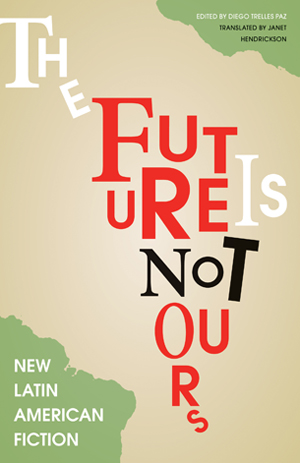
The Future Is Not Ours: New Latin American Fiction brings together twenty-three Latin American writers who were born between 1970 and 1980. The anthology offers an exciting overview of contemporarySpanish-language literature and introduces a generationof writers who came of age in the time of military dictatorships, witnessed the fall of theBerlin Wall, the end of the Cold War, the birth of the Internet, the murders of Ciudad Juárez,Mexico, and the September 11th attacks in New York City.The anthology features: Oliverio Coelho, Federico Falco, and Samanta Schweblin (Argentina);Giovanna Rivero (Bolivia); Santiago Nazarian (Brazil); Juan Gabriel Vásquez and AntonioUngar (Colombia); Ena Lucía Portela (Cuba); Lina Meruane, Andrea Jeftanovic, and AlejandroZambra (Chile); Ronald Flores (Guatemala); Tryno Maldonado and Antonio Ortuño (México);María del Carmen Pérez Cuadra (Nicaragua); Carlos Wynter Melo (Panama); Daniel Alarcónand Santiago Roncagliolo (Peru); Yolanda Arroyo Pizarro (Puerto Rico); Ariadna Vásquez (DominicanRepublic); Ignacio Alcuri and Inés Bortagaray (Uruguay); and Slavko Zupcic (Venezuela).

Mexican Drug War Issues from Words Without Borders Update

I’ve been following the progress of the Words Without Borders fund drive on their Mexican Drug War Issue. They released some information about some of the stories. Although, given their current funding to goal ratio I’m not sure they are going to make it.

Hi Everyone,

Just got word from our editorial team that some of the translations for the Mexican Drug War Issue have come in so I’m able to tell you a bit more about what’s in the issue. Work featured will include extracts from Magali Tercero’s reporting on living under “drugtatorship”, “Notes on the Violence in Sinaloa, Mexico,” Rafael Perez Gay’s short story “Road to Juarez,”  in which a man’s senile father claims to have been an undercover federal agent infiltrating a drug cartel, Fabrizio Mejia Madrid’s nonfiction piece, “The Mystery of the Parakeet, the Rooster, and the Goat,”  based on  statements made by drug lord Ricardo ”El Valde” Valderrama, and Luis Felipe Fabre’s poem “Notes on a Theme of a Zombie Cataclysm.” Guest editor Carmen Boullosa is interviewed on how the drug war has impacted writers directly and also contributes a poem mourning all that Mexico has lost. Translations still to come include Hector de Mauleon, Yuri Herrera, Rafael Lemus, and Juan Villoro.

There’s only 20 days left. Please help us spread the word.

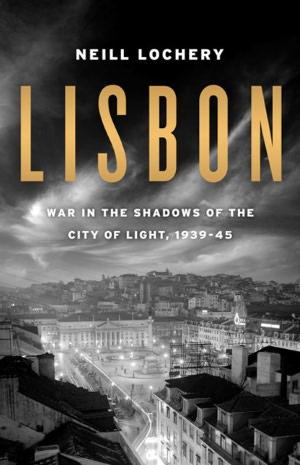
Lisbon: War in the Shadows of the City of Light, 1939-1941 – A Review

Lisbon: War in the Shadows of the City of Light, 1939-1941
Neill Lochery
Public Affairs, 2011, 306 pg

Lisbon: War in the Shadows of the City of Light will tell you just about everything you will ever need to know about Lisbon and Portugal during World War II. Perhaps, too much depending on you interests. Neill Lochery not only writes about the Salazar government at war, but about the intrigues and, in many ways, the gossip of those who passed through the city. The book is best at laying out Salazar’s plan to stay neutral and how he was able to play the two sides off of each other. As a man without any other goals than staying in power and making Portugal modern, he was able to sell tungsten to Germany without the least scruples in taking German gold (some of which the Bank of Portugal is said to have, Richsbank stamp and all). And with the allies, especially Britain which Portugal had long had alliances, he also sold materials for gold. As long as one side seemed more powerful than the other, he attempted to favor them more, short of joining the war. During the early years of the war he was quite welcoming to Germany, but he didn’t want to join the war, nor did he want Spain to invade. Spain had made several different plans to invade during the war, but Salazar was able to avoid it. He was always cautious, and even in 43 when Germany didn’t look as strong as it had, he delayed granting access to the Azores to the Allies.It is in the context of the scheming man that Lochery notes that any good that came out of Portugal’s neutrality during the war came about because it suited Salazar or he had no control over it. The Jewish refuges are a case and point. While Salazar didn’t kick Jews out of Portugal, he also didn’t want to grant them entry visas. It was his diplomatic officials early in the war who disobeyed orders and were able to allow Jews to escape through Lisbon.

Lisbon itself was a reflection of Salazar. It was full of spies, refugees, and people taking advantage of the situation. With all the refugees and the limited transportation options out of the country many were stranded there and had to do what ever it took to get out. For the rich such as the Gugenhiems, the Duke and Duchess of Windsor, and Hollywood stars like Leslie Howard they stayed in the best hotels and lived a life that had nothing to do with the deprivations of the war. It is here, in the more biographical sections, that the book suffers a bit. Not that it is badly written, it just isn’t that interesting to me. Especially, the part about the Duke and Duchess of Windsor. At least I know now how self-absorbed he was but other than that I don’t really care. There are definitely some sections one can skip over.

It is an interesting book, but for me only half of the book was interesting. But if you are interested in the history of Portugal during the war you can’t go wrong with this book.

The Guardian Reviews Purgatory by Tomás Eloy Martínez

Tomás Eloy Martínez’s last book Purgatory  has been published. “It sounds like another good book. The Guardian has the review:

A superb political reporter, Martínez perfected in his novels the blending of strict journalistic fact with the devices of fiction. He said that he had learned the craft when, in the late 60s, the exiled dictator Juan Domingo Perón summoned him to his Spanish estate to help him write his memoirs which, as the young journalist quickly realised, were largely fictitious. The result of the experience, published in the mid-80s, was The Perón Novel. It was followed a decade later by his masterpiece, Santa Evita, which García Márquez, usually reticent in his praise, said was “the novel I’ve always wanted to read”. The posthumous publication of Purgatory shows a writer at the height of his craft, and is a fitting conclusion to the work of one of Latin America’s most remarkable novelists.