
Hacerse el muerto (Playing Dead) by Andrés Neuman – A Review

Hacerse el muerto
Andrés Neuman
Páginas de Espuma, 2011, pg 138

Andrés Neuman, one of the 20 selected by Granta last year, is one of the best of the group of the writers and Hacerse el muerto (Playing Dead) a collection of 30 stories is ample proof of that. Although little of his work has been translated into English yet, two of the stories from this collection are in the Granta volume with slightly different titles: Madre atras (Mother Behind) and El infierno del Sor Juna (Sor Juna’s Hell). What makes his short stories so good is devotion to the short story form as a means to explore different narrative ideas. He has no one style of writing the stories and some range from the heart felt descriptions of the loss of his mother to the fabulistic Sor Juna’s Hell to meta fiction that is consumed with the role of story. It should not be surprising that he has such interest as he has already published 3 other books of short stories and has edited one collection of Short Stories from Spain. That devotion even extends to the inclusion of 20 aphorisms on the art of writing short stories, of which many are koan-like and offer not only a guide to the writer, but a guide to Neuman’s art.

Hacerse el muerto is structured around the theme of death in all its forms, whether real or not, and is broken into six five story sections are thematically and stylistically linked. It is an approach that allows him to experiment with many different forms and modes of story telling. The book opens with El fusilado (The Firing Squad) a story of a man who is kneeling before a firing squad. Neuman describes the fear and terror in linguistic terms, taking apart the logic behind the words. But in that final moment when the order to fire is to be given, the true nature of the firing squad is given: it is a joke. The firing squad marches off laughing, calling him faggot. He is alive, but he is also dead, all his energy spent waiting in fear, he can do nothing more than lay in the mud like a dead man. In Un suicida resueño (A Reverberating Suicide) the narrator explains how he tries to kill himself but every time he tries to pull the trigger he breaks out laughing and is forced to drop the gun. The best he can do is wait and see if that laughter will go away, a sub conscious laughter that makes fun of the narrator’s seriousness and gives him something to live for, even if its to try again.

The above stories are well written and have great turns, but the stories that make up Una silla para alguien (A Seat for Someone) and the story Estar descalzo (To Be Shoeless) are the most arresting. All of them focus on the loss of a parent, mother in the former, father in the latter. He captures a sense of loss that is tied to the absences objects remind us of. In Estar descalzo the narrator is given his father’s shoes in the hospital and it is his relationship to the shoes that is the means for overcoming loss. Or in Madre atras (Mother Behind)  he gives a sponge bath to her back and uses the sponge to write what he has wanted to write since they had entered the hospital. Each of stories (often you might call them prose poems) are a meditation of loss that are subtle and not interested in the immediate feelings of grief, but a reflection years later of what it meant. Perhaps the best example is the very short Ambigüedad de las paradojas (The Ambiguity of the Paradoxes), which captures not only how beauty and loss go together, but how Neuman approaches those ideas, always leaving the story open.

Enterramos a mi madre un sábado al mediodía. Hacía un sol espléndido.

We buried my mother one Saturday at mid day. There was a splended sun.

Neuman also likes to experiment. In the section titled, Breve alegato contra el naturalismo (A Brief Argument Against Naturalism) he constructs five meta stories that either are interested in how one writes, or tries to break out of the naturalistic tendency in fiction. The most successful example is Policial cubista (Cubist Police Officer) which describes a murder scene in terms of a cubist. If you use Nude Descending a Staircase as an example the story makes perfect sense. In each case, it isn’t just one image, but multiple images as if you were seeing several photos at once. So in Neuman’s story you see the body, but you also see the person fleeing the scene. In a compact 200 words or so, he describes the arc of the encounter that led to the murder. It is a clever story that is as economical as a story could be and a great reuse of cubism.

Reading the stories of Andrés Neuman it is obvious that he is a great story teller, especially of the micro-relato (less than 1500 words). His stories are notable for their economy and the way he can pull the surprising conclusions together at the very last minute in ways that are both satisfying and leave the world of the story open, leaving one wanting to return to what passed by so quickly. That is the mark of a good writer.

To finish I’ll leave you with a couple of my favorite quotes from his ideas about writing short stories. These are not rules, as he points out, but ideas that are still evolving.

Mucho más urgente que noquear a lector es despertarlo.

It is much more important to wake the reader up than knock them out.

El cuento no tiene esencia, apenas constumbres.

A story does not have an inherent nature, it scarcely has customs.
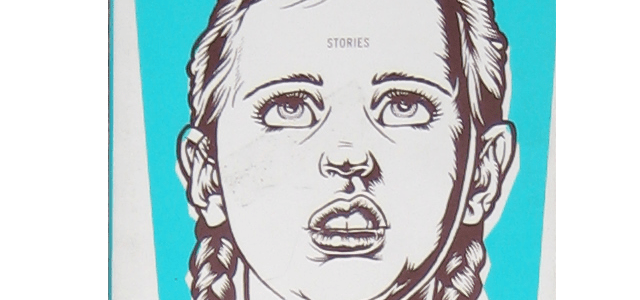
The Girl on the Firdge by Etgar Keret – A Review

The Girl on the Fridge
Etgar Keret
Farrar, Straus and Grioux 2008, pg 171

Etgar Keret’s work is often marked by a sense that one is in a slightly different reality. It isn’t surrealism, just a place where you might be able to buy for 9.99 the meaning of life. In the stories of Keret that purchase never really works out as one would want, and usually the charters don’t so much as regret their decisions as abandon them as just yet another of life’s let downs.  The stories in The Girl on the Fridge aren’t quite as fantastic (see my review of The Bus Driver Who Wanted to be God), but there is still that sense that what one wants doesn’t always work out. Keret’s stories are very short and he has the ability to zero in on those moments with great precision, stripping away everything except those small moments of disappointment.

In The Real Winner of the Preliminary Games, a group of men get together every few weeks to talk and drink. They have a ritual to it and the evenings allow them to not so much find answers to their problems, but find that they are not so bad.  Towards the end one of the men says he’s feed up and is going to commit suicide. His friend, Eitan, talks him out of it. But Eitan, in a moment that has that feeling of melancholy that is just below the surface of many Keret stories takes out his M 16.

“If I want to, I can shoot,” he said out loud. He ordered his brain to pull the trigger. His finger obeyed, but stopped halfway. He could do it, he wasn’t scared. He just had to make sure he wanted to. He thought about it for a few seconds. Maybe in the general scheme of things he couldn’t find any meaning to life, but on a smaller scale it was okay. Not always, but a lot of the time. He wanted to live, he really did. That’s all there was to it. Eitan gve his finger another order to make sure he wasn’t kidding himself. It still seemed prepared to do whatever he wanted. He put the gun on half cock and pushed the safety back in. If not for those four beers, he’d never even have tried it. He would have made up an excuse, said it was just a dumb test, that it didn’t mean anything. But like Uzi said, that was the whole point. He put the gun back in the drawer and went into the bathroom to puke. then he washed his face and soaked his head in the sink. Before drying himself, he took a look in the mirror. A skinny guy, we hair, a little pale, like that runner on TV. He wasn’t jumping or yelling or anything, but he’d never felt this good.

Eitan puts the gun away because that is what one does. He then feels a rush. Is it from the test or the rush that comes after throwing up? Whatever it is, it isn’t the answer to anything, just the relief from melancholic doubt. Tomorrow it may return and when the men return to the bar they’ll talk each other into living again because that’s what one does.

In one of his more fantastical ones, Freeze, a man gains the power to make the world freeze. When the world freezes he takes the opportunity to have sex with the best looking women (rape is what he is actually doing although the character would never admit it). At first it works out great for him, but eventually some one tells him that is not good because the women aren’t asking for it. So he then begins a series of experiments, telling the women why they are in their frozen state to scream during sex. Nothing satisfies him until he realizes all he has to do is tell the woman to love him for himself. Of course that works and the woman loves him. All through the story, though, you have a man getting what he wants only to find it is what he wants and in relationships is isn’t just the one person that matters. He is satisfied, but there is always the lingering doubt that what the relationship, any relationship is built on are demands that only one wants. That he can command someone to love him for himself is in of it self contradictory and at the same time a parody of what should be a operating principle for couples. It is a disturbing story that leaves one wondering what loving one for oneself really means.

Keret often uses the perception of children to expose the strangeness of the adult world. In Moral Something, a man is sentenced to hang and the kids who have seen the sentencing on TV try to understand what happens we someone is hung. Since the adults are trying to protect them from the information and the kids only have roumor they have to experiment. They hang a stray cat, but of course it settles nothing because they don’t know if they have done it right. The boys argue over it and when the prettiest girl in school walks by she tells them they are all animals. Keret in that little scene is able to create what the adult world looks like without the veneer of rules, laws, and moral codes. The kids, too, are on that ever present search for the answers that never exist. They don’t know yet, as Eitan in The Real Winner, that there are only approximations, things you settle on because they work even if they aren’t what everyone else is doing.

There are dozens of brief little encounters such as these that show Keret as a master of the form. His vision of a world that never quite operates with the same rules as ours does makes him one of the most interesting short story writers around. While The Bus Driver Who Wanted to Be God is a little more fantastical and, therefore, more interesting, The Girl on the Fridge is still a welcome addition to his body of work.

Interview with Antonio Muñoz Molina About His Short Story Collection At Canal-L

Canal-L has an interview of Antonio Muñoz Molina talking about his new book of short stories, Nada del otro mundo (Nothing exceptional). He talks about what he likes in short stories, why he thinks the fantastic only works in short stories, and how to be a Spanish speaker in the US is to be an internationalist.

Libro de mal amor by Fernando Iwasaki – Reviewed at La Jornada

La Jornada has a review of the Mexican republication of the Libro de mal amor by Fernando Iwasaki. The book was originally published in Spain, where Iwasaki lives, in 2001. Iwasaki can be quite funny and I have read one of his more recent books, España, aparte de mi, estes premios. This book sounds funny and interesting.

Fernando Iwasaki (Lima, 1961) es un autor que no goza de la fama que merece. Tal vez porque siempre ha escrito lo que le ha venido en gana sin afán de satisfacer a los lectores. Él mismo nos dice que “no cree en la escritura como texto de representación, sino como texto de presentación”.

[…]

Primero: cada una de las diez veces Fernando se enamoró de la mujer más bella del mundo. ¿Hay forma de que no sea así? Enamoradizo a más no poder, el personaje y narrador siempre supo entregarse por completo. Para ello requería ser seducido por una mujer que valiera la pena. Cada una de ellas lo valía por completo. ¿Se puede amar de otra forma? Parece ser que no.

[…]

La lista continúa. Pero la suma de las virtudes de este libro sólo sirve para evidenciar algo: reírse de uno mismo sirve para hacer literatura, para desmitificar el amor y para, en una de ésas, lograr presentarlo como sólo las palabras lo pueden hacer.

La vida ausente (The Absent Life) by Ángel Zapata – A Brief Review

La vida ausente
Ángel Zapata
Paginas de Espuma, 2006, pg 98

Again, I can’t say too much about the book, as it is the last of the four I’m reading for an article on Spanish short story writers. That said, this is one crazy book, filled with surrealistic stories that veer from one contrasting image to another and leaves you on first read wondering what just happened. In one story for example, there are fish headed people, dancing corkscrews and tops, flying egg plants, and great belly button in the sky that every one mistakes as God. If my favorite passage in the book, the belly button appears in the sky and the people say, it’s God. Instead, God drives up in his Porsche and says, that’s not God, word. And the people say, the word of God. At times his story takes on the touch of Fellini, at others it is a touching sentimental piece with father and son that twists strangely. Interspersed between are little fragments of juxtapositions that read like something out of Tender Buttons. And yet, the first 30 pages are the most nostalgic piece about late 70s early 80s Madrid I have ever read. La vida ausente is an intreging book.  I can’t wait to read the interview with him at El sindrome Chejov to see what he has to say about this work.  I can’t wait to write more about him for the article. It should be a lot of fun.

Andrés Neuman Narrates Short Films Based on His Latest Book of Short Stories

Andrés Neuman’s publisher Paginas de Espuma has put together two readings of stories from his new collection of short stories. In each of these he narrates the stories. The first is a bit more produced, but both are interesting.

Parpadeos (The Blink of an Eye) by Eloy Tizón – A Brief Review

Parpadeos (The Blink of an Eye)
Eloy Tizón
Editorial Anagrama, 2006, 141 pg

This is the third book that will be featured in an upcoming article about the Spanish Short story in Spain. Papadeos is a little bit more hit and miss than the works of Cristina Fernandez Cubas or Hipolito G. Navarro, but it definitely had some stories of note. Most of them either concentrated on re-imaginings of the everyday or re imaginings of famous tales. He is  a little more successful with the former, but the latter are more obvious. In one he describes Spock from Star Trek as bi-sexual loner who finds himself imprisoned because he accidentally sees the captain’s naked butt. In the prison planet he only finds peace when he falls in love with an alien. The story is quite the opposite of an Spock that appeared in movies or TV, but that isn’t the point. In another he explains the lives of Heidi and friends after they have grown up. All of the reworkings point back to the desire to describe the common place in new ways, and to catch the fleeting that goes by in the blink of an eye.

Andrés Neuman Interviewed in La Vanguardia

Andrés Neuman was interviewed in La Vanguardia this week. It is one of the more interesting interviews I’ve seen about his new book and asks some good questions about how he sees himself as a short story writer.

Pese a su sempiterno aspecto de estudiante de facultad de Humanidades, Andrés Neuman (Buenos Aires, 1977) es uno de los grandes de la literatura española. Presente en todas las listas que escogen a los mejores narradores menores de 40 años (Bogotá 39, Granta), ganador del premio de la crítica 2010 por su novela El viajero del siglo, ha demostrado que se atreve con todos los géneros y formatos (novelas largas y cortas, cuentos y microcuentos, poesía y ensayo, traducciones y blogs), como si fuera un decatleta de la literatura aunque él prefiere calificarse, simplemente, de “culo inquieto, porque para atleta me faltan músculos”. Residente en Granada, hijo de una violinista y un oboísta, el incansable Neuman, tan argentino como español, ofrece ahora Hacerse el muerto (Páginas de Espuma), en apariencia un inofensivo libro de relatos.

La estructura temática (y formal) hace pensar en una idea previa de libro unitario. ¿Es así?
Me gustan los libros con un concepto de fondo, siempre que ese concepto sea el fruto de una búsqueda, y no de un propósito inicial. Pienso que improvisando, si hay suerte, puede llegarse a una idea. Cumpliendo un plan se llega, como mucho, a un prejuicio.

Aborda usted la muerte empezando por una broma macabra y acabando por algo que pocos se atreven a hacer: pedir perdón a sus enemigos.
Los primeros textos proponen distintas aproximaciones a la muerte: históricas, oníricas, humorísticas, familiares…. Como un catálogo de preguntas acerca de nuestra desaparición. Es curioso que tengamos tantas dudas ante nuestra única certeza. El personaje de un cuento ha perdido a su pareja y piensa: si ya no tengo amor, ¿de qué me sirve el odio? Pero sus buenas intenciones se tuercen.

Aunque parezca mentira, El fusilado está basado en un hecho real, ¿no?
Un hecho real con forma de pesadilla. El protagonista recuerda a Daniel Moyano, narrador argentino, que sufrió un simulacro de fusilamiento, tortura muy del gusto de la dictadura patria y también de la guerra civil española. Más allá de la denuncia obvia de aquella atrocidad, lo que a mí me interesaba era preguntarme: ¿en qué estado queda alguien que creyó parpadear por última vez y sigue viviendo? ¿Qué clase de conciencia póstuma le queda?

And for a bonus El Pais has another review of the book.

Short Stories from Andrés Neuman, Ángel Zapata and José María Merino

The magazine Cuentos para el andén (Stories for the bus stop) just released its first issue. In it are stories from Andrés Neuman’ newest book, Ángel Zapata and José María Merino. It looks like a nice idea to have a couple brief stories come out every month. I don’t think any of the stories are more than 4000 words, which is perfect for the bus stop. Also included is a short story from José María Merino who is a graduate of a writing program. I’m quite cruious to see what the story is like given the criticism that is often leveled at writing programs in the US.

Read the magazine (pdf).

(via)

New Collection of Stories from Dagoberto Gilb reviewed in the LA Times

I can remember liking some of his other story collections and the recent story I read in the New Yorker recently. As such the review in the LA Times makes me a little less interested in his work. Since I’ve been spending so much time of late thinking about short stories, his sound like so many well told stories that fit convention, but go no father. I’m not sure everyone ca break convention, but the conventional can get a little tedious from time to time.

From the review:

“Before the End, After the Beginning” is a collection of stories written mostly after the stroke, and it serves as a reckoning. The first, “please, thank you,” is a gateway into the new status quo: Written from the point of view of Mr. Sanchez, a recent stroke victim, we see a tough guy in a diminished state. He’s obstinate, funny, slowly improving, but he’s lost the use of one hand; the story has no capital letters because he cannot reach the shift key. This also happened to Gilb himself, but autobiographical details don’t say much about how these stories work. They work well.

Gilb, who was raised in Los Angeles and now makes his home in Texas, is known for writing stories of men and masculinity. This book continues that tradition — almost all of these stories are told from the point of view of boys or men — while moving that tradition into a place of transition. Over and over, the characters are in-between. We see Mr. Sanchez only from the time he wakes up from the stroke to when he checks out of the hospital.

[…]

A couple of stories are compact exercises in character and voice, a few intense pages of joy that begin on L.A.’s freeways, or a story in which misfortune is seen third-hand. But even with these and the first story’s lack of capitalization, Gilb is not pushing stylistic boundaries. He’s simply telling good stories: of men who are both Mexican and American, who are cultured and uncouth, who look at wealth from the outside and, occasionally, from within. A student may make something of himself; a poor young father might fall through the cracks; an older man might discover something new. They are formed by forces outside themselves, but they are not finished yet.

Con Agatha en Estambul by Cristina Fernandez Cubas – A Brief Review

This is yet another of her collections of stories I am reading for an article on the Spanish short story. While all of her stories have an element of the mysterious in them, Con Agatha en Estambul (With Agatha in Estambul) seems to have less and less of it. It almost becomes a device, especially in a story like Con Agatha en Estambul where the suggestion that the ghost of Agatha Christie is giving clues to the narrator about her relationship is so small, you could remove the it. Or in the story El Lugar (The Place) a husband narrates his encounters with his dead wife in his dreams. Are these real encounters or just dreams? Since it is Cubas you are disposed to think of them as real. But either way the story, much like Con Agatha, is really about women becoming who there are supposed to be. And it is in the rich stew of mystery do the characters find what the image of themselves they are trying to construct. It is an apt metaphor for creation of the self. It is that interest that makes her work so intriguing.


New Book of Short Stories from Antonio Muñoz Molina

Antonio Muñoz Molina has published a new book of short stories in Spain called Nada del otro mundo. I don’t know much about them other than he has written them over the last 13 years, one is unpublished, and he enjoys reading Cheever and Updike so I gather they are in that vein. (It is a truism that short story writers in Spain come from two traditions: Cortazar and Borges, or Carver, Cheever, and the other Americans). Considering the size of his books, I’m actually curious how he handles the short form. It must be difficult to be judicious when you are normally free to write 400-900 pages.

“El cuento es una máquina que tú ves. Es como la maqueta de un edificio racionalista. Se ve todo el proceso de la construcción narrativa, pero de una manera sintética”. Para Muñoz Molina, el cuento (tocado de más misterios y fantasías que la novela) se rige por el mismo pulso que la poesía y eso lo convierte en impredecible. “Siempre recuerdo el momento, o el proceso, en el que surgió cada uno de ellos, como el último, que llegó repentinamente, por equivocación, en una noche de insomnio. Yo había empezado a escribir otro pero se hacía cada vez más y más largo. Tuve que dejarlo. Hasta que una noche surgió El miedo de los niños, lleno de ciertas sensaciones de la infancia, de pequeños detalles”. Una fuerza emocional que, según el escritor, empuja a los grandes relatos que él admira, como El nadador, de Cheever, o Un día perfecto para el pez plátano, de Salinger: “En los grandes cuentos parece que no pasa nada pero siempre pasa algo decisivo”.

El angulo de horror (Angle of Horror) by Cristina Fernandez Cubas – a Brief Review

I write about Cristina Fernandez Cubas as often as I can because I find her short stories so interesting and also illusive. I can’t say much because the book is for part of an article on Spanish short story writers, but again she knows how to mix the fantastic with the real. My favorite story of the bunch, though, had nothing about the fantastic and was just a great and funny piece on the failed relationship between a father and daughter. The more I read her stories, the more it is a shame she is not available in English.

Short Stories from Francisco Antonio Carrasco and Ana María Shua

You can read a couple of very short stories from Francisco Antonio Carrasco over at El sindrome Chejov. I’m not convinced this is an interesting collection especially after the first story.

Francisco Antonio Carrasco sobre Taxidermia:

Taxidermia es una colección de veintiún cuentos actuales de corte realista en los que la fantasía acaba muchas veces imponiéndose a la propia realidad, en los que la obsesión triunfa generalmente sobre la cordura; veintiún cuentos de desconcierto y desajuste ante la vida, de impotencia ante un mundo que no podemos controlar. En fin: una metáfora de la incomunicación humana. Y es que, en el fondo, todos necesitamos un taxidermista para naturalizar la vida a nuestro antojo.
An La nave de los locos has another short one from Ana María Shua (A book of hers is in English so if you can’t read this you can still check out her work).

El fusilado by Andrés Neuman – Short Story and Book Trailer

The book trailer/short story for Andrés Neuman’s collection of stories Hacerse muerto is available. In it one of his stories from the book, El fsilado is read and not so much dramatized as expressed. (via)

Los últimos percances (the Latest Misfortunes) by Hipólito G Navarro – a Brief Review

I just finished the Los últimos percances (the Latest Misfortunes) by Hipólito G Navarro, which marks the last of the three books with in the short story collection by the same name. Written in 2005, it is his last collection of new work, although El pez volador, a selection of the stories from this book, came out a year or two ago. I can’t say much about the book as I am writing an article about his stories, but I can say this continues his experimental approach to short stories that I’ve been commenting on for the last few months. I think El aburrimeiento Lester (The Boredom, Lester) is my favorite volume in the collection, but this certainly has some funny and inventive stories such as 27/45 and La cabeza nevada (the snowy head). One thing I did notice is that his stories have gotten shorter and more dense. While Los tirgres albinos had a section of micro-stories (micro relatos in Spanish), in los ultimos, it was more pronounced. It has been a great pleasure to read all these stories and I’m still thinking of ways to sum them up, besides the sloppy “experimental”, which is only so useful.

New Andrés Neuman Book Coming October 2011 from Paginas de Espuma

Andrés Neuman, one of the Granta youngsters and one of the few short story writers in the collection, has a new book of short stories coming out in October 2011 from Paginas de Espuma. I can’t say I know much about it, but I did find his stories interesting in the Granta book.

From the publisher:

Una silla esperando a alguien que no llega. Un zapato con memoria. Una madre que corre en sueños. Una pareja enamorada de lo que no hace. Un psiquiatra atendido por su paciente. Una moneda volando en un hospital. Una mujer que se excita con Platón. Dos ensayistas en el baño. Un político perseguido por revolucionarios invisibles. Un asesino cubista. Un mundo donde los libros se borran. Un fusilado que piensa. Monólogos. Mirones. Todo esto, y más, vive en Hacerse el muerto.

En estos nuevos cuentos, Neuman explora el registro tragicómico hasta las últimas consecuencias, desplazándose de lo conmovedor a lo absurdo, del dolor de la muerte al más agudo sentido del humor. Breves piezas que buscan, simultáneamente, la emoción y la experimentación. Un trabajo atrevido con el estilo, la voz y la temporalidad. Una impactante serie de reflexiones sobre la pérdida como manera lúcida de intensificar la vida, de interpretar nuestra asombrada fugacidad.

And the supper short book trailer:

Short Story from Hipólito G. Navarro at La nave de los locos

The fine literary blog La nave de los locos has an unpublished short story from Hipólito G. Navarro a writer whose work I like. Although, I wouldn’t call this a story so much as a meditation or a reflection. That is often the case with very short stories. They aren’t so much a story with some action then a resolution, but a reflection what might have happened.

The first paragraph:

BALANCE

A un tigre, así sea albino, nunca le da por contar sus rayas. Tener algunas de más o de menos sobre la piel es asunto que le trae bastante al fresco….

Tin House 49 – Cesar Aira Interview and Excerpt, Ben Okri, Kelly Link, and Oliver Broudy – A Review

Tin House issue 49, The Ecstatic, arrived last week and in a fit of diligent reading I finished it off in a week’s time, I’m rather pleased with this. Anyway, the issue, as always, had some high points and some forgettable pieces. What I was most exited with was Scott Eposito’s interview with Cesar Aira which was quite good (unfortunately it is not available on-line). Scott is a good reader and had some great questions to for Aira. Most interesting is his way of working which is a revisionless writing that only continues until he is uninterested or his idea is exhausted. (He does spend a day or so per page, so it isn’t exactly revisionless writing). The review and the excerpt did make me want to read his work. The excerpt which will be out in 2012 was interesting, more than most excerpts, is about a Panamanian government official who writes a master piece by accident. It has potential and I am interested in knowing where he is going with it. The only thing that annoyed me was that tedious statement that says the only way you can enjoy something is in the original language. Not true and rather limiting. I wish writers would stop with this kind of nonsense. There are limits, but there is no other way for most of us to read the world.

The interview with Ben Okri was interesting, if a little too much about NY. It is on-line but you’ll have to a little diffing to find it. The short story from Kelly Link called the Summer People was very good. A mix of the fantastic and the surreal about a young woman who is the care taker for the mysterious inhabitants of an old house. They are never seen, but communicate telepathically giving her their wishes. Anytime she does something they reward her with fantastically create objects, often wind up toys of undescrible complexity. But they are a strange people who though never seen are described in terms of queens and workers, as if they were a form of bee. Link was able to build a fascinating and complex world that has no explanation and though cannot exist, seems like it just could. My only criticism is it was filled with southernisms and while I’m not against them it seems as if they were more stereotypical than real. I haven’t been to the south in years, so I don’t know if they are real, but they felt a little forced.

Finally, Oliver Broudy’s non-fiction piece about a kung fu master who is running a school to train the next masters of white crane style was great. As someone who grew up on kung fu, to read about a man who has gathered a handful of students in a ten year course of study, living a monkish lifestyle of training and asceticism was fascinating. He told the story, in part, from the perspective of a poor young American who seemed the most unlikely to finish the training. The conflict between the easy American life, even in a run down part of Pennsylvania that has no future, and the hard work of kung fu is an almost insurmountable tension. In many ways, it is evocative of problems facing the nation.