Blogs & Websites Covering the Spanish Book Markets

Publishing Perspectives has and article about the list of literary sites and blogs the Spanish ministry of culture has published. It is a little lacking in  some areas, but it keep any one busy for some time.

Recently, the Ministry of Culture of Spain, through its Observatory (Observatorio del libro y la lectura), compiled a list of websites and blogs of note on books and the book industry. If you’d like to keep yourself informed on a daily basis but don’t speak Spanish, it’s worth using Google Translate to give yourself a flavor of what’s going on.

This is the short list, but you can check the long list too.

Short Story by Etgar Keret at Tin House

Tin House has a short story form Etgar Keret.

Every night, after she had finally left him, he’d fall asleep in a different spot: on the sofa, in an armchair in the living room, on the mat on the balcony like some homeless bum. Every morning, he made a point of going out for breakfast. Even prisoners get a daily walk in the yard, don’t they? At the café they always gave him a table set for two, and sat him across from an empty chair. Always. Even when the waiter specifically asked him whether he was alone. Other people would be sitting there in twos or threes, laughing or tasting each other’s food, or fighting over the bill, while Avichai sat by himself eating his Healthy Start—orange juice, muesli with honey, decaf double espresso with warm low-fat milk on the side. Of course it would have been nicer if someone had sat down across from him and laughed with him, if there had been someone to argue with over the bill and he’d have to struggle, to hand the money to the waitress saying, “Don’t take it from him! Mickey, stop. Just stop! This one’s on me.” But he didn’t really have anyone to do that with, and breakfast alone was ten times better than staying home.

Celebrating the 100th Birthday of Mexican Novelist Josefina Vicens

La Jornada has a piece on the Mexican writer Josefina Vicens on the occasion of her 100th birthday. She only wrote two novels and one short story, but her work was highly regarded by people such as Octavio Paz. She sounds interesting (and I like a little bit of obscurity). Her last book has been translated into English: False Years (Discoveries).

Desde la publicación de El libro vacío, la crítica la miró con beneplácito; en la segunda edición, la obra se publicó con una carta-prólogo de Octavio Paz, quien califica la obra de Vicens como una “verdadera novela”, que habla sobre la nada con un lenguaje “vivo y tierno”. Para Paz, la primera novela de Vicens destaca por la presentación del “hombre caminando siempre al borde del vacío, a la orilla de la gran boca de la insignificancia”. Con esta obra, se muestran las inquietudes autorales por el tema de la creación literaria, el conflicto de la “página en blanco” y la condición individualista del artista al que le angustia no tener nada que decir y que piensa en la primera frase para iniciar una novela.

Por su parte, Los años falsos plantea el tema del patriarcado mexicano, pues en la obra el hijo varón se convierte, a la muerte de su padre, del mismo nombre, en el proveedor económico y en el encargado de proporcionar el tradicional “respecto de varón” a su madre y hermanas. Se trata de una metamorfosis de hijo a padre, así como de un rito de asignación, pues el patriarca ausente le hereda no sólo la carga familiar, sino el trabajo, el grupo de amigos y, de forma extrema, la concubina. Aunque la mirada narrativa pone énfasis en las relaciones entre los géneros, en la obra destacan las alusiones a la política mexicana emergida de la postrevolución; a esa nueva época en la que la corrupción, la mentira y las influencias son privilegios de unos cuantos.

‘Three Messages’: Mexican stories of the fantastic – Reviewed in the Seattle Times

The Seattle Times has a a review of a new collection of Mexican short stories. I’m not sure I would seek it out or not since it sounds like genres I don’t read much, but since so little in the way of short stories makes it into English, it might be worth reading. I found the references to magical realism annoying. On the other hand that most of the stories have been written in the last 10 years is exciting. Too many anthologies seem to be the greatest hits of the greatest writers and don’t have anything new to say.

This anthology contains 34 stories; all but one of them were originally published after 2000, and most in the past two years. All were written by Mexican-born authors. All are short, and some are extremely short, lasting no more than three or four pages. They range in tone from delirious to grim, and exhibit various attitudes toward the marvelous intrusions into the mundane which they recount: embarrassed and regretful, slyly ambiguous, reluctantly accepting, prosaic. They occupy the memory stubbornly, insisting on their own eccentric logics, powered by the writers’ dark or shining visions, steered via authorial voices that can be disarmingly direct, cuttingly ornate, or deceptively quiet.

Borges’ Manual de zoología fantástica Reviewed at La Jornada

La Jornada has an all too brief review of a Borges curiosity, Manual de zoología fantástica (The Manual of the Fantastical Zoology). It is a mix of his writings about famous characters like the phoenix and those of his own invention. It sounds like an interesting mix.

El jardín zoológico borgiano es una recopilación extensa, variopinta, si bien ágil, de criaturas mitológicas y literarias que van desde centauros, arpías, ictiocentauros o centauros-tritones, unicornios o nagas, por mencionar a los más ampliamente difundidos que se presentan como auténticas especies fantásticas compuestas de numerosos individuos o bien seres únicos e irrepetibles, como Pegaso, Escila, Garuda, el Fénix, el Ave Rock, el Behemoth, el Cancerbero, el Kraken, al lado de entidades tan escurridizas y sutiles como los seres térmicos, crocotas y leucocrocotas, animales de los espejos, animales metafísicos o animales esféricos. Varias de las criaturas soñadas por Kafka asoman sus confusas y tímidas cabezas en estas páginas, así como las cantadas por otros grandes literatos como C. S. Lewis, Plinio, Dante, Ariosto, fray Luis de León y algunos poetas y sabios indios, chinos y musulmanes. Un verdadero deleite deparan al lector estas descripciones, amenizadas con el inimitable estilo de Borges, cazador de aporías, laberintos e hipálages, ilustrados con citas de grandes autores que, cuando no se ofrecen en el original castellano, que es en contados casos, se proponen en traducciones escogidas, selectas, salidas no pocas veces de la pluma del mismísimo Jorge Luis Borges (1899-1986), el hombre de letras más brillante que produjo el siglo XX hispanoamericano y quizá hispánico en su conjunto.

Words Without Borders 2012 Graphic Novel Edition Out Now

The new Words Without Borders graphic novel edition is out now.

by Mazen Kerbaj

Letter to the Mother

Image description

Because of you I fancied killing a hundred times.

Translated by Mazen Kerbaj and Ahmad Gharbieh


by Nawel Louerrad

Demonsterate

Image description

I’ve been wearing this tutu since I was a kid.

Translated by Canan Marasligil


by Héctor G. Oesterheld and Francisco Solano López

from “The Eternonaut,” Part II

Image description

There are other survivors!

Translated by Erica Mena


by Li Kunwu and Philippe Ôtié

A Great Step Forward: Memoir of the Famine

Image description

Even the roaches in the village are dying of hunger.

Translated by Edward Gauvin


by Jérôme Ruillier

from “Les Mohameds”

Image description

I loved Renault like you’d love a mistress.

Translated by Edward Gauvin


by Krysztof Gawronkiewicz

Romanticism

Image description

Our technology enables the resurrection of an incomplete body.

Translated by Antonia Lloyd-Jones

Javier Calvo Wins the Biblioteca Breve de novela Prize

Javier Calvo won the Biblioteca Breve de novela prize for his book El jardín colgante, a provocative take on Spain’s Transition to democacy.

Escribió El jardín colgante en 2011. “Un año indescriptible y extraño; vi cosas que nunca había visto antes, como la plaza de Catalunya llena de gente llamando a la revolución, un fugaz despertar de la consciencia; la magia negra del capitalismo, con agencias de calificación expulsando a políticos de sus cargos… y todo con la sensación de que no había futuro, de que todo se había acabado”. A partir de ahí, se preguntó cómo se había llegado a tal situación de catástrofe y llegó a la conclusión de que el inicio estaba en 1977, cuando España despertaba a la democracia. Él no vivió esos días, pero ha leído y se ha documentado, sin exceso —“porque el exceso de documentación perjudica a la novela”— y desde el presente, se plantea si “aquello fue un sueño o lo es ahora, si entonces era realidad y ahora no”.

Xingu and Other Stories by Edith Wharton – A Review

Xingu and Other Stories
Edith Wharton
Charles Scribner’s Sons, October 1916, 436 pg

Xingu and Other Stories is an uneven collection of stories from a writer in the midst of her most fertile work. The good stories show similar concerns of her more famous novels such as the house of Mirth. When she is examining the lives of couples or more commonly the lives of women she is a powerful writer that doesn’t write polemics, but creates heroines that self aware and willing to try to size what should be theirs. They may not get it, but they’ll try. Interspersed among those stories, though, are less than convincing ghost stories, atrocity stories from World War I, and tales of revenge. Nevertheless, Xingu has some gems in it.

The eponymous story Xingu  is a funny send up of conformity and phony intellectualism. A group of women get together regularly and invite a writer to talk to the group about their book. The writers quickly bore of the  morally bland middle class women and their pedantic questions. Nor are the women are capable of  having their own opinions about the works. They all seek a kind of respectable consensus on what each book means and it makes for a conservative and unimaginative group. One day when they are trying to entertain a pompous writer one of the members mentions begins to talk about a place called Xingu. Everyone at the lunch fakes knowledge of Xingu, but none of them have heard of it. As the story builds, they begin to get more and more extravagant in their claims. Finally, the woman who first mentions Xingu , turns the table on them all and tells them what Xingu means, deflating the pedantic women of the group. It is a funny story although the punch line is a little long. Wharton can occasionally draw a story out a little too far.

Autres Temps… is classic Wharton with its subtle and nuanced look at women in society. In the story, a woman returns to New York after her divorce, a scandalous idea in during the late 1800’s, forced her to flee to Europe and a new life. She returns because her daughter has just divorced, too, and is going to remarry and she wants to be there to help her, because she remembers what a disaster it was for her. When she arrives, though, her daughter reminds her everything is alright. No one seems upset, even the women of her generation, the women she was friends with at one time. She begins to think that her exile is over, but slowly her daughter begins to suggest, perhaps she is too tired to come to dinner with everyone. Maybe she should stay in her rooms. It is a brilliant moment, both in the coldness of her daughter who should have been grateful for her help, and the identification of that all too common trait where mores change for the young, but those of the older generation still remember the past sins. It doesn’t so much as mater what she did, just that she did something at some point and should return to her exile.

The Long Run is perhaps the most cutting of all the stories and reminiscent of The House of Mirth. It it, a single man and a married woman are friends and lovers. They have been friends for years and the desire between them is strong. One night she comes to him and says she can be his. She is ready to give everything up for him and will run away that very evening. Although he says he wants it and would love to leave the factory he owns and write again with as his muse, he won’t do it. He says it wouldn’t be good for her. He is not the free thinker he is, but now the respectable factory owner more concerned about what people will think about him. Yet he is aware of his situation:

…she had married that pompous stick Phillip Trant because she needed a home, and perhaps also because she wanted a little luxury. Queer how we sneer at women for wanting the thing that gives them half their attraction!

But she is too independent for this and refuses his half measures that are more interested in respectability than love. She also sees that the winner if they do things his way is him. She won’t have any power. She wisely says no in the best line of the book:

…one way of finding out whether a risk is worth taking is not to take it, and then to see what one becomes in the long run, and draw one’s inferences.

The novella The Bunner Sisters is a strange tale about drug addiction, or as the drug addict is called in the book, drug fiends. The drug in question is opium and though Wharton never shows anyone taking it, it is the axis of the story. Even in the opening pages of the book there is a sense of danger and squalor populated by drunks and it sets the tone for the book. Describing the neighboorhood the Bunner Sisters live in she says,

These three house fairly exemplified the general character of the street, which, as it stretched eastward, rapidly fell from shabbiness to squalor, with an increasing frequency of projecting sign-boards, and of swinging doors that softly shot or opened at the touch of red-nosed men and pale little girls with broken jugs.

In other words, saloons, the so called scourge of preprohibition America. The story is about two lonely sisters who have a small millinery shop. They live a solitary life until one buys the other a clock for her birthday. The man they bought it from has a little shop and both women hold out hopes of marring him, but it is the younger sister finally marries him. Unfortunately, he is an opium addict and the older sister worries constantly about what happened to her sister who went to St. Louis wither her husband. Finally, the sister returns and tells a tale of addiction, poverty, violence, that finally ends in a still born baby and death by tuberculosis. It is a frightful tale of what can happen when you have no one and you are dependent on a man. The younger sister renounces her freedom in the little shop, although it isn’t much freedom, and chooses unwisely. It is a story that is only one step away from Dickens. It is hard to say, though without knowing more about drug usage in her works and in general (I do know in her novel Custom or the Country there is an overdose), whether this falls under prescient or after school special. That said, it is in the general tenor of the social realist problem novel. At the same time, it is well drawn picture of the two spinsters, ones you can imagine she probably met at one time or anther. And Wharton does capture the loneliness well.

As for the rest of the stories, we have Coming Home which is purported to be a story from American ambulance drivers in France during World War I. It is a story of a Frenchwoman who is caught behind enemy lines. She has no other option than put up with the Germans, letting them stay in her house, eat her food, and though it is not said, rape her. When the French take the town back her brother learns the truth and when finding the German officer who raped her he murders him, leaving as if he had been mortally wounded. It isn’t a bad story as they go, but it fits right in there with German atrocity stories and is as much propaganda as anything else. Wharton was quite committed to the war and had already written Fighting France and had helped set up hospitals, and would later write the novel, A Son at the Front. It was also the only story written for the collection and shows a hurried rush to write something relevant.

The rest of the stories are so-so. One is a ghost story with a tiresome ending that has little suspense and another is a mysterious murder that really isn’t that mysterious.

Xingu has some great Wharton and it has some less than stellar work, but the good ones are excellent. Now if only publishers would pay $2000 for stories like these as they did in her time.

Open Letter Books Spring Summer Catalog Featuring Short Stories from Latin America, and Sergio Chejfec, Kristín Ómarsdóttir, Benjamin Stein

Open Letter has released its Spring Summer 2012 Catalog and there are some interesting books in it. But most exciting of them all are works from young Latin American writers. The only one I have read a fair amount of is Samanta Schweblin, who I like quite a bit. You can read the whole catalog here (pdf).

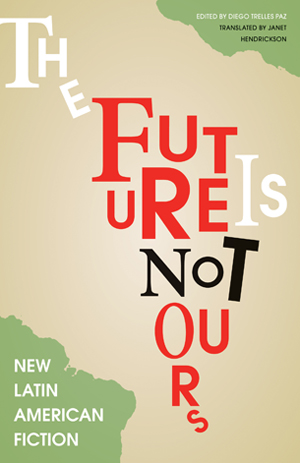
The Future Is Not Ours: New Latin American Fiction brings together twenty-three Latin American writers who were born between 1970 and 1980. The anthology offers an exciting overview of contemporarySpanish-language literature and introduces a generationof writers who came of age in the time of military dictatorships, witnessed the fall of theBerlin Wall, the end of the Cold War, the birth of the Internet, the murders of Ciudad Juárez,Mexico, and the September 11th attacks in New York City.The anthology features: Oliverio Coelho, Federico Falco, and Samanta Schweblin (Argentina);Giovanna Rivero (Bolivia); Santiago Nazarian (Brazil); Juan Gabriel Vásquez and AntonioUngar (Colombia); Ena Lucía Portela (Cuba); Lina Meruane, Andrea Jeftanovic, and AlejandroZambra (Chile); Ronald Flores (Guatemala); Tryno Maldonado and Antonio Ortuño (México);María del Carmen Pérez Cuadra (Nicaragua); Carlos Wynter Melo (Panama); Daniel Alarcónand Santiago Roncagliolo (Peru); Yolanda Arroyo Pizarro (Puerto Rico); Ariadna Vásquez (DominicanRepublic); Ignacio Alcuri and Inés Bortagaray (Uruguay); and Slavko Zupcic (Venezuela).

Mexican Drug War Issues from Words Without Borders Update

I’ve been following the progress of the Words Without Borders fund drive on their Mexican Drug War Issue. They released some information about some of the stories. Although, given their current funding to goal ratio I’m not sure they are going to make it.

Hi Everyone,

Just got word from our editorial team that some of the translations for the Mexican Drug War Issue have come in so I’m able to tell you a bit more about what’s in the issue. Work featured will include extracts from Magali Tercero’s reporting on living under “drugtatorship”, “Notes on the Violence in Sinaloa, Mexico,” Rafael Perez Gay’s short story “Road to Juarez,”  in which a man’s senile father claims to have been an undercover federal agent infiltrating a drug cartel, Fabrizio Mejia Madrid’s nonfiction piece, “The Mystery of the Parakeet, the Rooster, and the Goat,”  based on  statements made by drug lord Ricardo ”El Valde” Valderrama, and Luis Felipe Fabre’s poem “Notes on a Theme of a Zombie Cataclysm.” Guest editor Carmen Boullosa is interviewed on how the drug war has impacted writers directly and also contributes a poem mourning all that Mexico has lost. Translations still to come include Hector de Mauleon, Yuri Herrera, Rafael Lemus, and Juan Villoro.

There’s only 20 days left. Please help us spread the word.

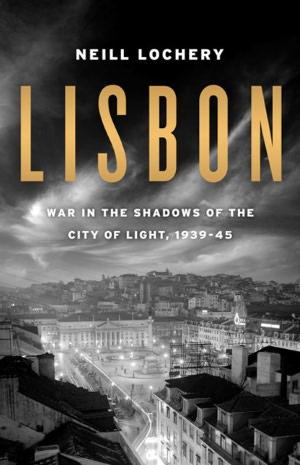
Lisbon: War in the Shadows of the City of Light, 1939-1941 – A Review

Lisbon: War in the Shadows of the City of Light, 1939-1941
Neill Lochery
Public Affairs, 2011, 306 pg

Lisbon: War in the Shadows of the City of Light will tell you just about everything you will ever need to know about Lisbon and Portugal during World War II. Perhaps, too much depending on you interests. Neill Lochery not only writes about the Salazar government at war, but about the intrigues and, in many ways, the gossip of those who passed through the city. The book is best at laying out Salazar’s plan to stay neutral and how he was able to play the two sides off of each other. As a man without any other goals than staying in power and making Portugal modern, he was able to sell tungsten to Germany without the least scruples in taking German gold (some of which the Bank of Portugal is said to have, Richsbank stamp and all). And with the allies, especially Britain which Portugal had long had alliances, he also sold materials for gold. As long as one side seemed more powerful than the other, he attempted to favor them more, short of joining the war. During the early years of the war he was quite welcoming to Germany, but he didn’t want to join the war, nor did he want Spain to invade. Spain had made several different plans to invade during the war, but Salazar was able to avoid it. He was always cautious, and even in 43 when Germany didn’t look as strong as it had, he delayed granting access to the Azores to the Allies.It is in the context of the scheming man that Lochery notes that any good that came out of Portugal’s neutrality during the war came about because it suited Salazar or he had no control over it. The Jewish refuges are a case and point. While Salazar didn’t kick Jews out of Portugal, he also didn’t want to grant them entry visas. It was his diplomatic officials early in the war who disobeyed orders and were able to allow Jews to escape through Lisbon.

Lisbon itself was a reflection of Salazar. It was full of spies, refugees, and people taking advantage of the situation. With all the refugees and the limited transportation options out of the country many were stranded there and had to do what ever it took to get out. For the rich such as the Gugenhiems, the Duke and Duchess of Windsor, and Hollywood stars like Leslie Howard they stayed in the best hotels and lived a life that had nothing to do with the deprivations of the war. It is here, in the more biographical sections, that the book suffers a bit. Not that it is badly written, it just isn’t that interesting to me. Especially, the part about the Duke and Duchess of Windsor. At least I know now how self-absorbed he was but other than that I don’t really care. There are definitely some sections one can skip over.

It is an interesting book, but for me only half of the book was interesting. But if you are interested in the history of Portugal during the war you can’t go wrong with this book.

The Guardian Reviews Purgatory by Tomás Eloy Martínez

Tomás Eloy Martínez’s last book Purgatory  has been published. “It sounds like another good book. The Guardian has the review:

A superb political reporter, Martínez perfected in his novels the blending of strict journalistic fact with the devices of fiction. He said that he had learned the craft when, in the late 60s, the exiled dictator Juan Domingo Perón summoned him to his Spanish estate to help him write his memoirs which, as the young journalist quickly realised, were largely fictitious. The result of the experience, published in the mid-80s, was The Perón Novel. It was followed a decade later by his masterpiece, Santa Evita, which García Márquez, usually reticent in his praise, said was “the novel I’ve always wanted to read”. The posthumous publication of Purgatory shows a writer at the height of his craft, and is a fitting conclusion to the work of one of Latin America’s most remarkable novelists.

New Cuentos para el andén Featuring Stories from Luis Mateo Díez, Jesús Ortega and Matías Candeira

A new issue of Cuentos para el andén is out, featuring stories from three authors I have never heard about: Luis Mateo Díez, Jesús Ortega and Matías Candeira. The last issue was enjoyable and I liked the idea of supporting short stories with a free quick read magazine.

Hacerse el muerto (Playing Dead) by Andrés Neuman – A Review

Hacerse el muerto
Andrés Neuman
Páginas de Espuma, 2011, pg 138

Andrés Neuman, one of the 20 selected by Granta last year, is one of the best of the group of the writers and Hacerse el muerto (Playing Dead) a collection of 30 stories is ample proof of that. Although little of his work has been translated into English yet, two of the stories from this collection are in the Granta volume with slightly different titles: Madre atras (Mother Behind) and El infierno del Sor Juna (Sor Juna’s Hell). What makes his short stories so good is devotion to the short story form as a means to explore different narrative ideas. He has no one style of writing the stories and some range from the heart felt descriptions of the loss of his mother to the fabulistic Sor Juna’s Hell to meta fiction that is consumed with the role of story. It should not be surprising that he has such interest as he has already published 3 other books of short stories and has edited one collection of Short Stories from Spain. That devotion even extends to the inclusion of 20 aphorisms on the art of writing short stories, of which many are koan-like and offer not only a guide to the writer, but a guide to Neuman’s art.

Hacerse el muerto is structured around the theme of death in all its forms, whether real or not, and is broken into six five story sections are thematically and stylistically linked. It is an approach that allows him to experiment with many different forms and modes of story telling. The book opens with El fusilado (The Firing Squad) a story of a man who is kneeling before a firing squad. Neuman describes the fear and terror in linguistic terms, taking apart the logic behind the words. But in that final moment when the order to fire is to be given, the true nature of the firing squad is given: it is a joke. The firing squad marches off laughing, calling him faggot. He is alive, but he is also dead, all his energy spent waiting in fear, he can do nothing more than lay in the mud like a dead man. In Un suicida resueño (A Reverberating Suicide) the narrator explains how he tries to kill himself but every time he tries to pull the trigger he breaks out laughing and is forced to drop the gun. The best he can do is wait and see if that laughter will go away, a sub conscious laughter that makes fun of the narrator’s seriousness and gives him something to live for, even if its to try again.

The above stories are well written and have great turns, but the stories that make up Una silla para alguien (A Seat for Someone) and the story Estar descalzo (To Be Shoeless) are the most arresting. All of them focus on the loss of a parent, mother in the former, father in the latter. He captures a sense of loss that is tied to the absences objects remind us of. In Estar descalzo the narrator is given his father’s shoes in the hospital and it is his relationship to the shoes that is the means for overcoming loss. Or in Madre atras (Mother Behind)  he gives a sponge bath to her back and uses the sponge to write what he has wanted to write since they had entered the hospital. Each of stories (often you might call them prose poems) are a meditation of loss that are subtle and not interested in the immediate feelings of grief, but a reflection years later of what it meant. Perhaps the best example is the very short Ambigüedad de las paradojas (The Ambiguity of the Paradoxes), which captures not only how beauty and loss go together, but how Neuman approaches those ideas, always leaving the story open.

Enterramos a mi madre un sábado al mediodía. Hacía un sol espléndido.

We buried my mother one Saturday at mid day. There was a splended sun.

Neuman also likes to experiment. In the section titled, Breve alegato contra el naturalismo (A Brief Argument Against Naturalism) he constructs five meta stories that either are interested in how one writes, or tries to break out of the naturalistic tendency in fiction. The most successful example is Policial cubista (Cubist Police Officer) which describes a murder scene in terms of a cubist. If you use Nude Descending a Staircase as an example the story makes perfect sense. In each case, it isn’t just one image, but multiple images as if you were seeing several photos at once. So in Neuman’s story you see the body, but you also see the person fleeing the scene. In a compact 200 words or so, he describes the arc of the encounter that led to the murder. It is a clever story that is as economical as a story could be and a great reuse of cubism.

Reading the stories of Andrés Neuman it is obvious that he is a great story teller, especially of the micro-relato (less than 1500 words). His stories are notable for their economy and the way he can pull the surprising conclusions together at the very last minute in ways that are both satisfying and leave the world of the story open, leaving one wanting to return to what passed by so quickly. That is the mark of a good writer.

To finish I’ll leave you with a couple of my favorite quotes from his ideas about writing short stories. These are not rules, as he points out, but ideas that are still evolving.

Mucho más urgente que noquear a lector es despertarlo.

It is much more important to wake the reader up than knock them out.

El cuento no tiene esencia, apenas constumbres.

A story does not have an inherent nature, it scarcely has customs.

Words without Borders Raising Kick Starter Funds for Mexican Drug War Issue

Words Without Borders has a Kick Starter campaign going for an new issue about the Mexican Drug War. This is going to be a great opportunity to read some of the authors in Mexico who are addressing the topic.Since the Drug War is somewhat recent as far as the translation process goes, not too much has come out in translation yet. (Martin Solares Black Minutes touches on it, but it is really more about the femecides in Juarez). Below is their description. You can contribute here.

In March 2012 Words without Borders: The Online Magazine for International Literature hopes to continue our tradition of exploring global events through international writing with a special Mexican Drug War issue guest edited by Carmen Boullosa, author of Leaving Tabasco, Cleopatra Dismounts, They’re Cows, We’re Pigs and numerous yet-to-be-translated books of prose and poetry. The issue will feature 11 pieces of fiction, poetry, and literary nonfiction exploring the world of a modern-day Mexico held hostage by drug lords. Rafael Perez Gay, Luis Felipe Fabre, Rafael Lemus, Yuri Herrera, Juan Villoro, Fabrizio Mejia Madrid, Magali Tercero, Sergio Gonzalez Rodriguez, Hector de Mauleon, and Carmen Boullosa will delve into the personal and the global repercussions of a conflict that has killed more than 60,000 people.

In keeping with our mission to promote cultural understanding through literature, the issue will present the human stories behind the bloodshed and struggles that have ravaged Mexico for more than a decade. To get a sense of the work we do and how this issue will come together please take a look at our May 2011 Afghanistan Issue (published, in part, with Kickstarter’s help!) and our July and August 2011 Arab Spring Issues.

When a Librarian Goes Wrong? Nancy Pearl’s Amazon Deal

The Seattle Times today had a big piece about Seattle’s favorite librarian superstar Nancy Pearl and her new deal to publish a few out of print books every year for just the Kindle. I’ve listened to Pearl off and on for years on KUOW which is my local public radio station. She’s on all the time and used to be on once a week back in the day. While I respect her love of books, her tastes are a little to broad for me so the shows often have people calling in about fantasy series which I just can’t abide. That aside, she’s been hugely popular but now with the Amazon deal the local NW bookstores are quite unhappy. I can see why, too, because it looks as if she is throwing them under the bus with this deal. Perhaps if she had done something with Google books, which allows independent companies away of selling Google titles the back lash might not have been so large. For me, this is a small endeavor on her part so I’m not to up in arms about it, but she should be more cogniscent of how platform choices can control the marketplace and that vertical integration, which is Amazon’s model, can be anti competitive.

The reaction from the brick-and-mortar bookshops — which have struggled first against competition from the big-box chains, and then the price-cutting Amazon — was immediate.

By Friday, some 50 store managers and owners had emailed Thom Chambliss, executive director of the Pacific Northwest Booksellers Association in Eugene, Ore.

That’s a sizable number, considering the group has 160 to 165 total members.

“Consternation,” is how Chambliss describes the content of the emails.

Before taking a position on Pearl’s alliance with Amazon, the group says it wants to talk to Pearl — whom in 2011 it gave its “Lifetime Achievement Award” for the “Book Lust” series containing her book recommendations.

The Short Stories of Francisco Urondo Reviewed at El Pais

I’ve never heard of Francisco Urondo a Argentine writer and revolutionary who died at 46 in 1976. A collection of his short stories has just been published in Spain and El Pais has a good review of them. While he was a committed leftist revolutionary, something that should lend itself to didactic literature, according to the review he manages to overcome. Instead, he creates a picture of a writer who was able to show the truth of the revolutionaries: the infighting, the sometimes pointlessness of their goals. And at this late distance, as the reviewer notes, those features lend not romanticism, but melancholy to the stories.

[…] Urondo podrá caer, con irritante frecuencia, en la retórica circular propia de la guerra fría (“la única manera en que se podía realmente aportar al proceso revolucionario era haciendo la revolución”); podrá intentar establecer analogías bastante explícitas entre la buena nueva evangélica y la buena nueva revolucionaria a través de cuatro personajes, dos de los cuales desempeñan papeles protagónicos, que se llaman Mateo, Marcos, Lucas y Juan (además, tienen un cercano amigo que se llama Pablo); podrá derrochar ingenuidad, idealismo, voluntarismo; pero en su novela late con fuerza impresionante el espíritu de una época contradictoria y convulsionada, con una fe ciega en ideologías abarcadoras y esa sensación incomparable de estar contribuyendo a escribir la historia. Pero el tono es, finalmente, desesperanzado. Hay una tristeza y una sensación de impotencia que se cuelan por detrás de las ínfulas guerrilleras y las perspectivas totalizadoras. Quizá el poeta que hay en Urondo le daba una cierta visión del futuro que no logró hacer explícita sino, precisamente, en el tono, en la vibración de la melancolía que traspasa las páginas de Los pasos previos.

Tiene razón Rama cuando afirma que, desde la perspectiva de la derrota, esta novela puede leerse “como el diagrama de una gran equivocación, como el pecado hijo del irrealismo cuando no del idealismo”; pero como él mismo indica, esa lectura está implícita en la novela, aunque menos en las discusiones ideológicas, como sostiene, y más en su melancolía, en su intuición de la muerte, en la angustia de los desencuentros y las despedidas prematuras. Pero, para citar de nuevo a Rama, era una batalla, no la guerra.

Interview with António Lobo Antunes at El Pais

El Pais has a long interview with António Lobo Antunes about his writing practices and how he has developed his style. It also mentions that since September when he finished his last book he has not been able to write anything new.

P. Siempre dice que los libros incluyen su propia clave para entenderlos y disfrutarlos. ¿Este suyo último también?

R. Uno tiene que entrar en un libro sin ideas preconcebidas. Mientras lees -a mí me encanta leer, que es un placer absoluto, no como escribir, que a veces no lo es-, mientras lees, decía, tienes que conservar una virginidad en la mirada. No se debe ir con prejuicios a cuestas. A veces se puede tener la sensación de no entender nada, y eso está bien porque luego, súbitamente, uno entiende todo: lo oscuro se vuelve claro.

P. ¿No le preocupa que esto no pase siempre, que algunos lectores de sus libros, difíciles siempre, se rindan y lo dejen?

R. Mientras uno escribe no puede pensar en el lector. Si le haces guiños al lector, el libro resulta malo. He hablado mucho con Juan Marsé (un amigo mío que me gusta mucho como escritor, cuya última novela, Caligrafía de los sueños, me parece una maravilla) de que no se puede transigir en eso. Uno tiene que hacer lo que tiene que hacer con la novela. Y si al lector le gusta, mejor. Y si no le gusta…

In Defense of Blogers – The Committe 2 Protect Geeks

O’Reilly Media had a conference recently where Danny O’Brien pointed out some of the harsh treatment bloggers can get at the hands of authoritarian governments. They can get imprisoned even for writing about non political subjects such as technology. Definitely worth a watch.