Borderlands: Riding the Edge of America by Derek Lundy – A Review

Borderlands: Riding the Edge of America by
Derek Lundy
Vintage Canada Editions, 2011, pg 421

There are two broad kinds of journalism: the dispassionate omnipotent writing that is standard in news papers and most news magazines; and the first person experiential story of exploration and quite often adventure. The latter type lends itself to travel writing quite well since the reader can substitute themselves with the narrator. That kind of journalism can also lead to stunts, or at least just a distracting preoccupation with the narrator. At its best, though, experiential journalism adds subtle insight  to reportage, offering little details that in a third person account would feel the wrath of the editor. Experiencing the little frustrations of daily life can be say more than just the broad facts of a story.

Derek Lundy’s Borderlands: Riding the Edge of America is one of the better examples of the second type. Lundy describes his journey along the United States borders with Mexico and Canada on a motorcycle. It is a journey that seems rather simple, but to actually stay as close to the US border is a difficult, annoying and dangerous endeavor. What Lundy is looking for is more than just a travelog of one’s many journey, but a deeper investigation into border culture and the way that shapes and repels part of American culture. He blends his experiences with reporting and history to create a fascinating cultural history of the US border and the politics of the tri-nation region now wedded through NAFTA.

One thing that makes the book worth reading is Lundy is a Canadian and the book is aimed at the Canadian market. The we, the us, the home country is Canada and though Lundy is always respectful to his neighbors there is always a questioning of the hardening of the border–really the militarization or police-statization of it (perhaps its the same thing). Over and over again he crosses the border, especially along the Canadian one, to find the border patrol searching everything he carries on his motorcycle in depth. Free time is not always the best thing. Its always more pronounced in the quieter crossings where the boarder patrol has more time on their hands to do a search. It rarely seems they ever achieve something. Over and over again he returns to the fear and paranoia that are part of the policy making on the border: the untrue story that 9-11 hijackers crossed from Canada (many of his interview subjects seems to think they did); that al Qaeda has crossed undefended borders; that if the US just was more serious about watching the border it could stop illegal traffic. It is these ideas that make every encounter on the Canadian border tedious, and those on the Mexican border part of a police state, where one cannot question the authority of those on patrol. To be fair, though, Lundy meets many Border Patrol officers who actually answer a few questions for him and show a human side. And he rightly points out that it is a dangerous job to be just sitting out there, one or two officers, in the middle of nowhere, uncertain who is coming along. In most of his encounters on the border with the patrol the agents would put their hands on the triggers of their guns when he approached, only letting go when he had taken his helmet off and explained what he was about. Then they would to tell him to leave because it was too dangerous to be on the border where the drug trade has such a strong influence.

Lundy is one never to follow advice to closely and repeatedly he finds himself battling with his motorcycle down some deserted road just to stay close to the border. These are places that days or weeks before there may have been trafficking activities or a gun fight. The book was written early in Calderon’s war and he mentions in an afterward that there are places that he would not go now. He doesn’t go into heavy details about the trafficking, just its ever present danger. The narcos are the biggest danger he faces, but the book is full of the difficulties of ridding a motorcycle cross country and some of his best writing describes the muddy roads, or icy passes he crosses, afraid he will crash at any moment, suffering in the cold or the heat or gale force winds. It is the mix of problems of the border with those of cyclist that propel the book and give it an air of suspense.

Ultimately, though the book would not be a success if it did not show the border issues in all their complexity. Lundy notes that the southern border has always been fluid and that those who still live along the border (with in 15 -25 miles) still expect the ability to go back and forth with ease. Many have families on both sides and it is common for families to have moved back and forth for generations. And for tribes like the Tohono their reservation straddles both sides of the border and has been particularly hard hit by the new efforts at border control (his discussion of the Tohono  is particularly distressing in the way drug trafficking has wreaked havoc) . On the Canadian border the same phenomenon exists. There are towns that straddle the border and families and tribes that expect that they should be able to move easily between. It seems the father one lives from the border, the more of a barrier it should be. Of course this was not always true.  Lundy understands, too, that immigration brings its own issues and does give a fairly mixed view of the issues. One thing he doesn’t see working well is the fence, which at the writing of the book was still being built. In stop after stop he notes how it is the laughing stock of the whole border region and how easily it is just to go around it or over it.

Lundy’s book is the best kind of travel-journalism. It is part adventure story, but at its core its a well written examination of the American crisis of faith that is the border, one that perhaps only an outsider could write.

Argentine Writer Héctor Tizón Has Died

Argentine writer Héctor Tizón has died. I’m not familiar with his work, but according to the obituary from El Pais he was a kind of Juan Rulfo from Argentina. He used magical realism, but also had a dry realism. He didn’t like literary games in favor of writing what was “before his eyes as Hemingway would.” Like many writers of his generation he spent several years in exile during the dictatorship.

En el mismo libro comentó también su visión de la escritura: “La mayor parte de la literatura actual se hace con la literatura misma, con palabras y juegos de palabras, es decir, con ‘nada’. Yo prefiero contar otra vez las viejas historias, las que ya han sido contadas, semejantes a sí mismas en todo el mundo. Nunca lograremos contar algo que antes no se haya contado. (…) Lo que verdaderamente vale es el modo de narrar, y los hombres alcanzados por la narrativa vuelven a ser niños a quienes no les disgusta volver a escuchar una y otra vez las mismas historias, para protegerse; historias que nos exaltan y a la vez dignifican”.

“Nunca formó parte de las capillas literarias, pero era muy latinoamericano”, afirma Jorge Fernández. “Siguió la premisa de Borges en el sentido de que no había que tener un propósito por ser argentino, sino aspirar a lo universal. Tizón, pintando su aldea, contando cosas tan pequeñas y tan alejadas de las grandes urbes y el mundo, en realidad pintaba la condición humana”.

Spanish Author Esther Tusquets Has Died

The Spanish author Esther Tusquets has died. You can read the notices at El Pais and La Vanguardia. Books on Spain has an excellent run down in English of her impact and relevance. I’m not familiar with her fiction, but her work as a memorialist has seemed interesting. Part of a publishing family, she wrote about the Franco years from the perspective of one of the wealthy supporters of the regime.

“Tengo sensación de final y quiero empezar a ir ligera de equipaje. A mi edad, uno se lo puede permitir todo”. Hace apenas poco más de dos años que la editora y escritora Esther Tusquets (Barcelona, 1936) justificaba así que se hubiera acentuado levemente su siempre latente irreverencia, que dejó en negro sobre blanco en sus últimos libros de memorias, como en Confesiones de una vieja dama indigna (2009). Ese viaje que intuía ha acabado hoy a los 75 años en el hospital Clínico de Barcelona por una pulmonía, punta de iceberg de un párkinson que padecía desde hacía años. Este martes será enterrada en Cadaquès (Girona), el mismo mar de (casi) todos sus veranos.

Merino, Fernández Cubas, Shua, Peri Ross, Hidalgo Bayali and Marsé on the Best Short Story Writers

El Pais has an article where short story authors Merino, Fernández Cubas, Shua, Peri Ross, Hidalgo Bayali and Marsé discuss the best short story writers of today, including those in Spanish. Perhaps it could be a more insightful article, but it does have a few points of interest.

“Poe, Maupassant, Kafka, Borges, Cortázar… ¿Cómo elegir? Y, sobre todo, ¿por qué elegir, si puedo tenerlos todos?”, responde Ana María Shua a la pregunta sobre su clásico básico. Prolífica autora de cuentos y microrrelatos, con títulos como la colección Que tengas una vida interesante (Emecé), la escritora argentina acaba de cruzarse con la obra de tres autores que, en breve tiempo, han sido capaces de imprimir una huella en su memoria: “Edgar Keret, el israelí loco que inventó otra manera de contar; Alice Munro, una vieja canadiense que se cree que un cuento se puede contar como si fuera una novela, ¡y lo consigue!, y Eloy Tizón, el cuentista español que toma al lector de sorpresa y lo derriba en cada párrafo”. Entre los jóvenes talentos que despuntan en lengua castellana, señala dos nombres: “En España, Isabel González, sin duda, con su libro Casi tan salvaje, escrito a estocadas salvajes sin el casi. En Argentina (pero publicada también en España), Samanta Schweblin, una genio, no se la pierdan, nieta literaria de Dino Buzzati. Con menos de 35 años, las dos ya son más que promesas”.

Mario Bellatin Profiled in El Pais

El Pais has a long profile of Mexican author Mario Bellatin. It is quite good and gives some interesting insights into this intriguing author.

Bellatin se considera sufí y cumple con su estética austera. El mobiliario de su hogar es tan esquemático que la casa parece casi deshabitada, o habitada por un fantasma, como dice el escritor que se siente en ocasiones. Siempre lleva su uniforme negro, y conduce un coche negro sin cambio automático ni dirección asistida, cosa meritoria teniendo en cuenta que solo dispone de un brazo. El principal foco decorativo de la sala es un minúsculo cuadro con un derviche —un bailarín sufí— congelado en un instante del giro permanente en que consiste la danza ritual de esta religión.

Esa pared, como todas las demás de la sala y del estudio, estarán cubiertas pronto por enormes estanterías en las que piensa distribuir Los cien mil libros de Mario Bellatin, una obra que también presentará en la Documenta. Se trata de otro proyecto a medio camino entre la literatura y el arte conceptual, consistente en la edición de cien libros suyos en un formato mínimo y con una tirada de 1.000 ejemplares cada uno. Los comercializará por su cuenta, sin pasar por las librerías, intercambiándolos directamente con los compradores “por un cigarro o por 1.000 pesos, dependiendo de mi estado de ánimo”. De momento ha publicado seis, y calcula que con todo lo que ha escrito durante su carrera ya tiene material para 52. “A partir de ahora quiero seguir escribiendo para llegar a 100. Pero igual me muero antes, no importa. Lo importante es que el hecho de que aquí haya 100.000 libros o no haya nada solamente depende de un deseo, y nada objetivo, externo a ti mismo, se puede interponer a ese deseo”.

Como el derviche que gira en un movimiento eterno, lo único que desean el hermano de la chica elefante, el ladrón de bolígrafos, el hijo de la cocinera de hormigas y el dueño del perro Perezvón es que Mario Bellatin permanezca siempre escribiendo.

Ivan Thays also has a brief run down of his four most important books.

New Book of Interviews with Boom Authors to be Published in Spanish

El Pais has an interview with Robert Saladrigas who has published a book (Voces del boom) of interviews with authors of the Boom. It is a collection of previously published essays. I’d be curious to see what the interviews are like. Saladrigas has some interesting things to say about the authors in the interview. Rulfo sounds a little unhinged at times, including politically. I wish there was a sample chapter so I could say whether the book is any good.

P. El propio Rulfo decía que aquello no iba a terminar como había empezado. “La Revolución cubana no es ya lo que fue ni lo que prometió ser. En cambio [decía, refiriéndose a la época de Allende, era 1971], Chile está viviendo ahora la experiencia más bonita de Latinoamérica”.

R. Exacto, y hablaba desde México, estaba muy cerca de nosotros… Pero gente como Vargas Llosa, por ejemplo, no decían eso mismo en voz alta. Lo hacía gente como Rulfo, un hombre ya muy mayor que lo veía desde otra perspectiva. Y lo que dice de Chile hay que verlo desde la perspectiva de entonces; desde ahora, claro, se entendería peor.

P. En su libro aparecen ya los rasgos dramáticos de Donoso, Sarduy y Puig, seres que reflejaban una angustia que no se compadecía con su espectáculo exterior.

R. Muy cierto. Fíjate que, además, en el caso de Donoso hoy es casi inconcebible el éxito de un libro como El obsceno pájaro de la noche. No lo leería nadie. Y en aquel momento nos fascinaba. Pero visto en perspectiva, en efecto, el aspecto de algunos de los que has mencionado resultaba patético, alegres y tan tristes.

Sergio Chejfec’s Translator, Heather Cleary, on Chejfec’s Approach to Writing

Heather Cleary, Sergio Chejfec’s translator, has a fascinating take on his approach to language. She notes that he has a way of distancing the reader at the same time he brings the reader in.

Reading Sergio Chejfec, I’m always struck by the way his prose both deflects and draws the reader in, never allowing complete immersion in the narrative: whether explicitly or implicitly, the medium in which the story is told is under constant scrutiny. In other words, I’m struck by the way Chejfec’s language is never “natural.” He discusses this aspect of his work in a beautiful essay titled “Simple Language, Name,” which hinges on the capaciousness of the word “nombre” (both “name” and, grammatically, “noun”). The piece begins with a reflection on the necessary illusion of linguistic transparency, and then delves into the particular kind of access to personal histories and collective traditions that surnames allow.

The full article is worth reading for this Argentine author. (via)

Carlos Fuentes Daughter Cecilia on Carlos Fuentes

Melenio has a letter from Carlos Fuentes only surviving child describing her anguish at her relationship with her father. It is a sad letter (he wasn’t the best father as people who are very busy tend not to be) but one that is interesting when thinking about a writer who was such a personality. (via )

¿Habrás sabido alguna vez cuánto te quise y cuánto te extrañé siempre? Hace muchos años iniciaste una nueva vida con una nueva familia y por alguna razón, decidiste tratar de borrar de tu historia a mi mamá y a mí. Algo imposible porque existimos, porque tuvimos un pasado, porque compartimos momentos reales y porque sé que, a pesar de tu aparente rechazo al cariño y al calor humano, alguna vez me quisiste y me cuidaste. Ahora que leo las cartas que le escribiste a mi mamá durante los quince años que estuvieron juntos, lo compruebo. Siempre había un  dibujito para mí, o palabras tiernas o de preocupación. Yo sé que jamás logré ser la hija que hubieras soñado, pero lo intenté. No. No soy ni alta ni guapa ni sofisticada ni delgada ni culta ni interesada en la política, pero hice mi mejor esfuerzo estudiando y trabajando, siempre tratando de que me abrieras un lugarcito en tu vida. Nunca lo logré.

Traveller of the Century by Andrés Neuman – Reviewed by Juan Gabriel Vásquez in the Guardian

Juan Gabriel Vásquez has a solid review of  Traveller of the Century by Andrés Neuman in the Guardian. If you haven’t read about the book, perhaps this is the review to interest you in reading it. (You can always read my review here.)

Traveller of the Century doesn’t merely respect the reader’s intelligence: it sets out to worship it. An unusual talent is required to pull this off, and Neuman has it. Perhaps the awareness of dealing with an imaginary place has made him watch his world all the more closely, and with language so vivid and new you will find yourself reading as if you were rereading: for the pleasure of detail, imagery and style (all magnificently rendered by translators Nick Caistor and Lorenza García, who had a daunting task before them). Neuman, born in Argentina but raised in Andalusia, is a poet and aphorist as well as a fiction writer, and his virtuosity in the short distances does wonderful things to the long novel: the attention he pays to one of his main characters is the same he pays to the sound of an adjective while describing the wind, or a dog’s ears, or light.

Guardian Podcast: Latin American novels and poetry

The Guardian has a great podcast this week on Latin American novels and poetry. Mostly the podcast is concerned with describing Latin American writers since the boom (partly prompted by the passing of Carlos Fuentes). They make the case, one that is relatively true, that Latin American writers are not interested in trying to describe their countries or define what it is to be Latin American, as was common in the Boom. They have different interests, often times more literary or experimental. Also included at the link is a list of suggested reading. Definitely, worth checking out.

Cesar Aira Profiled in The Nation

This came out a couple months ago, but I haven’t kept track of anything lately. It is a really nice and long overview of the writer, heavy on the biographical. Worth a read. (via Scott)

Whether or not César Aira is Argentina’s greatest living writer, he’s certainly its most slippery. His novels, which number more than sixty, are famous for their brevity—few are longer than a hundred pages—and for their bizarre, unpredictable plots. In How I Became a Nun (2005) an innocent family outing climaxes with murder. The weapon? A vat of cyanide-laced strawberry ice cream. In The Literary Conference (2006) an attempt to clone the Mexican writer Carlos Fuentes causes giant blue silkworms to attack a Venezuelan city, and in Aira’s latest book to appear in English, Varamo (2002), two spinsters get caught smuggling black-market golf clubs.

Aira loves to keep readers guessing—he once said that he deliberately writes the opposite of whatever fans praise—and several of his novels are actually works of probing psychological realism. But for all the variety of his novels’ plots, what has remained consistent during the thirty-odd years he has been writing is his taste for blending genres. Social realism and haunted-house tale mix with architectural theory in Ghosts (1990). Biography, pioneer tale and biogeography melt together in An Episode in the Life of a Landscape Painter (2000). The B-movie plot of The Literary Conference is peppered with asides on myth and translation.

Must Read: How English Books in Europe Hurts Local Writers

Tim Parks has a fascinating article in the New York Review of Books about how in some countries in Europe the translation into a foreign language in Europe has is completing with the English originals. He posits that in countries where English is commonly spoken as a second language, that readers are more interested in reading books from English writers, and given a choice between a translation from English and the original they will pick the original. This has lead to the phenomenon where English language authors are considered the best writers. Instead of broadening access to writers, it has had the effect of limiting narrowing access. I don’t think this phenomenon is as pronounced in Spain, but I do marvel at how many English speaking authors make it in to Spanish. On reading through a book of interview I was also amazed that outside of some classic short story authors, most of the influences were Spanish or English language authors only. Fascinating stuff. (Via)

When I asked people to list titles they had recently read, they seemed surprised themselves how prevalently English and American, rather than simply foreign, these novels were. A linguist from Amsterdam University, for example, went away and jotted down the names of all the novelists on his shelves: fifty-eight Anglophone authors (many were Booker and Pulitzer winners), nineteen from eight other countries and twenty Dutch. Until he wrote down this list, he remarked, he had not been aware how far his reading was driven by publicity and availability. Indeed, no one spoke of any method behind his or her choice of novels (as opposed to non-fiction, where people declared very specific and usually local interests).

“I read foreign novels because they’re better,” was a remark I began to expect (surprisingly, a senior member of the Dutch Fund for Literature also said this to me). I asked readers if that could really be the case; why would foreign books be “better” across the board, in what way? As the responses mounted up, a pattern emerged: these people had learned excellent English and with it an interest in Anglo-Saxon culture in their school years. They had come to use their novel-reading (but not other kinds of reading) to reinforce this alternative identity, a sort of parallel or second life that complemented the Dutch reality they lived in and afforded them a certain self esteem as initiates in a wider world.

Apart from the immediate repercussions on the book market, where there is now fierce competition between English and Dutch editions of English language novels, the phenomenon suggests a few things about reading and the modern psyche. There appears to be a tension, or perhaps necessary balance, between evasion and realism in fiction, between a desire to read seriously about real things—to feel I am not wasting my time, but engaging intelligently with the world—and simultaneously a desire to escape the confines of one’s immediate community, move into the territory of the imagination, and perhaps fantasize about far away places.

Carlos Fuentes Interview at Guernica

Guernica has an unpublished interview with Carlos Fuentes from 2006 that is worth reading (you can also listen to it if you scroll to the bottom of the page). It covers politics more than literature, although there is a lengthy section on his admiration for Juan Marse. Fuentes was always a fairly astute political commentator and he has some interesting things to say about immigration and democracy.

Guernica: Do you consider yourself a writer in exile?

Carlos Fuentes: I have never considered myself a writer in exile because I grew up outside of my own country, because my father was a diplomat. Therefore, I grew up in Brazil, Chile, Argentina, the United States, I studied in Switzerland—so I’ve always had perspective on my country—I am thankful for that.

Our greatest novelist ever, Juan Rulfo, the author of Pedro Páramo, never left Jalisco and the states of Mexico where he sold tires and drove around and heard stories—he is the great example of a writer very much bred, rooted in the country, that transforms all he has heard into great art. My position was very different because I had a perspective on Mexico since I was a child. I was a boy of ten when President Cárdenas expropriated the oil holdings of foreign companies, and there was a wave of anti-Mexicanism in the United States. There were big headlines, “Mexican Communists Steal Our Oil,”—then I lost friends at school (I was in grade school), I was looked upon with suspicion. And I was the son of a diplomat; when I heard the news from Mexico I sided with Mexican causes. I grew up in a kind of exile until I was fifteen years old, always outside of Mexico, but always very conscious that I was a Mexican. Yet that gave me a different consciousness of being Mexican from someone who had never left Mexico—so, it worked both ways.

For a moment there I could have become Argentinean or Chilean—I was very bound to my friends, my schools in Santiago and Buenos Aires, but no—no, Mexico has won me over, and do you know why? Because Mexico always was and always will be a mystery for me, a big question mark. What is this country all about? How can I understand it? You know, when García Márquez doesn’t understand the baroque political situation in Mexico, he goes to the National Museum of Anthropology, and stands before the Coatlicue the Mother Goddess of the Aztecs, the gigantic sculpture of block, of serpents, headless, tremendous, of a goddess saying, “I am a goddess not a person—don’t try to find personality in me. I am not Venus—I am Coatlicue, the goddess of serpents.” And when he has stood five minutes in front of Coatlicue, he says, “Now I understand Mexico,” and leaves.

It’s a very complex, mysterious country. I will never understand it fully, and that’s why I write so much about it, in order to try to understand it.

Interviews with Spanish Short Story Writer José María Merino (Spanish Content)

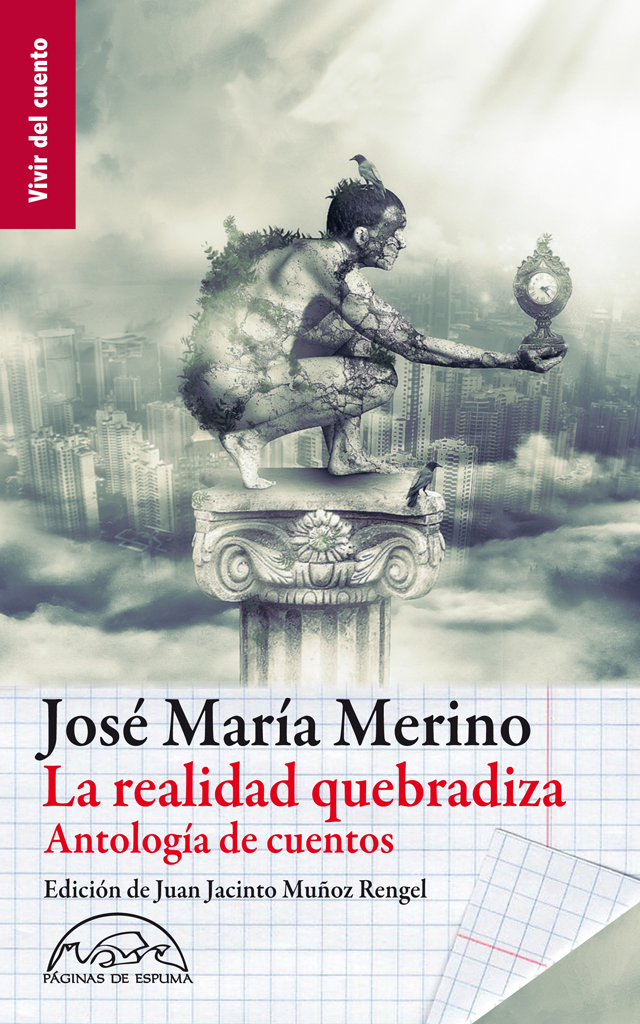
El Pais among other newspapers have some interesting interviews with José María Merino on the occasion of the publication of an anthology of his writing by Páginas de Espuma. He is a short story writer I’ve been looking forward to reading soon. Last year his book El libro de las horas contadas was given high praise and end up on some best of the year lists. The interview from El Pais is interesting. It was especially gratifying to hear a short story writer say there are only so many short stories one can read in a sitting, something for all the short stories I read, I find to be true.

-¿Y que hay de los microrrelatos?

-Hay gente que los desdeña, pero es como si un pintor desdeñase el soporte de óleo o el soporte de madera. En ellos puede haber cosas estupendas o cosas deleznables, exactamente igual que en la novela. Para mí, como escritor, lo que aporta es que puedes decir cosas que no podrías decir de otra manera.

-¿Son estos capaces de satisfacer el hambre literaria?

-Sería absurdo comparar un minicuento con Ana Karénina, pero son sabores que pueden resultar más intensos, pueden dar un matiz diferente. El problema es que no puedes leer demasiados minicuentos seguidos, porque te empachan. Pero pueden despertar ideas interesantes y divertirte mucho.

You can read the introduction of the anthology here. It will give a good sense of his work. And if you are looking for a few more interviews the publisher has a few links here, here, here.

Daniel Sada Reviewed in the New Quarterly Conversation

The latest issue of the Quarterly Conversation came out recently. As usual it has some great material in it, including a review of Daniel Sada’s Casi Nunca which was published a couple of months ago. It is a good review in terms of thinking about Sada’s language and grounding him in Mexican letters. It isn’t so good in giving you a sense of what the book is about. That’s ok I guess. You can’t have every thing. The book has been on my shelf for years. I’m going to get around to read it one of these days.

Other features of note:

Post-Literacy or Super-Literacy?

Post-Literacy or Super-Literacy?

By Daniel Evans Pritchard

Douglas Glover believes that there is a major failure in literary culture, and his new volume of essays, Attack of the Copula Spiders, attempts to re-teach the skills of reading and writing. Attack of the Copula Spiders, however, definitely is not an exercise in remedial education. Glover is a literary technocrat with a cranky, professorial temperament. He studies the percentages of load-bearing words within sentences and paragraphs, offering dictums in terms that would be familiar to central bankers. But are his remedies right for our literary problems?


On The Alienist by Machado de Assis

On The Alienist by Machado de Assis

By Matt Rowe

A highly educated man proposes that the government create a publicly funded system of healthcare. His opponents question the scientific basis of his ideas while clinging to religion. Some wonder where the money will come from; others worry about who will decide who receives care. As ordinary citizens see more and more of their friends and family fall victim to a corrupt system, they unite in a protest that is intended to be non-violent but turns bloody when challenged by government militia. But, rather than the people’s triumph, the seizure of power only marks the moment when hypocrisy, under the banner of “compromise,” becomes pervasive. That’s what happens in Machado de Assis’ 1882 novella The Alienist , the opening chapters of which are excerpted in this issue of The Quarterly Conversation. The Alienist takes place not in the United States of 2012 but in the Brazilian colonial outpost of Itaguaí, sometime around the year 1800.

The László Krasznahorkai Interview

The László Krasznahorkai Interview

Interview by Ágnes Dömötör

You know, the problem is that anything that’s the least bit serious gets bad PR. Kafka got bad PR, and so does the Bible. The Old Testament is a pretty hard text to read; anyone who finds my writing difficult must have trouble with the Bible, too. Our consumer culture aims at putting your mind to sleep, and you’re not even aware of it. It costs a lot of money to keep this singular procedure going, and there’s an insane global operation in place for that very purpose.

In Translation

From The Alienist by Machado de Assis

From The Alienist by Machado de Assis

Translated by Matt Rowe

The chronicles of Itaguaí tell that long ago there lived in town a certain Doctor Simeon Blunderbuss, a man of noble birth and the greatest doctor in Brazil, Portugal, and both Old and New Spains. He had studied at Coimbra and at Padua before returning to Brazil at the age of thirty-four. The King could not manage to convince him to stay on in Coimbra as regent of the university, nor in Lisbon directing royal affairs.


True Milk by Aixa de la Cruz

True Milk by Aixa de la Cruz

Translated by Thomas Bunstead

I thought it strange the baby not crying. I wanted to get up and check that it was all right, but I was worried I’d hurt myself, plus I was in a bit of a daze—it was as though my eyelids weighed more than usual. I asked myself: what dreams would I have had while I was under? I couldn’t remember a thing. Strange, because I always dream, and I always remember my dreams. I’d had a recurring nightmare over the previous nine months, over and over: in agony, I’d be giving birth to a baby that made a sound like a cat.


Ibn Fadlan and the Land of Darkness: Arab Travellers in the Far North

Ibn Fadlan and the Land of Darkness: Arab Travellers in the Far North

Review by George Messo

It’s Ibn Fadlan’s account of his remarkable journey that takes up the larger part of Paul Lunde and Caroline Stone’s newly translated anthology Ibn Fadlan and the Land of Darkness: Arab Travellers in the Far North. In 922 Ibn Fadlan set off from Baghdad as the envoy of caliph Muqtadir, bound for the upper Volga River and the Turkic-speaking court of Almish ibn Yiltawar at Bulghar. His mission was simple: to instruct the newly converted Almish and his people in the Islamic faith, to oversee the building of a congregational mosque, and to assist in the construction of a defensive fortress. Because of their richness, Ibn Fadlan’s detailed observations retain an authentic power to shock. He maintains a coolly dispassionate sense of importance and breadth, documenting a dizzying range of anthropological gems, from Turkish marriage customs to hospitality, from hygiene and the Ghuzz taboo on washing to horse sacrifices.


And so many others of note.

The Future is Not Ours: New Latin American Fiction – A Brief Review

The Future is Not Ours: New Latin American Fiction
Diego Trelles Paz, ed
Open Letter, 2012, 254 pg

I won’t say too much about the book since I will be reviewing it for the Quarterly Conversation. It was a good book. As with any collection of short stories there were a few stories that didn’t interest me much, but the over all quality was good. Reading stories that come from outside the American tradition is always nice because I don’t have to be bothered with the craft of the story, since the authors tend to have different interests in writing. I did find the introduction slightly annoying, mostly because it promised something that the stories did not deliver: reactions to the recent past. The editor notes how important that the connections to the history of dictatorships, etc is in their work, but that is rarely mentioned in the stories. It is the fault of the introduction not the writers, for advancing that idea. Also his effort to locate the book  in the context of a new Latin American writing that has gone past the Boom and the McOndo of Alberto Fuguet, doesn’t quite work. Many of these stories have a Fuguet quality and don’t seem so distant from the his McOndo style.

All of these are quibbles, since the stories, on the whole, are good. I will leave it at that until the review comes out.

Books and Authors That Described the Spanish Exile

El Pais had an interesting article about the Spanish authors who went into exile and the works that reflect that exile. I’ve read a little of Aub (my review was luke-warm), but none of the works here are familiar to me. I think a couple sound interesting. You can read some excerpts here.

Max Aub, La gallina ciega. Diario español

Max Aub.

max Aub publicó en vida dos fragmentos ampliados de sus diarios: Enero en Cuba recogió su estancia insular en 1968 y La gallina ciega, su regreso a España en 1969. En su inicio, puso una execración de Franco; en su final, una zumbona carta al ministro solicitando su beneplácito para publicarlo. Y en medio, afirma: “No intenté ser imparcial”, porque “no soy juez, sino parte”. Le fastidió casi todo… Que las coquinas de 1969 no supieran como las de 1936, que España se hubiera convertido en el lugar de veraneo internacional y, sobre todo, que nadie se acordara de lo sucedido entre 1936 y 1939, ni de la vida cultural republicana, ni de quienes se fueron al exilio. Asistir a una comida con Luis Buñuel y Dámaso Alonso, o al reencuentro con el fascista Santa Marina son experiencias inolvidables, contadas en esta prosa conceptuosa y restallante. (Joaquín Mortiz. México, 1971).

Cuentos para el andén Number 7 Out Now

Cuntos para el andén, the free magazine of short stories from Spain is out with its newest edition. It includes a couple of pieces of short fiction from Juan Jacinto Muñoz Rengel. I’ve been interested in reading something of his ever since I read La familia del aire a few weeks ago. He uses the fantastic in his writing. Also there is one from Francisco Umbral who I don’t know, but have heard his name a few times.

June 2012 Words Without Borders Out Now

The June 2012 Words Without Borders is out now. The theme this month is Queer. As usual there is an interesting selection as well as a review of Andrés Neuman’s Traveler of the Century which I also reviewed.

Fiction by Cristina Peri Rossi

Ne Me Quitte Pas

Seventeen years old: a terrible age for studying. A terrible age for anything other than fornicating.

Translated by Megan Berkobien bilingual version


Fiction by Alonso Sanchez Baute

Death

If a queen cries an entire sea, she has to cry the Mediterranean or, at least, the Aegean

Translated by George Henson bilingual version


by Ilana Zeffren

This is How it is When You’re Involved with Sensitive Girls

Image description

I choose to keep away from shrinks and still end up on their sofa.

Translated by Ilana Zeffren


Poetry by Jean Sénac

from “Edgard’s Lessons”

If singing my love is loving my country, I am a soldier

Translated by Douglas Basford bilingual version


Fiction by Kim Bi

Tree of Lips

She wished she were blind so she couldn’t see the man mincing around, mimicking her father in a skirt.

Translated by Sora Kim-Russell and Eunjung Kwon-Lee bilingual version

La furia de las pestes (The fury of plague) by Samanta Schweblin – A Review

La furia de las pestes
Samanta Schweblin
Fondo Editorial Casa de las Americas, 2008, 111 pg

For readers of Spanish language literature in translation Samanta Schweblin’s name is slowly getting a little more notice. She has appeared in Words Without Borders, the Granta 22 best Young Writers in Spanish, and will appear in the forth coming The Future is Not Ours from Open Letter. However, with such spotty coverage it is hard to get a good sense of this writer’s work, a writer who has earned the respect of many of contemporary Spanish Language short story writers.It is a shame because her reputation as a short story writer to watch is deserved.

La furia de las pestes is Schweblin’s second book and won the Casa del las Americas short story prize in 2008. A couple of the stories have been translated into English: Conservas, which appeared in Words Without Borders (where I first encountered her work), and En la estepa, which is in The Future is Not Ours. Both of these stories are marked by the fantastic and show her at her best. Conservas is the story of a woman who reverses her pregnancy over the course of months, slowly shrinking it down until there is nothing left of it. Ultimately, it is a bitter sweet moment when she realizes that what she wanted so badly is perhaps not quite for the best. It nicely turns what easily could have turned into a didactic story on women’s rights, and gets at a more emotionally wrenching truth that there is no answer to such dilemmas. En la estepa (On the Stepe) is a fantastic story, yet one where the fantastic is only alluded to and like here best work, plays on customs most people would know, but are just a little strange and call into question those very customs. Throughout the story the characters keep mentioning some sort of creature that all want and that the lucky ones have found on the stepe. The first time I read it I thought it was just a story about a beast (and uninteresting at that), but when you look at the language everything the characters says are the words one uses when expecting a child. Used in a different context they sound abusive, selfish and it makes one question exactly what one is talking about when talking about children.

Those stories are available in English. But what about the rest of the stories? One thing that is obvious is that she is not tied to the fantastic. In two stories Papa Noel duerme en casa (Santa Claus Slept at My House) and Mi hermano Walter (My Brother Walter), she uses depression as a form of the fantastical. In each the characters loose contact with an accessible reality and their actions, naturally, seem strange. Interspersed with in stories of the fantastic, it underscores the strange nature of depression. The depression is not treated lightly and Papa Noel duereme en casa has a troubling vision of a marriage coming to an end and narrated by a young girl. Or in a story called Cosas que se tiran (The Things That Are Thrown), where a the narrator’s partner throws all their possessions into the shower before leaving, there is just a glimpse of something dying (the story is only 2 pages long). It forms a recurring theme of loss that leaves a dull ache for the unobtainable and at the same time a mater of fact sense of attachment to those losses, as if the narrators are so accustomed to them there is nothing one can do. That sense is most evident in El hombre sirena (The Merman), about a woman who meets a merman who is sitting on a dock. He offers her something different, but she doesn’t take him up on it. Or at least that is the suggestion, because she drives away with her brother to the waiting doctor. Is this another depressed person? She is obliviously anxious when she gets in the car to drive away. And like so many of her stories, the narrator says, perhaps tomorrow there will be another one waiting for me. The unspoken future is mostly likely not too much better.

The title story is a nice nod to Juan Rulfo about a man who goes to a forgotten village and tries to get the people to say something. It is one of those lost villages out of The Burning Plain (El llano en llamas) where everyone stays in their stone homes when a stranger comes to town. The twist her is when he tries get the people to talk and offers them something he thinks will help, it only reminds them of what they don’t have.

Finally,Cabezas contra el asfalto (Heads Against the Asphalt) is dark story about art. It opens with the shocking lines

Si golpeás much la cabeza de alguien contra al asfalto–aunque sea para hacerlo entrar en razón–, es probable que termines lastimándolo.

If you hit someone’s head a bunch of times against the asphalt–even though you are doing it for their own good–you’ll probably end up hurting it.

From there it follows a narrator who from time to time gets angry and beats people’s heads against the asphalt. As a child it gave him power because bullies would leave him alone. At other times it terrified people. However, he is able to channel the anger into painting. He becomes famous painting pictures of heads beat against the asphalt. His paintings sell for millions of dollars. All that matters is the frame of reference and beating someone’s head against the asphalt is perfectly acceptable. The narrator is completely detached from what is acceptable and it throws into relief which beatings are acceptable and which are not. The story ends with the ultimate taboo, but as far as the narrator is concerned it was just another beating. It didn’t matter who the person was, he just made him angry and he had to beat him. Unfortunately, for him reality is not self constructed.

Samanta Schweblin’s stories can be deceptively simple, but when she is at her best the stories open up new realities from ones that surround us every day. He ability to turn the language of child rearing into something dark, or reimagine a fairytale like the Little Mermaid as a series of indecisive acts, make one of the more interesting writers coming from Latin America.