A new issue of Cuentos para el andén is out, featuring stories from three authors I have never heard about: Luis Mateo Díez, Jesús Ortega and Matías Candeira. The last issue was enjoyable and I liked the idea of supporting short stories with a free quick read magazine.
Author: bythefirelight
Hacerse el muerto (Playing Dead) by Andrés Neuman – A Review

 Hacerse el muerto
Andrés Neuman
Páginas de Espuma, 2011, pg 138
Andrés Neuman, one of the 20 selected by Granta last year, is one of the best of the group of the writers and Hacerse el muerto (Playing Dead) a collection of 30 stories is ample proof of that. Although little of his work has been translated into English yet, two of the stories from this collection are in the Granta volume with slightly different titles: Madre atras (Mother Behind) and El infierno del Sor Juna (Sor Juna’s Hell). What makes his short stories so good is devotion to the short story form as a means to explore different narrative ideas. He has no one style of writing the stories and some range from the heart felt descriptions of the loss of his mother to the fabulistic Sor Juna’s Hell to meta fiction that is consumed with the role of story. It should not be surprising that he has such interest as he has already published 3 other books of short stories and has edited one collection of Short Stories from Spain. That devotion even extends to the inclusion of 20 aphorisms on the art of writing short stories, of which many are koan-like and offer not only a guide to the writer, but a guide to Neuman’s art.
Hacerse el muerto is structured around the theme of death in all its forms, whether real or not, and is broken into six five story sections are thematically and stylistically linked. It is an approach that allows him to experiment with many different forms and modes of story telling. The book opens with El fusilado (The Firing Squad) a story of a man who is kneeling before a firing squad. Neuman describes the fear and terror in linguistic terms, taking apart the logic behind the words. But in that final moment when the order to fire is to be given, the true nature of the firing squad is given: it is a joke. The firing squad marches off laughing, calling him faggot. He is alive, but he is also dead, all his energy spent waiting in fear, he can do nothing more than lay in the mud like a dead man. In Un suicida resueño (A Reverberating Suicide) the narrator explains how he tries to kill himself but every time he tries to pull the trigger he breaks out laughing and is forced to drop the gun. The best he can do is wait and see if that laughter will go away, a sub conscious laughter that makes fun of the narrator’s seriousness and gives him something to live for, even if its to try again.
The above stories are well written and have great turns, but the stories that make up Una silla para alguien (A Seat for Someone) and the story Estar descalzo (To Be Shoeless) are the most arresting. All of them focus on the loss of a parent, mother in the former, father in the latter. He captures a sense of loss that is tied to the absences objects remind us of. In Estar descalzo the narrator is given his father’s shoes in the hospital and it is his relationship to the shoes that is the means for overcoming loss. Or in Madre atras (Mother Behind) he gives a sponge bath to her back and uses the sponge to write what he has wanted to write since they had entered the hospital. Each of stories (often you might call them prose poems) are a meditation of loss that are subtle and not interested in the immediate feelings of grief, but a reflection years later of what it meant. Perhaps the best example is the very short Ambigüedad de las paradojas (The Ambiguity of the Paradoxes), which captures not only how beauty and loss go together, but how Neuman approaches those ideas, always leaving the story open.
Enterramos a mi madre un sábado al mediodía. Hacía un sol espléndido.
We buried my mother one Saturday at mid day. There was a splended sun.
Neuman also likes to experiment. In the section titled, Breve alegato contra el naturalismo (A Brief Argument Against Naturalism) he constructs five meta stories that either are interested in how one writes, or tries to break out of the naturalistic tendency in fiction. The most successful example is Policial cubista (Cubist Police Officer) which describes a murder scene in terms of a cubist. If you use Nude Descending a Staircase as an example the story makes perfect sense. In each case, it isn’t just one image, but multiple images as if you were seeing several photos at once. So in Neuman’s story you see the body, but you also see the person fleeing the scene. In a compact 200 words or so, he describes the arc of the encounter that led to the murder. It is a clever story that is as economical as a story could be and a great reuse of cubism.
Reading the stories of Andrés Neuman it is obvious that he is a great story teller, especially of the micro-relato (less than 1500 words). His stories are notable for their economy and the way he can pull the surprising conclusions together at the very last minute in ways that are both satisfying and leave the world of the story open, leaving one wanting to return to what passed by so quickly. That is the mark of a good writer.
To finish I’ll leave you with a couple of my favorite quotes from his ideas about writing short stories. These are not rules, as he points out, but ideas that are still evolving.
Mucho más urgente que noquear a lector es despertarlo.
It is much more important to wake the reader up than knock them out.
El cuento no tiene esencia, apenas constumbres.
A story does not have an inherent nature, it scarcely has customs.
Words without Borders Raising Kick Starter Funds for Mexican Drug War Issue
Words Without Borders has a Kick Starter campaign going for an new issue about the Mexican Drug War. This is going to be a great opportunity to read some of the authors in Mexico who are addressing the topic.Since the Drug War is somewhat recent as far as the translation process goes, not too much has come out in translation yet. (Martin Solares Black Minutes touches on it, but it is really more about the femecides in Juarez). Below is their description. You can contribute here.
In March 2012 Words without Borders: The Online Magazine for International Literature hopes to continue our tradition of exploring global events through international writing with a special Mexican Drug War issue guest edited by Carmen Boullosa, author of Leaving Tabasco, Cleopatra Dismounts, They’re Cows, We’re Pigs and numerous yet-to-be-translated books of prose and poetry. The issue will feature 11 pieces of fiction, poetry, and literary nonfiction exploring the world of a modern-day Mexico held hostage by drug lords. Rafael Perez Gay, Luis Felipe Fabre, Rafael Lemus, Yuri Herrera, Juan Villoro, Fabrizio Mejia Madrid, Magali Tercero, Sergio Gonzalez Rodriguez, Hector de Mauleon, and Carmen Boullosa will delve into the personal and the global repercussions of a conflict that has killed more than 60,000 people.
In keeping with our mission to promote cultural understanding through literature, the issue will present the human stories behind the bloodshed and struggles that have ravaged Mexico for more than a decade. To get a sense of the work we do and how this issue will come together please take a look at our May 2011 Afghanistan Issue (published, in part, with Kickstarter’s help!) and our July and August 2011 Arab Spring Issues.
When a Librarian Goes Wrong? Nancy Pearl’s Amazon Deal
The Seattle Times today had a big piece about Seattle’s favorite librarian superstar Nancy Pearl and her new deal to publish a few out of print books every year for just the Kindle. I’ve listened to Pearl off and on for years on KUOW which is my local public radio station. She’s on all the time and used to be on once a week back in the day. While I respect her love of books, her tastes are a little to broad for me so the shows often have people calling in about fantasy series which I just can’t abide. That aside, she’s been hugely popular but now with the Amazon deal the local NW bookstores are quite unhappy. I can see why, too, because it looks as if she is throwing them under the bus with this deal. Perhaps if she had done something with Google books, which allows independent companies away of selling Google titles the back lash might not have been so large. For me, this is a small endeavor on her part so I’m not to up in arms about it, but she should be more cogniscent of how platform choices can control the marketplace and that vertical integration, which is Amazon’s model, can be anti competitive.
The reaction from the brick-and-mortar bookshops — which have struggled first against competition from the big-box chains, and then the price-cutting Amazon — was immediate.
By Friday, some 50 store managers and owners had emailed Thom Chambliss, executive director of the Pacific Northwest Booksellers Association in Eugene, Ore.
That’s a sizable number, considering the group has 160 to 165 total members.
“Consternation,” is how Chambliss describes the content of the emails.
Before taking a position on Pearl’s alliance with Amazon, the group says it wants to talk to Pearl — whom in 2011 it gave its “Lifetime Achievement Award” for the “Book Lust” series containing her book recommendations.
The Short Stories of Francisco Urondo Reviewed at El Pais
I’ve never heard of Francisco Urondo a Argentine writer and revolutionary who died at 46 in 1976. A collection of his short stories has just been published in Spain and El Pais has a good review of them. While he was a committed leftist revolutionary, something that should lend itself to didactic literature, according to the review he manages to overcome. Instead, he creates a picture of a writer who was able to show the truth of the revolutionaries: the infighting, the sometimes pointlessness of their goals. And at this late distance, as the reviewer notes, those features lend not romanticism, but melancholy to the stories.
[…] Urondo podrá caer, con irritante frecuencia, en la retórica circular propia de la guerra fría (“la única manera en que se podía realmente aportar al proceso revolucionario era haciendo la revolución”); podrá intentar establecer analogías bastante explícitas entre la buena nueva evangélica y la buena nueva revolucionaria a través de cuatro personajes, dos de los cuales desempeñan papeles protagónicos, que se llaman Mateo, Marcos, Lucas y Juan (además, tienen un cercano amigo que se llama Pablo); podrá derrochar ingenuidad, idealismo, voluntarismo; pero en su novela late con fuerza impresionante el espíritu de una época contradictoria y convulsionada, con una fe ciega en ideologías abarcadoras y esa sensación incomparable de estar contribuyendo a escribir la historia. Pero el tono es, finalmente, desesperanzado. Hay una tristeza y una sensación de impotencia que se cuelan por detrás de las ínfulas guerrilleras y las perspectivas totalizadoras. Quizá el poeta que hay en Urondo le daba una cierta visión del futuro que no logró hacer explícita sino, precisamente, en el tono, en la vibración de la melancolía que traspasa las páginas de Los pasos previos.
Tiene razón Rama cuando afirma que, desde la perspectiva de la derrota, esta novela puede leerse “como el diagrama de una gran equivocación, como el pecado hijo del irrealismo cuando no del idealismo”; pero como él mismo indica, esa lectura está implícita en la novela, aunque menos en las discusiones ideológicas, como sostiene, y más en su melancolía, en su intuición de la muerte, en la angustia de los desencuentros y las despedidas prematuras. Pero, para citar de nuevo a Rama, era una batalla, no la guerra.
Interview with António Lobo Antunes at El Pais
El Pais has a long interview with António Lobo Antunes about his writing practices and how he has developed his style. It also mentions that since September when he finished his last book he has not been able to write anything new.
P. Siempre dice que los libros incluyen su propia clave para entenderlos y disfrutarlos. ¿Este suyo último también?
R. Uno tiene que entrar en un libro sin ideas preconcebidas. Mientras lees -a mí me encanta leer, que es un placer absoluto, no como escribir, que a veces no lo es-, mientras lees, decía, tienes que conservar una virginidad en la mirada. No se debe ir con prejuicios a cuestas. A veces se puede tener la sensación de no entender nada, y eso está bien porque luego, súbitamente, uno entiende todo: lo oscuro se vuelve claro.
P. ¿No le preocupa que esto no pase siempre, que algunos lectores de sus libros, difíciles siempre, se rindan y lo dejen?
R. Mientras uno escribe no puede pensar en el lector. Si le haces guiños al lector, el libro resulta malo. He hablado mucho con Juan Marsé (un amigo mío que me gusta mucho como escritor, cuya última novela, Caligrafía de los sueños, me parece una maravilla) de que no se puede transigir en eso. Uno tiene que hacer lo que tiene que hacer con la novela. Y si al lector le gusta, mejor. Y si no le gusta…
In Defense of Blogers – The Committe 2 Protect Geeks
O’Reilly Media had a conference recently where Danny O’Brien pointed out some of the harsh treatment bloggers can get at the hands of authoritarian governments. They can get imprisoned even for writing about non political subjects such as technology. Definitely worth a watch.
The Girl on the Firdge by Etgar Keret – A Review
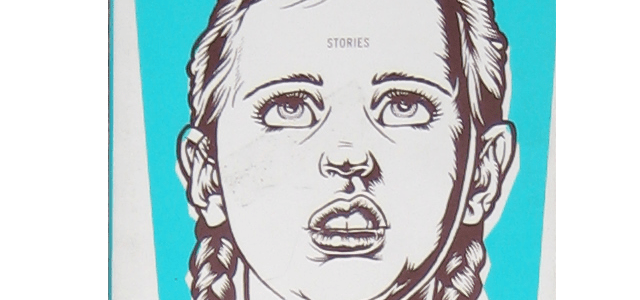
 The Girl on the Fridge
Etgar Keret
Farrar, Straus and Grioux 2008, pg 171
Etgar Keret’s work is often marked by a sense that one is in a slightly different reality. It isn’t surrealism, just a place where you might be able to buy for 9.99 the meaning of life. In the stories of Keret that purchase never really works out as one would want, and usually the charters don’t so much as regret their decisions as abandon them as just yet another of life’s let downs. The stories in The Girl on the Fridge aren’t quite as fantastic (see my review of The Bus Driver Who Wanted to be God), but there is still that sense that what one wants doesn’t always work out. Keret’s stories are very short and he has the ability to zero in on those moments with great precision, stripping away everything except those small moments of disappointment.
In The Real Winner of the Preliminary Games, a group of men get together every few weeks to talk and drink. They have a ritual to it and the evenings allow them to not so much find answers to their problems, but find that they are not so bad. Towards the end one of the men says he’s feed up and is going to commit suicide. His friend, Eitan, talks him out of it. But Eitan, in a moment that has that feeling of melancholy that is just below the surface of many Keret stories takes out his M 16.
“If I want to, I can shoot,” he said out loud. He ordered his brain to pull the trigger. His finger obeyed, but stopped halfway. He could do it, he wasn’t scared. He just had to make sure he wanted to. He thought about it for a few seconds. Maybe in the general scheme of things he couldn’t find any meaning to life, but on a smaller scale it was okay. Not always, but a lot of the time. He wanted to live, he really did. That’s all there was to it. Eitan gve his finger another order to make sure he wasn’t kidding himself. It still seemed prepared to do whatever he wanted. He put the gun on half cock and pushed the safety back in. If not for those four beers, he’d never even have tried it. He would have made up an excuse, said it was just a dumb test, that it didn’t mean anything. But like Uzi said, that was the whole point. He put the gun back in the drawer and went into the bathroom to puke. then he washed his face and soaked his head in the sink. Before drying himself, he took a look in the mirror. A skinny guy, we hair, a little pale, like that runner on TV. He wasn’t jumping or yelling or anything, but he’d never felt this good.
Eitan puts the gun away because that is what one does. He then feels a rush. Is it from the test or the rush that comes after throwing up? Whatever it is, it isn’t the answer to anything, just the relief from melancholic doubt. Tomorrow it may return and when the men return to the bar they’ll talk each other into living again because that’s what one does.
In one of his more fantastical ones, Freeze, a man gains the power to make the world freeze. When the world freezes he takes the opportunity to have sex with the best looking women (rape is what he is actually doing although the character would never admit it). At first it works out great for him, but eventually some one tells him that is not good because the women aren’t asking for it. So he then begins a series of experiments, telling the women why they are in their frozen state to scream during sex. Nothing satisfies him until he realizes all he has to do is tell the woman to love him for himself. Of course that works and the woman loves him. All through the story, though, you have a man getting what he wants only to find it is what he wants and in relationships is isn’t just the one person that matters. He is satisfied, but there is always the lingering doubt that what the relationship, any relationship is built on are demands that only one wants. That he can command someone to love him for himself is in of it self contradictory and at the same time a parody of what should be a operating principle for couples. It is a disturbing story that leaves one wondering what loving one for oneself really means.
Keret often uses the perception of children to expose the strangeness of the adult world. In Moral Something, a man is sentenced to hang and the kids who have seen the sentencing on TV try to understand what happens we someone is hung. Since the adults are trying to protect them from the information and the kids only have roumor they have to experiment. They hang a stray cat, but of course it settles nothing because they don’t know if they have done it right. The boys argue over it and when the prettiest girl in school walks by she tells them they are all animals. Keret in that little scene is able to create what the adult world looks like without the veneer of rules, laws, and moral codes. The kids, too, are on that ever present search for the answers that never exist. They don’t know yet, as Eitan in The Real Winner, that there are only approximations, things you settle on because they work even if they aren’t what everyone else is doing.
There are dozens of brief little encounters such as these that show Keret as a master of the form. His vision of a world that never quite operates with the same rules as ours does makes him one of the most interesting short story writers around. While The Bus Driver Who Wanted to Be God is a little more fantastical and, therefore, more interesting, The Girl on the Fridge is still a welcome addition to his body of work.
The Spanish E-Book Wars Have Started
El Pais has an article about the start of the Spanish e-book wars that Amazon has started. It is fairly typical of what we have seen in the US. The One big exception is how the Amazon is getting around the fixed book price law in Spain. Apparently, Amazon claims that they are selling direct from the author, versus from a publisher. It will be interesting to see how this works out.
Pero El emblema del traidor es una novela peculiar por otro motivo: se puede encontrar en edición electrónica por dos precios: 2,68 euros en Amazon.es y 7,99 euros en Casadellibro.com; algo que, en principio, viola la ley española de precio fijo (según la cual la misma edición de un libro no puede tener dos precios distintos dentro del territorio nacional). Gómez-Jurado ofrece una explicación al respecto: “En un caso lo vende directamente el autor, en el otro hay una editorial de por medio”.
Margaret B. Carson, Translator of Sergio Chejfec, Interviewed at Conversational Reading
There’s a great interview at Conversational Reading with Margaret B. Carson the translator of Sergio Chejfec’s My Two Worlds. It is a book that the more I hear about the more I want to take it off my shelves and read. This in particular caught my eye (once I was accused of writing German sentences because they were so long):
On the whole, I tried to stick quite close to the original, not just in word choice but also in preserving the length and density of the sentences. I had to search for models in English to give me an idea of how to structure and balance the clauses and sub-clauses that, as Enrique Vila-Matas points out in his introduction to My Two Worlds, seem to test the elasticity of the sentence itself. I was happy to discover that the long literary sentence en English is not a relic from 19th-century, and that many contemporary writers—among them Lynne Tillman, William Gaddis, and David Foster Wallace—provided excellent models that helped me carry over this essential part of Chejfec’s style.
The Black Minutes by Martín Solares – A Review of a Mexican Noir


The Black Minutes
Martín Solares
Black Cat 2010, pg 436
If you’ve read anything about Mexico in the last few years then you know something about The Black Minutes by Martín Solares. The Black Minutes is one of a growing trend of crime novels that, in some ways, are replacing the novel of the cacique as the literary image of Mexico. I know there are plenty of other novels written in Mexico, but the Black Minutes reflects a moment in Mexican history that is wracked with incredible violence and corruption and it only makes sense for Mexican authors to turn to that theme. The question, though, with such overwhelming violence and mind-numbing numbers of disappearances how does a fiction writer address the subject without seeming shrill or a journalist with a few obscured details? Can a novelist make compelling fiction without falling into polemics? Of course that assumes the goal of the writer is to make compelling, entertaining, or what every adjective you want to use that suggests there is an artistic end to the novel. Solares has decided not to write directly about a specific event—the femicides in Juarez—but create his own version of Juarez, a smaller, more manageable one, that exists both in the past and in the now. It is a strategy that makes for a good novel, not just a good crime novel, which it most certainly is, and Solares’s skills as a writer move it beyond genre.
The Black Minutes opens in the present with the brutal murder of a journalist. It is a resonant crime ripped, as one might say, from the headlines. A crusty old policeman, El Maceton, is put on the case. Little by little he follows the footsteps of the late journalist as he gets closer and closer to what had happened. Along the way he interviews people who tell him to stay away from it all, that it isn’t worth it. Chief among them is a Jesuit priest who knows more than he is willing to say, but gives the story an already sinister edge of coverups and corruption. Paralleling the story is the constant powerlessness of Meceton in the face of the crime boss’s son who continually threatens him because he took away his gun. Meceton, a man who’d rather watch TV than have sex, is the typical middle aged civil servant, tired, getting headaches when ever there’s trouble around. Just as Maceton is getting close to finding out what happened the crime boss’s son rams his car a few times, before he is killed in traffic.
At this point the story goes back 30 years to follow Vincente Rangel, a failed rock musician and nephew of a long time detective for the police department of Paracuán, Tamaulipas. At first Rangel is just a rookie—intern might be a better word—who follows his uncle around to get on the job training. He has no formal training, no one does, nor does he have a gun. He is part of a police force that works through favors, friendships, and bribes. When the bodies of mutilated and murdered school girls start to appear around town, his uncle is given the task of finding the killer. It falls to Vincente when his uncle dies of a heart attack. As the story unfolds, the level of corruption and old-boy-networking that goes on makes it almost impossible to find who the killer is. Rangel is constantly dealing with people in his own force who want to stop him, with the seemingly endless number of judicial agencies that want him to stop, local officials who what something to happen as long as it doesn’t snare one of their people. And the police force is completely inept, made up of untrained lifers like his uncle, who most are just in the business to get bribes, and the unofficial helpers that each cop has and who they pay to do some of the grunt work, including bringing them coffee. Yet Rangel some how is able to figure it out and more amazing, perseveres in the hunt despite the ever present threats. Just as Rangel is about to bring the killer in, the story switches to the present and Solares wraps the story up tiddly, closing all the chapters where he left a character hanging.
One of Solares’s strengths is the ability to weave this story of corruption and lies through the two different time periods and leave each section unanswered until the very end. The sense of mystery and dread that that evokes through out the novel starts just the background fear surrounding any crime and grows as Rangel and Maceton find themselves, in typical detective fashion, the lone forces of good. But the real power in the novel is his depiction of the chaotic town of Paracuán as a reflection of a larger Mexico. Readers can be forgiven if they begin to think at some point, it’s a wonder anything gets done in Mexico. Solares’s depiction of every last member of society as somehow corrupt begins to wear the reader down until all that is left is the same foreboding that runs through out the novel: any second I could get it. Yet the Rangel and Maceton don’t succumb and despite the terror that runs throughout the book, and its antecedents in the press, there is some sort of hope still there.
The Mexican writer Jorge Volpi (one of Solares’s friends according to the acknowledgements page) has said more writers should create political novels, novels that meet the actual. The Black Minutes is one of those few cases where the political—and how a society deals with crime is political—and the novelistic are perfectly tuned.
P.S if you want to feel better about Mexico you might try listening to this interview about Mexico City here .
Álvaro Pombo Wins the Nadal Prize with El temblor del héroe
Álvaro Pombo has won the Nadal Prize for El temblor del héroe, a book that is a criticism of the insensitivity of these times of crisis. That’s all I know about the book which will appear in February. You can read the notice from El Pais and from La Vanguardia.
From el Pais:
Además de -o por culpa de- la crisis, son tiempos en los que la gente ha perdido el entusiasmo hacia los otros; no se sabe qué actitud tomar frente a ellos; cuesta reaccionar ante cualquier drama, propio o ajeno. A un escritor de la alta sensibilidad de Álvaro Pombo no podía escapársele esa situación moral, que ha decidido volcar en un profesor universitario de Filosofía recién jubilado, atribulado en el Madrid actual, que asiste a una desgracia ante la que ni se inmuta. Así es el protagonista de El temblor del héroe, novela con la que el autor ha obtenido en Barcelona los 18.000 euros del 69º premio Nadal (que convoca ediciones Destino), decano de las letras españolas, que llegará a las librerías el 2 de febrero. Cierta añoranza por tiempos pasados más bienaventurados destila también Quan erem feliços, con la que otro veterano, aquí en lides periodísticas, el gerundense Rafael Nadal, se alzó con el 44º premio Josep Pla de prosa en catalán (6.000 euros), memorias de infancia con las que el galardón regresa a la no ficción tras 24 años de novela pura.
Interview with Antonio Muñoz Molina About His Short Story Collection At Canal-L
Canal-L has an interview of Antonio Muñoz Molina talking about his new book of short stories, Nada del otro mundo (Nothing exceptional). He talks about what he likes in short stories, why he thinks the fantastic only works in short stories, and how to be a Spanish speaker in the US is to be an internationalist.
Interview with Laura Freixas About her New Book at La Vanguardia
La Vanguardia interviewed Laura Freixas about her new book, Los otros son más felice.
La carrera de Laura Freixas es fruto del esmero por mantenerse firmemente anclada en el compromiso con una literatura que es y quiere ser femenina. Freixas nunca ha disimulado que le interesa proponer la mirada de la mujer sobre el mundo y sobre la propia condición femenina, una perspectiva bien escasa en la historia de la literatura, incluso en la historia de la literatura hecha por mujeres, y habría que decir, también en la hecha para mujeres. Los otros son más felices (Destino), su cuarta novela, es un relato de iniciación, el de una joven, Áurea, radicada en un pueblo de La Mancha pero habitante del Madrid del tardofranquismo, a la que su madre envía a casa de unos familiares ricos y cultos en Cadaqués. Es pues una novela sobre el descubrimiento del mundo.
Su novela puede funcionar como una lectura complementaria del clásico Nada de Laforet, porque aunque la condición social no sea la misma, el descubrimiento del mundo de Laforet está contado en el inmediato, mientras que en su novela pese mucho que se trata de un relato retrospectivo.
Oye pues es una buena comparación, no se me había ocurrido y claro me honra, porque Nada es una gran novela. Es verdad, ahora que lo dices seguramente me haya influido en ese planteamiento de una chica joven que llega de otra región de España a casa de una familia catalana que no comprende. Es verdad, ¿cómo no se me había ocurrido?
I thought her comments about Madrid in the 70s was interesting too
En su novela está reflejado algo muy cierto y que cambió luego de forma sensible: Madrid por entonces era muy rural, una especie de agregación de gente de pueblos. Casi la antítesis de lo que ocurre ahora.
Es cierto sí, efectivamente, y ahora es cosmopolita, una ciudad plenamente anónima, cosa que hoy no ocurre en Barcelona por ejemplo, donde rápidamente te preguntan de qué familia eres y donde veraneas y te hacen el retrato, algo que a mí me agobiaba un poco. El Madrid de los setenta era un Madrid que era muy pueblo, se notaba que había mucha gente que venía del pueblo y que mentalmente todavía estaba en el pueblo. Es un tipo de gente que todavía se ven en Madrid, aunque hoy sea efectivamente la única ciudad realmente anónima y cosmopolita de la península; sobre todo los viejos, es un tipo de viejo que no ves en Barcelona. Aquí ves viejas de luto, viejos con alpargatas y con boina sentados en los parques que serán de pueblo toda su vida. Eso en los setenta se notaba mucho, entonces la narradora de mi libro aunque haya nacido en Madrid se siente muy pueblerina en comparación con los elegantes y cultos catalanes. Y te diré más, de hecho, cuando yo empecé a escribir la novela, su familia venía de Castilla La Vieja, que es de donde viene mi familia materna, pero luego lo cambie a La Mancha por el nombre, porque ella lo siente como una mácula. Y quería huir del tópico. En cambio, Madrid se ha hecho más cosmopolita y más anónimo, se ha beneficiado de su condición de capital, y del crecimiento demográfico tan brutal, le ha perjudicado urbanísticamente porque ha crecido a tontas y a locas, muy mal…
January 2012 Words Without Borders Out- The Apocalypse
A new Words Without Borders is out now featuring The Apocalypse , as this is the year of the Apocalypse(s). As always it looks interesting. I also noticed that they have added the original language along side of the translation which is really a nice touch. I’ll be able to read some of the Spanish language ones in the original.
With a nod to the doomsday prophecy, we’re launching 2012 with writing about apocalypse. In two riffs on the Old Testament, André-Marcel Adamek builds a Belgian ark, while Fernando Paiva eulogizes the Creator. Ofir Touché Gafla counts down the hours in a runaway city. Sławomir Mrożek awaits the end of days at McDonald’s. Hector G. Oesterheld and Solano Lopez depict a deadly snowfall in Buenos Aires. Gyrðir Elíasson sees banned books in Iceland’s future. Antônio Xerxenesky exposes a conspiracy to rewrite a famous ending. And Mexico’s Ambar Past provides an incantatory oracle. We trust you’ll enjoy these apocalyptic visions; and if not, well, it’s not the end of the world. Elsewhere, Luis Nuño slips out for a smoke, Juan Villoro misses connections, and Alber Sabanoglu heads to sea.
The High Window by Raymond Chandler – A Review
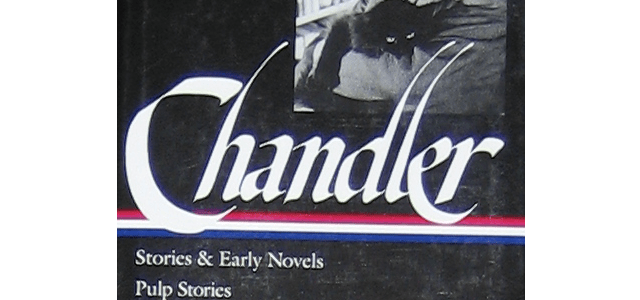
The High Window
Raymond Chandler
Library of America, 1995
Chandler’s The High Window is shorter and less robust than his other novels, but it is one of the few that I have not seen in a movie version (one exists from 1944 but it isn’t considered a particularly good film). In theory that should make for a better reading experience. It has the usual collection of reprobates and self destructive lowlifes. Still, it feels a bit sanitized, as if the real dark side of LA had been overlooked. Sure there are the murders and the mysterious young woman who is kept as a virtual slave in the house of his Marlowe’s client, but there isn’t any tension to them. They just happen 1,2,3 and each time Marlowe goes back to his client, a port drinking shut-in, only to have her refuse to answer his questions. After all that back and forth, Marlowe explains what happened. It is not a particularly interesting way of doing things. Any work of mystery that has to have a lengthy explanation at the end of it to explain what happened is usually a failure. Chandler usually managed to avoid those failures. On the plus side, his depiction of the drunks on Bunker Hill has his typically dark clarity, as do all his depictions of alcoholics. And the young private eye that follows him around only to get killed is funny, if nothing else. As a work of Chandler, though, The High Window is a disappointment. In part because his client, stays in the shadows, both figuratively and literally and does not animate the novel the way Farewell, My Lovely or The Big Sleep. Without that interaction in the plot, something is missing. The High Window is, at best, an intermezzo between his better works, and one any person new to Chandler should not read first.
Natasha Wimmer Interview about Bolaño at Conversational Reading
Conversational Reading has an interview with Natasha Wimmer about Roberto Bolaño’s latest book to be published in English, The Third Reich. It s a good interview, especially the parts about approaching a Bolaño novel.
SE: It’s interesting that you read the novel’s lack of a strong climax as a positive thing, since I’ve seen a number of reviewers ding The Third Reich for not having that one culminating scene of horror that many of Bolaño’s other novels accustom you to expect. (For my own part, I liked the anti-climax, regarding it more as a failure of Udo’s transformation than of Bolaño’s imagination.) To tie this in to your reading of the book as a farce, do you think there’s a certain perception out there of what Bolaño represents and that a book like Third Reich will be judged in terms of what’s accepted “Bolaño” instead of simply on its own terms?NW: Yes, I do think that there is a certain expectation of what a Bolaño novel will be, and I worried from the beginning that critics wouldn’t appreciate The Third Reich. Mostly I thought they would have problems with it on a sentence level, because Bolaño’s prose is thinner and more transparent than usual, with fewer of the oblique-lyrical moments that so dominate a novel like By Night in Chile, for example. My sense of the book, though, is that it’s one giant oblique-lyrical moment, and that the pacing is what gives it its stylistic edge and distinctiveness. It’s a book that leaves you feeling off-balance without realizing quite why, because the effect develops so gradually. I like your interpretation of the anti-climax as a reflection of the failure of Udo’s transformation, although I do think that he’s changed—diminished, or somehow shrunken—by his loss of faith in gaming, absurd or creepy as that faith was.
Farewell, My Lovely by Raymond Chandler – A Review
Farewell My Lovely
Raymond Chandler
Library of America, 1995
The problem with Chandler is that every time I read him I hear voices: Humphrey Bogart, Dick Powell, Robert Montgomery and even Gerald Mohr (thankfully, not Elliot Gould). Because I’ve listened to dozens of Richard Diamond radio shows Dick Powell is the foremost of the voices, but they’re all there and as I read the novel itself seems strange, foreign, as if it were the fake and all the films and radio versions were the real thing. That cultural ever-presence distracts one from the source and obfuscates through layers of sanitizing changes the real Chandler and his clear observations. As I read him, scraping away layers of Hollywood, I’m always surprised at the society Chandler describes: its as petty and real as the one I know. There is no tabu that he is unwilling to acknowledge and it is that willingness to show every nasty detail that makes returning to his books so rewarding.
When thinking about Chandler, if you can separate yourself from the film and radio versions, the way he constructs the narrative voice is refreshingly clean, edited down to an almost editorially free mode of observation. That the observations are commentaries in of themselves goes without saying, but he always remains professionally detached. Perhaps not to the level of a Johnny Dollar, but its there. Of course, that detachment is suspect with women characters. Still even his romantic interests have the sense of the reportage about them. This might not seem so important, but when compared to his contemporaries, even some non crime writing, the clarity of his work, uncluttered by repeating the obvious via internal monologues. While I hate the “show don’t tell” prescription to writers, Chandler is one writer who knew how to follow it and it makes his work still stand.
Farewell, My Lovely opens with a clear eyed description of the changing racial make up of LA. Marlowe goes to a bar in central LA that had changed from white to black clientele. Like most things in these Chandler novels, Marlowe is in the area on a case and sees a tough enter the bar and decides to follow him in. It’s there that Chandler sketches the racial tensions of the changing city as the tough, Moose Malloy, cannot understand how the bar could change. That aggravation, first shown verbally through racial slurs, is ultimately expressed in a violence that leads to murder. When Marlowe is interviewed by the police, Chandler again shows the complete indifference of white society to the minorities. The cop in charge wants some glory from the case, but knows he’ll get nothing from it because no one cares. In those opening pages he sets up a great critique of LA, dark as it can be, and Marlowe is restrained in using racist language (he sticks with the then common negro).
Where his work breaks down, is the silly Indian character who seems like some stereotype right out of the movies. At one point in the book he is captured by a crime boss. One of his henchmen is an Indian who has a sideline as an Indian in western movies. Problem is, he talks as if he were on the plains of the old west circa 1880. Perhaps it was supposed to be a joke, but the only thing it is silly. Where he captured the corruption and racial tensions of LA in the bar scene, here he just imports mid century stereotypes for a little buffoonery that is not funny at all.
Still, it is the I don’t give a damn about you attitude that permeates the characters that makes the book so fresh. Nor is is a cartoonish look. Here I’m specifically thinking of the drunk woman he visits repeatedly. This isn’t a Hollywood drunk of so many noir films that has some semblance of control, but a total wastrel whose only goal in life is the next bottle. The busybody across the street from the woman is interesting, too, a nice depiction of the non criminal, but still having the Chandler eye for details.
Plenty of people have commented on the logic of his plots so I won’t bother here, and really I don’t care. They are good enough for me. It is the world he creates that interests me. But one thing that will strike anyone is that Marlowe is lucky and that several moments of the book hinge on fortunate accidents, especially when he is in a dark canyon and hit over the head and a young woman comes to his rescue. And the chances he takes, such as sneaking on to the gambling ship anchored off Bay City to confront the a crime boss. Occasionally, it is a little too much and were it not for the writing, perhaps it would be. (I can’t help but imagine Marlowe years latter suffering dementia for all the certain concussions he’s received.) Yet despite all that Farewell, My Lovely is an excellent piece of noir that rises above so much of the pulp material of the era (I’ve been reading some of it and have been quite disappointed. Just compare the first paragraph of Chandler’s Red Wind to anything else and you’ll see what I mean). One I could easily read again and hopefully, finally, get those voices out of my head.
When Borges Lost the Premio Nacional Because of Politics
The Nobel wasn’t the only prize Borges lost because of politics. He also lost the Premio Nacional in 1941, the year of El jardín de senderos que se bifurcan. Revista Ñ has an article about the ins and outs of his loss. Mostly, though Borges was ahead of his time.
La pérdida del premio acaso no fuera tan inesperada. En la bibliográfica que publicó en Sur en mayo de 1942, apenas antes de que se conociera el dictamen del jurado, Bioy Casares fue clarividente y se adelantó a los reparos que el libro recibiría: “Estos ejercicios de Borges producirán tal vez algún comentador que los califique de juegos. ¿Querrá expresar que son difíciles, que están escritos con premeditación y habilidad, que en ellos se trata con pudor los efectos sintácticos y los sentimientos humanos, que no apelan a la retórica de matar niños, denunciada por Ruskin, o de matar perros, practicada por Steinbeck?”. Captando el clima de época, Bioy conjetura que “tal vez algún turista, o algún distraído aborigmpensa nacional, a una obra exótica y de decadencia (…) juzgamos que hizo bien.”
Best Book of 2011 from Elvira Navarro, Carlos Yushimito, Ana María Shua and other Spanish Language Authors
Canal-l has put together a blog that lists the favorite books of 2011 by various Spanish Language authors such as Elvira Navarro, Carlos Yushimito, Ana María Shua. It is an interesting list and I have even read one book, Alberto Fuget’s Missing. Una investigación which I thought was a great book and one of my favorites of the year. Another I have been reading for a while, The Complete Short Stories of Lydia Davis. As with all the lists from outside of the US it is always fascinating to see how many books from outside the Spanish speaking world they choose.
 By The Firelight