When I Left Home: My Story by Buddy Guy – A Review

When I Left Home: My Story
Buddy Guy, with David Ritz
Da Capo Press, 2012

Buddy’s always been one of my favorite blues guitarist, if not my fav. I’ve always loved his frenetic approach and a large number of riffs are his. While he has always complained, as he does several times in the book, that he rarely got to record the blues as he wanted to, all I know the many by are his recordings and one show years ago that I got to see when I was catching all the old blues men. He’s one of the last of that era and few of them either lived long enough or didn’t care enough to get their experiences down on paper (Big Bill Bronsey is one of the few exceptions). An autobiography affords the chance to go beyond the records, the photos, and the occasional You Tube clip and to know where the music came from. Given that the blues has at times a mystic weight put on it, what with the legends of Robert Johnson and blues explosion of the late 60s that was in part a pantheon raising, perhaps an autobiography, despite their vagaries, would bring that past back for a little while.

It’s hard to be a blues man. The life is dangerous, under paid, and given to life shortening excesses, particularly alcohol. That Buddy has survived in good health and enjoying success that eluded him for many years is a combination of luck and a natural shyness that kept him level headed. He grew up in Louisiana and at a young age moved to Batton Rouge where a passing stranger one day heard him playing a bad guitar and offered to buy him something decent. It was the kind of luck that gave him a eventual career.  He began playing gigs in Batton Rouge, because you couldn’t live on that. The inability to live well on music runs through out the book as does his constant desire to finally make it. The blues is as much a commercial activity as an art, a word I doubt he’d use. A way of life might be better. Something that is music, feeling, and community. The story of his move to Chicago and his meeting with Muddy Waters the day he was deciding to move back home is well known. But his descriptions of sharing a narrow studio apartment with a friend, spending the night on the streets while he waited for him to sleep so he could go back later, was just one of many hardships.

But Buddy was young and he loved playing and Chicago in the mid 50s to the early 60s was humming with blues and a man could make a living, not a lot, but enough to get by. Buddy also became one of the most sought after side men in the recording studio because he would follow directions, keep his mouth shut, and show up on time. In other words, he was reliable. Unlike his friend Jr Wells he never had problems with alcohol and as was all too common would drink himself into a stupor and would often find himself in jail. Buddy would have to, of course, bail him out. All through the book, Buddy is right in the action but due to his nature he is just one step back from real self destruction. He was also wise enough to know when things were never going to get better and, for example, stopped touring with Wells due to his unpredictability.

The Chicago he describes during the heyday of the Chicago Blues was one of clubs running all night with steel mill workers, going from club to club to play or compete in battle of the bands. The prize was usually just a bottle of whiskey. Buddy didn’t care, though, because he was playing. It was only latter as he married and had more children that he found that the blues and especially Leonard Chess did not pay. For most of the sixties until the blues revival hit at the end of the decade he drove a tow truck and worked in a garage. It is hard to believe that the man who cut some great sides and was a side man to some of the best sessions at Chess was working a day job. What’s interesting is how often he talks about wanting to make it. Despite the fun he was having in the clubs, he had visions of making it big. It can be easy to forget the economic necessities of the musicians once their work has been transformed over the years to a sacred legacy. It is also a realization that the rock ethos of authenticity and the Romantic ideal of the artist and his muse are projections that the critics inject.

Buddy, though, as he tells it was nothing if not responsible. He mentions he wanted stability which is why he married twice, but the blues and touring are anything but stable and both of those marriages eventually failed. It’s not to say Buddy didn’t sleep around, or find himself staring at the knife blade his first wife held over his head one night, he just managed to keep it together a little better. It was with that stability in mind that he opened his first club the Checker Board, thinking he could quit touring and stay at home more. But the club always lost money and he had to invest too much time into it. For a while he had to sleep in it with a gun to keep people from steeling his booze. Not a great success.

If financial success eluded him,  so did artistic success. According to Guy it isn’t until the 90’s that he finally got to record the way he wanted to and be successful. I’m not sure that I agree since Stone Crazy from 1981 is probably his best album. All he says about it is it came out without much success. He also doesn’t like much of the Chess or Vanguard catalog. There are definitely some failures (I Digg Your Wig, anyone?), but some of his tracks show both his guitar and vocal talents. He often mentions that he didn’t have the chance to record like he played in the clubs. Yet when you see some of the live stuff, it isn’t too distant from his recorded materials. I can remember being disappointed with some of the live stuff, because he sang so much and worked the crowd instead of playing ala Hendrix or Vaughn. While A Man and the Blues doesn’t rock, the live material from the same period isn’t too distant from it (It is also one of his best, certainly of the period, although a few of the instrumentals leave a little to be desired). To me the 90’s material is OK, but what ever you think about it, he loves it, it part, because it marks his ultimate success and is part of his progression to blues legend.

The idea of the progression to success is typical of the memoir genre. As is all too often common, the book has a story that shows Buddy slowly making his way to success. It is a narrative arc that can down play past successes, such as with his albums, and it can also turn the end of the book, where all the success is recounted, into a formulaic naming of famous names. The last 15-20% of the book begins to slide into that trap. Over and over he talks about playing with Clapton or Vaughn or Santana in some concert. It can get a little repetitive. And since this is an oral history dressed up as a book the writing can be lacking when the subject isn’t strong enough to propel the story.

Ultimately, the book is at its best when he is describing the early days and was a struggling musician. Ritz captures Buddy’s way of speaking quite well and as he recounts the stories (most with a suspicious level of dialogue, another flaw of the genre) you feel like Buddy is telling them to you. The best way to end this review is to quote Buddy’s last visit with Muddy Waters before he died of cancer.

Didn’t wanna mention music ’cause I knew he wasn’t performing or recording. Figure the best thing I could do was just sit and be quiet. Sat there for a long spell.

Muddy was the kind of guy who could read my mind. After a long time he turned to me and said, “Look, Buddy, I’m okay. And I only got one thing to say to you.”

“What’s that?” I asked.

“Mother fucker,” he answered, “don’t let these blues die.”

Links: Neuman, Munro, Fitzgerald, Bernhard, and Kerouac

It has been a very busy summer this year and I haven’t been able to keep up with the literature this year. I’m just catching up with some of the interesting articles and blog posts out there. Here are a few that caught my eye recently. Most are in English. Enjoy.

A Beginner’s Guide to Alice Munro – from the Millions. Since this blog is often about short stories, this piece caught my eye. It is a good overview. Her influence is large in the English speaking world, but she is also often sited as an influence in the Spanish speaking world.

The New Yorker has published a short story from 1936. The Guardian some context for the story: not one of his best.

A graphic comic of Thomas Bernard. (via Scott)

Andrés Neuman’s summer reading list.

Stephanie Nikolopoulos at the Millions writes about the different reactions men and women have about Jack Kerouac.

Men’s disinterest in Austen and other female authors has, of course, been its own cause for consideration. Last year, in an article entitled “Men Need Only Read Books by Other Men, Esquire Post Suggests,” The Atlantic Wire rightly took issue with the fact that only one female author was listed in Esquire’s “75 Books Men Should Read.” However, guess which male author The Atlantic Wire specifically mentions, as if he is the driving force behind men’s exclusion of female writers: “hard-living, macho writers like…Jack Kerouac.” Interesting. I would have called him a life-affirming, sensitive author. It was Kerouac, after all, who wrote, “Boys and girls in America have such a sad time together; sophistication demands that they submit to sex immediately without proper preliminary talk. Not courting talk—real straight talk about souls, for life is holy and every moment is precious.”

And a note about Alfredo Bryce Echenique’s latest novel.

Quim Monzó Story at Guernica

Guernica magazine has short story form Quim Monzó called One Night. It is a racy take on Snow White.

Plum in the center of the room, the prince can see the body of the girl, who is sleeping on a litter of oak branches and wrapped round in flowers of every color. He quickly dismounts and kneels by her side. He takes her hand. It is cold. And her white face, too, like a dead girl’s. Not to mention her thin, purple lips. Conscious of his role in the story, the prince kisses her lovingly. He knows this is the kiss that must bring her back to life, the kiss the princess has been waiting for forever, since the witch’s curse put her to sleep. The prince leans his head backwards so he can gaze at her when she lifts her eyelids and opens those large, almond eyes.

Joe Kubert, Creator of Sgt. Rock, RIP

I’m not a huge comics fan boy. Superheros get tiresome after a while–they cry about their superpowers way too much. Growing up I read war comics, specifically: The Unknown Soldier, G.I. Combat, and most of all, Sgt. Rock. I had no idea who Joe Kubert was but his creation (I believe he had stopped writing the comic before I came on the scene) was a mainstay for me for several years. I still have all the copies in their less than mint condition–worthless might be a better word–including the Batman-Sgt. Rock team up. I never did get the Superman one that was advertised, but probably for the best. I can’t say it was anything more than escapist fun, but, still, there was a tiredness to the stories, soldiers grinding on through the war. He had a dark element that made the men more real that their tights wearing counter parts. The hallmark of Sgt. Rock was his monthly struggle to keep his platoon together. It didn’t always happen and they lost men, always shown as a classic burial mound, a rifle stuck muzzle down, and a helmet hanging off to one side. Rare was the comic where people died, and give this was a war comic, perhaps more should have. Yet the Rock was still a blaze of glory, his Thompson machine gun roaring, extra ammo hanging off him, his helmet always at a rebellious angle. He was a hero and heroes, despite their creator’s wishes, make war glamorous.  I will say, in one of these comics I first read about friendly fire and at a young age it was disturbing to think you could get shot by one of your own. It was an eye opener, one that still sticks with me even after all these years. I believe I was reading after he had been in charge of the war comics (based on the NY Time‘s dates), but I think his influence was felt in those that I still have. According to the NY Times, during his run as head of war comics at DC between 67 and 76, “at the end of each comic, Mr. Kubert directed the typesetter to add a four-word coda. It read, ‘Make War No More.'” Those are fitting words for the end of every war comic, and if I was going to read war comics, those are really the only words the creator of a boyhood icon should have written.

You can see some of his work in an excerpt from a Fantagraphics book about his work (pdf).

The Odditorium: Stories by Melissa Pritchard – A Review

The Odditorium: Stories
Melissa Pritchard
Bellevue Literary Press, 2011

The Odditorium is just that: a collection of strange and odd curiosities that don’t really have any purpose being together except to titillate. An item could be strange, ugly, beautiful, but that oddness is the key to its existence within the collection. But is oddness in of itself interesting? Perhaps, but what is probably more interesting is the juxtaposition with the expected that leads one not only to see the odd as a curiosity but reflection on what one takes for granted. Oddities, like freak shows, though, can also become little more than facile rushes to exploitation. The shocking becomes little more than that its momentary surprise that fades into the background. While it’s true that Pritchard’s stories don’t fall into the trap of  creating the exploitively strange, the stories in The Odditorium are all more interested in their strangeness than finding something deeper or more compelling within them. There are certainly more than enough stories about crappy marriages, and that isn’t what I’m asking for here, but stories that do something with her obvious power as a writer. With each story it was obvious she had fallen in love with her characters, all historical figures, and she wanted to get closer to them, understand who they were. Unfortunately, she mistakes detail for depth and the search becomes and irritating failure.

Take the story Watanya Cicilia which describes the relationship between Sitting Bull and Annie Oakley and how they bonded, becoming father and daughter. In some ways she does describe it, but in others it is so lifeless that it doesn’t seem if there is a story there. It isn’t that she doesn’t flesh out the characters, or give us a new reality, it’s that the story is caught up in its own fragmentary nature, as if the broken pieces of narrative about two 19th figures mimics disjointedness of history. Yet it fails even that task. What it shows is how good Pritchard is at creating moments that overflow with sensory detail. Strip that away and the characters are nothing.  Characters aren’t necessary the only measure of a successful story, but since she focuses on them so much it is fair to ask if they serve more purpose than to be a tapestry for her descriptive skills. After finishing Watanya Cicilia, one could be forgiven for thinking, I used to care about Annie Oakley now she just bores. It is a shame because her early evocations of Annie’s life had some potential.

Again in Captain Brown and the Royal Victoria Military Hospital, perhaps the most interesting of the stories (really a novella), one gets the sense that she falls into the trap of the historical novelist who cannot let go of historical details because they are so fascinating. Unfortunately, it makes for tiresome reading. The story starts interestingly enough, following an American Captain as he prepares a military hospital for the coming D-Day invasions. He is a dedicated officer and she gives the reader an insight into the tedium of his life, one that he enjoys. In some ways she breaks from her interest in the strange and goes towards the boring. Nothing of note really happens and one could see the story as just the minute examination of a man, but there are also hints at a ghost and at an infatuation with a young French woman. It is a baggy piece and the subtle look at lonely man’s life is there, but she overlays it with hints of the fantastic that what might have been her strongest work, is derailed with needless diversions. She cannot resist the strange and the odd. She even puts a museum of the odd in the hospital so the reader can see how odd everything really is.

At the beginning of each story she leads the reader to think there is going to be something that is going to realize her full skills. The Hauser Variations is a perfect example. It is structured as a song which describes incidents in the life of Casper Hauser as told by different characters. It is a playful mix of her descriptive skills and a floating narrative. It is more an impressionistic piece, given to throwing snatches of song or the occasional bit of religious nonsense into the piece. The effect lends itself well to describing a mysterious man who had spent his early years away from all human contact. Yet time and again one gets the impression she is just too in love with the sound of her own voice. In a book of these kind of stories it is too much and it shows the games and trickery as little more than that.

Variation 2
With poetic sobriety.

I had twe pley horse, and such redd ribbons where I horse decorate did.
-Fragment from Kasper Hauser’s First Autobiography,
November 1828, Nuremberg

Dank grub, cabbage vermin, white, hairless, altrical slug. It scarcely flourished in its cradle plot its solitary necropolis, neither living nor dead, its budded tongue a fleshy club, its legs fwumped and futile.

It’s at times like these that I’m reminded of an essay by Lionel Trilling. He was writing about the flaws in the work of William Dean Howells. The one flaw that has always stuck with me is that Howells was not into the strange and that we are in the age of the strange. While I’m not asking for the reincarnation of the Howells or naturalism for that matter, strange for the sake of strange some times can just lead to a dead end. She has the language down, now go beyond that to something that really touches.


A Complaint

Pritchard has nothing to do with the blurbs on her book, but are some of these people really serious? Some of this stuff is egregious.

In this thrillingly protean collection of stories, Melissa Pritchard has done something profound. By imagining her way into historical moments and illuminating their shadows, she amplifies the music of history so we hear beautifully strange, wondrous notes we never knew were there. These stories resound with a fierce yet playful intelligence and a rare, magnificent generosity.

–Maud Casey

Please answer me this: how are stories generous? (More words per story) I really need to stop looking at these things. They are so silly especially when you completely disagree.

Borderlands: Riding the Edge of America by Derek Lundy – A Review

Borderlands: Riding the Edge of America by
Derek Lundy
Vintage Canada Editions, 2011, pg 421

There are two broad kinds of journalism: the dispassionate omnipotent writing that is standard in news papers and most news magazines; and the first person experiential story of exploration and quite often adventure. The latter type lends itself to travel writing quite well since the reader can substitute themselves with the narrator. That kind of journalism can also lead to stunts, or at least just a distracting preoccupation with the narrator. At its best, though, experiential journalism adds subtle insight  to reportage, offering little details that in a third person account would feel the wrath of the editor. Experiencing the little frustrations of daily life can be say more than just the broad facts of a story.

Derek Lundy’s Borderlands: Riding the Edge of America is one of the better examples of the second type. Lundy describes his journey along the United States borders with Mexico and Canada on a motorcycle. It is a journey that seems rather simple, but to actually stay as close to the US border is a difficult, annoying and dangerous endeavor. What Lundy is looking for is more than just a travelog of one’s many journey, but a deeper investigation into border culture and the way that shapes and repels part of American culture. He blends his experiences with reporting and history to create a fascinating cultural history of the US border and the politics of the tri-nation region now wedded through NAFTA.

One thing that makes the book worth reading is Lundy is a Canadian and the book is aimed at the Canadian market. The we, the us, the home country is Canada and though Lundy is always respectful to his neighbors there is always a questioning of the hardening of the border–really the militarization or police-statization of it (perhaps its the same thing). Over and over again he crosses the border, especially along the Canadian one, to find the border patrol searching everything he carries on his motorcycle in depth. Free time is not always the best thing. Its always more pronounced in the quieter crossings where the boarder patrol has more time on their hands to do a search. It rarely seems they ever achieve something. Over and over again he returns to the fear and paranoia that are part of the policy making on the border: the untrue story that 9-11 hijackers crossed from Canada (many of his interview subjects seems to think they did); that al Qaeda has crossed undefended borders; that if the US just was more serious about watching the border it could stop illegal traffic. It is these ideas that make every encounter on the Canadian border tedious, and those on the Mexican border part of a police state, where one cannot question the authority of those on patrol. To be fair, though, Lundy meets many Border Patrol officers who actually answer a few questions for him and show a human side. And he rightly points out that it is a dangerous job to be just sitting out there, one or two officers, in the middle of nowhere, uncertain who is coming along. In most of his encounters on the border with the patrol the agents would put their hands on the triggers of their guns when he approached, only letting go when he had taken his helmet off and explained what he was about. Then they would to tell him to leave because it was too dangerous to be on the border where the drug trade has such a strong influence.

Lundy is one never to follow advice to closely and repeatedly he finds himself battling with his motorcycle down some deserted road just to stay close to the border. These are places that days or weeks before there may have been trafficking activities or a gun fight. The book was written early in Calderon’s war and he mentions in an afterward that there are places that he would not go now. He doesn’t go into heavy details about the trafficking, just its ever present danger. The narcos are the biggest danger he faces, but the book is full of the difficulties of ridding a motorcycle cross country and some of his best writing describes the muddy roads, or icy passes he crosses, afraid he will crash at any moment, suffering in the cold or the heat or gale force winds. It is the mix of problems of the border with those of cyclist that propel the book and give it an air of suspense.

Ultimately, though the book would not be a success if it did not show the border issues in all their complexity. Lundy notes that the southern border has always been fluid and that those who still live along the border (with in 15 -25 miles) still expect the ability to go back and forth with ease. Many have families on both sides and it is common for families to have moved back and forth for generations. And for tribes like the Tohono their reservation straddles both sides of the border and has been particularly hard hit by the new efforts at border control (his discussion of the Tohono  is particularly distressing in the way drug trafficking has wreaked havoc) . On the Canadian border the same phenomenon exists. There are towns that straddle the border and families and tribes that expect that they should be able to move easily between. It seems the father one lives from the border, the more of a barrier it should be. Of course this was not always true.  Lundy understands, too, that immigration brings its own issues and does give a fairly mixed view of the issues. One thing he doesn’t see working well is the fence, which at the writing of the book was still being built. In stop after stop he notes how it is the laughing stock of the whole border region and how easily it is just to go around it or over it.

Lundy’s book is the best kind of travel-journalism. It is part adventure story, but at its core its a well written examination of the American crisis of faith that is the border, one that perhaps only an outsider could write.

Argentine Writer Héctor Tizón Has Died

Argentine writer Héctor Tizón has died. I’m not familiar with his work, but according to the obituary from El Pais he was a kind of Juan Rulfo from Argentina. He used magical realism, but also had a dry realism. He didn’t like literary games in favor of writing what was “before his eyes as Hemingway would.” Like many writers of his generation he spent several years in exile during the dictatorship.

En el mismo libro comentó también su visión de la escritura: “La mayor parte de la literatura actual se hace con la literatura misma, con palabras y juegos de palabras, es decir, con ‘nada’. Yo prefiero contar otra vez las viejas historias, las que ya han sido contadas, semejantes a sí mismas en todo el mundo. Nunca lograremos contar algo que antes no se haya contado. (…) Lo que verdaderamente vale es el modo de narrar, y los hombres alcanzados por la narrativa vuelven a ser niños a quienes no les disgusta volver a escuchar una y otra vez las mismas historias, para protegerse; historias que nos exaltan y a la vez dignifican”.

“Nunca formó parte de las capillas literarias, pero era muy latinoamericano”, afirma Jorge Fernández. “Siguió la premisa de Borges en el sentido de que no había que tener un propósito por ser argentino, sino aspirar a lo universal. Tizón, pintando su aldea, contando cosas tan pequeñas y tan alejadas de las grandes urbes y el mundo, en realidad pintaba la condición humana”.

Spanish Author Esther Tusquets Has Died

The Spanish author Esther Tusquets has died. You can read the notices at El Pais and La Vanguardia. Books on Spain has an excellent run down in English of her impact and relevance. I’m not familiar with her fiction, but her work as a memorialist has seemed interesting. Part of a publishing family, she wrote about the Franco years from the perspective of one of the wealthy supporters of the regime.

“Tengo sensación de final y quiero empezar a ir ligera de equipaje. A mi edad, uno se lo puede permitir todo”. Hace apenas poco más de dos años que la editora y escritora Esther Tusquets (Barcelona, 1936) justificaba así que se hubiera acentuado levemente su siempre latente irreverencia, que dejó en negro sobre blanco en sus últimos libros de memorias, como en Confesiones de una vieja dama indigna (2009). Ese viaje que intuía ha acabado hoy a los 75 años en el hospital Clínico de Barcelona por una pulmonía, punta de iceberg de un párkinson que padecía desde hacía años. Este martes será enterrada en Cadaquès (Girona), el mismo mar de (casi) todos sus veranos.

Merino, Fernández Cubas, Shua, Peri Ross, Hidalgo Bayali and Marsé on the Best Short Story Writers

El Pais has an article where short story authors Merino, Fernández Cubas, Shua, Peri Ross, Hidalgo Bayali and Marsé discuss the best short story writers of today, including those in Spanish. Perhaps it could be a more insightful article, but it does have a few points of interest.

“Poe, Maupassant, Kafka, Borges, Cortázar… ¿Cómo elegir? Y, sobre todo, ¿por qué elegir, si puedo tenerlos todos?”, responde Ana María Shua a la pregunta sobre su clásico básico. Prolífica autora de cuentos y microrrelatos, con títulos como la colección Que tengas una vida interesante (Emecé), la escritora argentina acaba de cruzarse con la obra de tres autores que, en breve tiempo, han sido capaces de imprimir una huella en su memoria: “Edgar Keret, el israelí loco que inventó otra manera de contar; Alice Munro, una vieja canadiense que se cree que un cuento se puede contar como si fuera una novela, ¡y lo consigue!, y Eloy Tizón, el cuentista español que toma al lector de sorpresa y lo derriba en cada párrafo”. Entre los jóvenes talentos que despuntan en lengua castellana, señala dos nombres: “En España, Isabel González, sin duda, con su libro Casi tan salvaje, escrito a estocadas salvajes sin el casi. En Argentina (pero publicada también en España), Samanta Schweblin, una genio, no se la pierdan, nieta literaria de Dino Buzzati. Con menos de 35 años, las dos ya son más que promesas”.

Mario Bellatin Profiled in El Pais

El Pais has a long profile of Mexican author Mario Bellatin. It is quite good and gives some interesting insights into this intriguing author.

Bellatin se considera sufí y cumple con su estética austera. El mobiliario de su hogar es tan esquemático que la casa parece casi deshabitada, o habitada por un fantasma, como dice el escritor que se siente en ocasiones. Siempre lleva su uniforme negro, y conduce un coche negro sin cambio automático ni dirección asistida, cosa meritoria teniendo en cuenta que solo dispone de un brazo. El principal foco decorativo de la sala es un minúsculo cuadro con un derviche —un bailarín sufí— congelado en un instante del giro permanente en que consiste la danza ritual de esta religión.

Esa pared, como todas las demás de la sala y del estudio, estarán cubiertas pronto por enormes estanterías en las que piensa distribuir Los cien mil libros de Mario Bellatin, una obra que también presentará en la Documenta. Se trata de otro proyecto a medio camino entre la literatura y el arte conceptual, consistente en la edición de cien libros suyos en un formato mínimo y con una tirada de 1.000 ejemplares cada uno. Los comercializará por su cuenta, sin pasar por las librerías, intercambiándolos directamente con los compradores “por un cigarro o por 1.000 pesos, dependiendo de mi estado de ánimo”. De momento ha publicado seis, y calcula que con todo lo que ha escrito durante su carrera ya tiene material para 52. “A partir de ahora quiero seguir escribiendo para llegar a 100. Pero igual me muero antes, no importa. Lo importante es que el hecho de que aquí haya 100.000 libros o no haya nada solamente depende de un deseo, y nada objetivo, externo a ti mismo, se puede interponer a ese deseo”.

Como el derviche que gira en un movimiento eterno, lo único que desean el hermano de la chica elefante, el ladrón de bolígrafos, el hijo de la cocinera de hormigas y el dueño del perro Perezvón es que Mario Bellatin permanezca siempre escribiendo.

Ivan Thays also has a brief run down of his four most important books.

New Book of Interviews with Boom Authors to be Published in Spanish

El Pais has an interview with Robert Saladrigas who has published a book (Voces del boom) of interviews with authors of the Boom. It is a collection of previously published essays. I’d be curious to see what the interviews are like. Saladrigas has some interesting things to say about the authors in the interview. Rulfo sounds a little unhinged at times, including politically. I wish there was a sample chapter so I could say whether the book is any good.

P. El propio Rulfo decía que aquello no iba a terminar como había empezado. “La Revolución cubana no es ya lo que fue ni lo que prometió ser. En cambio [decía, refiriéndose a la época de Allende, era 1971], Chile está viviendo ahora la experiencia más bonita de Latinoamérica”.

R. Exacto, y hablaba desde México, estaba muy cerca de nosotros… Pero gente como Vargas Llosa, por ejemplo, no decían eso mismo en voz alta. Lo hacía gente como Rulfo, un hombre ya muy mayor que lo veía desde otra perspectiva. Y lo que dice de Chile hay que verlo desde la perspectiva de entonces; desde ahora, claro, se entendería peor.

P. En su libro aparecen ya los rasgos dramáticos de Donoso, Sarduy y Puig, seres que reflejaban una angustia que no se compadecía con su espectáculo exterior.

R. Muy cierto. Fíjate que, además, en el caso de Donoso hoy es casi inconcebible el éxito de un libro como El obsceno pájaro de la noche. No lo leería nadie. Y en aquel momento nos fascinaba. Pero visto en perspectiva, en efecto, el aspecto de algunos de los que has mencionado resultaba patético, alegres y tan tristes.

Sergio Chejfec’s Translator, Heather Cleary, on Chejfec’s Approach to Writing

Heather Cleary, Sergio Chejfec’s translator, has a fascinating take on his approach to language. She notes that he has a way of distancing the reader at the same time he brings the reader in.

Reading Sergio Chejfec, I’m always struck by the way his prose both deflects and draws the reader in, never allowing complete immersion in the narrative: whether explicitly or implicitly, the medium in which the story is told is under constant scrutiny. In other words, I’m struck by the way Chejfec’s language is never “natural.” He discusses this aspect of his work in a beautiful essay titled “Simple Language, Name,” which hinges on the capaciousness of the word “nombre” (both “name” and, grammatically, “noun”). The piece begins with a reflection on the necessary illusion of linguistic transparency, and then delves into the particular kind of access to personal histories and collective traditions that surnames allow.

The full article is worth reading for this Argentine author. (via)

Carlos Fuentes Daughter Cecilia on Carlos Fuentes

Melenio has a letter from Carlos Fuentes only surviving child describing her anguish at her relationship with her father. It is a sad letter (he wasn’t the best father as people who are very busy tend not to be) but one that is interesting when thinking about a writer who was such a personality. (via )

¿Habrás sabido alguna vez cuánto te quise y cuánto te extrañé siempre? Hace muchos años iniciaste una nueva vida con una nueva familia y por alguna razón, decidiste tratar de borrar de tu historia a mi mamá y a mí. Algo imposible porque existimos, porque tuvimos un pasado, porque compartimos momentos reales y porque sé que, a pesar de tu aparente rechazo al cariño y al calor humano, alguna vez me quisiste y me cuidaste. Ahora que leo las cartas que le escribiste a mi mamá durante los quince años que estuvieron juntos, lo compruebo. Siempre había un  dibujito para mí, o palabras tiernas o de preocupación. Yo sé que jamás logré ser la hija que hubieras soñado, pero lo intenté. No. No soy ni alta ni guapa ni sofisticada ni delgada ni culta ni interesada en la política, pero hice mi mejor esfuerzo estudiando y trabajando, siempre tratando de que me abrieras un lugarcito en tu vida. Nunca lo logré.

Traveller of the Century by Andrés Neuman – Reviewed by Juan Gabriel Vásquez in the Guardian

Juan Gabriel Vásquez has a solid review of  Traveller of the Century by Andrés Neuman in the Guardian. If you haven’t read about the book, perhaps this is the review to interest you in reading it. (You can always read my review here.)

Traveller of the Century doesn’t merely respect the reader’s intelligence: it sets out to worship it. An unusual talent is required to pull this off, and Neuman has it. Perhaps the awareness of dealing with an imaginary place has made him watch his world all the more closely, and with language so vivid and new you will find yourself reading as if you were rereading: for the pleasure of detail, imagery and style (all magnificently rendered by translators Nick Caistor and Lorenza García, who had a daunting task before them). Neuman, born in Argentina but raised in Andalusia, is a poet and aphorist as well as a fiction writer, and his virtuosity in the short distances does wonderful things to the long novel: the attention he pays to one of his main characters is the same he pays to the sound of an adjective while describing the wind, or a dog’s ears, or light.

Guardian Podcast: Latin American novels and poetry

The Guardian has a great podcast this week on Latin American novels and poetry. Mostly the podcast is concerned with describing Latin American writers since the boom (partly prompted by the passing of Carlos Fuentes). They make the case, one that is relatively true, that Latin American writers are not interested in trying to describe their countries or define what it is to be Latin American, as was common in the Boom. They have different interests, often times more literary or experimental. Also included at the link is a list of suggested reading. Definitely, worth checking out.

Cesar Aira Profiled in The Nation

This came out a couple months ago, but I haven’t kept track of anything lately. It is a really nice and long overview of the writer, heavy on the biographical. Worth a read. (via Scott)

Whether or not César Aira is Argentina’s greatest living writer, he’s certainly its most slippery. His novels, which number more than sixty, are famous for their brevity—few are longer than a hundred pages—and for their bizarre, unpredictable plots. In How I Became a Nun (2005) an innocent family outing climaxes with murder. The weapon? A vat of cyanide-laced strawberry ice cream. In The Literary Conference (2006) an attempt to clone the Mexican writer Carlos Fuentes causes giant blue silkworms to attack a Venezuelan city, and in Aira’s latest book to appear in English, Varamo (2002), two spinsters get caught smuggling black-market golf clubs.

Aira loves to keep readers guessing—he once said that he deliberately writes the opposite of whatever fans praise—and several of his novels are actually works of probing psychological realism. But for all the variety of his novels’ plots, what has remained consistent during the thirty-odd years he has been writing is his taste for blending genres. Social realism and haunted-house tale mix with architectural theory in Ghosts (1990). Biography, pioneer tale and biogeography melt together in An Episode in the Life of a Landscape Painter (2000). The B-movie plot of The Literary Conference is peppered with asides on myth and translation.

Must Read: How English Books in Europe Hurts Local Writers

Tim Parks has a fascinating article in the New York Review of Books about how in some countries in Europe the translation into a foreign language in Europe has is completing with the English originals. He posits that in countries where English is commonly spoken as a second language, that readers are more interested in reading books from English writers, and given a choice between a translation from English and the original they will pick the original. This has lead to the phenomenon where English language authors are considered the best writers. Instead of broadening access to writers, it has had the effect of limiting narrowing access. I don’t think this phenomenon is as pronounced in Spain, but I do marvel at how many English speaking authors make it in to Spanish. On reading through a book of interview I was also amazed that outside of some classic short story authors, most of the influences were Spanish or English language authors only. Fascinating stuff. (Via)

When I asked people to list titles they had recently read, they seemed surprised themselves how prevalently English and American, rather than simply foreign, these novels were. A linguist from Amsterdam University, for example, went away and jotted down the names of all the novelists on his shelves: fifty-eight Anglophone authors (many were Booker and Pulitzer winners), nineteen from eight other countries and twenty Dutch. Until he wrote down this list, he remarked, he had not been aware how far his reading was driven by publicity and availability. Indeed, no one spoke of any method behind his or her choice of novels (as opposed to non-fiction, where people declared very specific and usually local interests).

“I read foreign novels because they’re better,” was a remark I began to expect (surprisingly, a senior member of the Dutch Fund for Literature also said this to me). I asked readers if that could really be the case; why would foreign books be “better” across the board, in what way? As the responses mounted up, a pattern emerged: these people had learned excellent English and with it an interest in Anglo-Saxon culture in their school years. They had come to use their novel-reading (but not other kinds of reading) to reinforce this alternative identity, a sort of parallel or second life that complemented the Dutch reality they lived in and afforded them a certain self esteem as initiates in a wider world.

Apart from the immediate repercussions on the book market, where there is now fierce competition between English and Dutch editions of English language novels, the phenomenon suggests a few things about reading and the modern psyche. There appears to be a tension, or perhaps necessary balance, between evasion and realism in fiction, between a desire to read seriously about real things—to feel I am not wasting my time, but engaging intelligently with the world—and simultaneously a desire to escape the confines of one’s immediate community, move into the territory of the imagination, and perhaps fantasize about far away places.

Carlos Fuentes Interview at Guernica

Guernica has an unpublished interview with Carlos Fuentes from 2006 that is worth reading (you can also listen to it if you scroll to the bottom of the page). It covers politics more than literature, although there is a lengthy section on his admiration for Juan Marse. Fuentes was always a fairly astute political commentator and he has some interesting things to say about immigration and democracy.

Guernica: Do you consider yourself a writer in exile?

Carlos Fuentes: I have never considered myself a writer in exile because I grew up outside of my own country, because my father was a diplomat. Therefore, I grew up in Brazil, Chile, Argentina, the United States, I studied in Switzerland—so I’ve always had perspective on my country—I am thankful for that.

Our greatest novelist ever, Juan Rulfo, the author of Pedro Páramo, never left Jalisco and the states of Mexico where he sold tires and drove around and heard stories—he is the great example of a writer very much bred, rooted in the country, that transforms all he has heard into great art. My position was very different because I had a perspective on Mexico since I was a child. I was a boy of ten when President Cárdenas expropriated the oil holdings of foreign companies, and there was a wave of anti-Mexicanism in the United States. There were big headlines, “Mexican Communists Steal Our Oil,”—then I lost friends at school (I was in grade school), I was looked upon with suspicion. And I was the son of a diplomat; when I heard the news from Mexico I sided with Mexican causes. I grew up in a kind of exile until I was fifteen years old, always outside of Mexico, but always very conscious that I was a Mexican. Yet that gave me a different consciousness of being Mexican from someone who had never left Mexico—so, it worked both ways.

For a moment there I could have become Argentinean or Chilean—I was very bound to my friends, my schools in Santiago and Buenos Aires, but no—no, Mexico has won me over, and do you know why? Because Mexico always was and always will be a mystery for me, a big question mark. What is this country all about? How can I understand it? You know, when García Márquez doesn’t understand the baroque political situation in Mexico, he goes to the National Museum of Anthropology, and stands before the Coatlicue the Mother Goddess of the Aztecs, the gigantic sculpture of block, of serpents, headless, tremendous, of a goddess saying, “I am a goddess not a person—don’t try to find personality in me. I am not Venus—I am Coatlicue, the goddess of serpents.” And when he has stood five minutes in front of Coatlicue, he says, “Now I understand Mexico,” and leaves.

It’s a very complex, mysterious country. I will never understand it fully, and that’s why I write so much about it, in order to try to understand it.

Interviews with Spanish Short Story Writer José María Merino (Spanish Content)

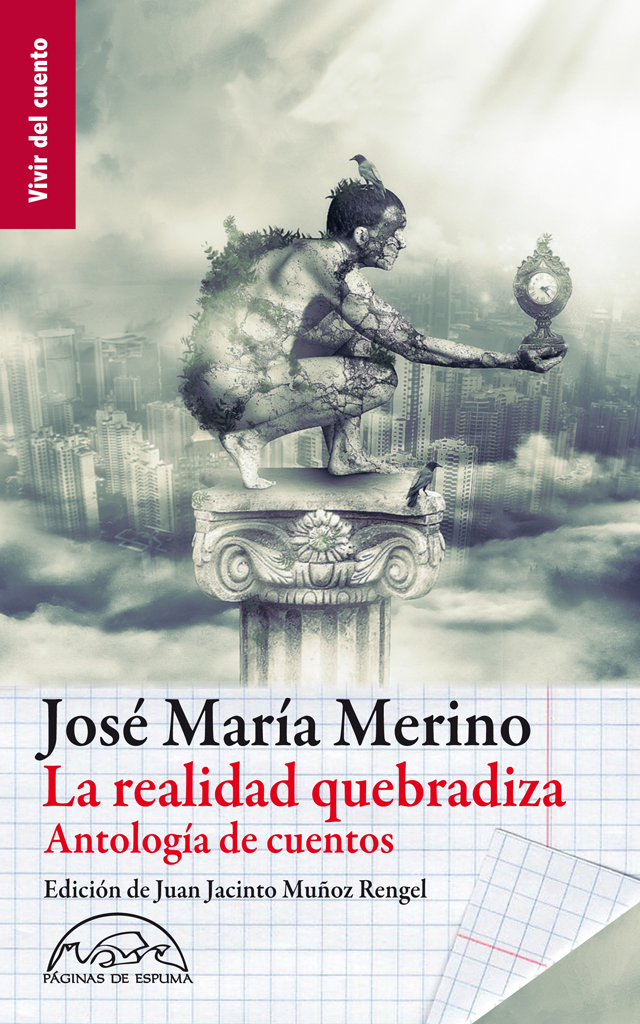
El Pais among other newspapers have some interesting interviews with José María Merino on the occasion of the publication of an anthology of his writing by Páginas de Espuma. He is a short story writer I’ve been looking forward to reading soon. Last year his book El libro de las horas contadas was given high praise and end up on some best of the year lists. The interview from El Pais is interesting. It was especially gratifying to hear a short story writer say there are only so many short stories one can read in a sitting, something for all the short stories I read, I find to be true.

-¿Y que hay de los microrrelatos?

-Hay gente que los desdeña, pero es como si un pintor desdeñase el soporte de óleo o el soporte de madera. En ellos puede haber cosas estupendas o cosas deleznables, exactamente igual que en la novela. Para mí, como escritor, lo que aporta es que puedes decir cosas que no podrías decir de otra manera.

-¿Son estos capaces de satisfacer el hambre literaria?

-Sería absurdo comparar un minicuento con Ana Karénina, pero son sabores que pueden resultar más intensos, pueden dar un matiz diferente. El problema es que no puedes leer demasiados minicuentos seguidos, porque te empachan. Pero pueden despertar ideas interesantes y divertirte mucho.

You can read the introduction of the anthology here. It will give a good sense of his work. And if you are looking for a few more interviews the publisher has a few links here, here, here.

Daniel Sada Reviewed in the New Quarterly Conversation

The latest issue of the Quarterly Conversation came out recently. As usual it has some great material in it, including a review of Daniel Sada’s Casi Nunca which was published a couple of months ago. It is a good review in terms of thinking about Sada’s language and grounding him in Mexican letters. It isn’t so good in giving you a sense of what the book is about. That’s ok I guess. You can’t have every thing. The book has been on my shelf for years. I’m going to get around to read it one of these days.

Other features of note:

Post-Literacy or Super-Literacy?

Post-Literacy or Super-Literacy?

By Daniel Evans Pritchard

Douglas Glover believes that there is a major failure in literary culture, and his new volume of essays, Attack of the Copula Spiders, attempts to re-teach the skills of reading and writing. Attack of the Copula Spiders, however, definitely is not an exercise in remedial education. Glover is a literary technocrat with a cranky, professorial temperament. He studies the percentages of load-bearing words within sentences and paragraphs, offering dictums in terms that would be familiar to central bankers. But are his remedies right for our literary problems?


On The Alienist by Machado de Assis

On The Alienist by Machado de Assis

By Matt Rowe

A highly educated man proposes that the government create a publicly funded system of healthcare. His opponents question the scientific basis of his ideas while clinging to religion. Some wonder where the money will come from; others worry about who will decide who receives care. As ordinary citizens see more and more of their friends and family fall victim to a corrupt system, they unite in a protest that is intended to be non-violent but turns bloody when challenged by government militia. But, rather than the people’s triumph, the seizure of power only marks the moment when hypocrisy, under the banner of “compromise,” becomes pervasive. That’s what happens in Machado de Assis’ 1882 novella The Alienist , the opening chapters of which are excerpted in this issue of The Quarterly Conversation. The Alienist takes place not in the United States of 2012 but in the Brazilian colonial outpost of Itaguaí, sometime around the year 1800.

The László Krasznahorkai Interview

The László Krasznahorkai Interview

Interview by Ágnes Dömötör

You know, the problem is that anything that’s the least bit serious gets bad PR. Kafka got bad PR, and so does the Bible. The Old Testament is a pretty hard text to read; anyone who finds my writing difficult must have trouble with the Bible, too. Our consumer culture aims at putting your mind to sleep, and you’re not even aware of it. It costs a lot of money to keep this singular procedure going, and there’s an insane global operation in place for that very purpose.

In Translation

From The Alienist by Machado de Assis

From The Alienist by Machado de Assis

Translated by Matt Rowe

The chronicles of Itaguaí tell that long ago there lived in town a certain Doctor Simeon Blunderbuss, a man of noble birth and the greatest doctor in Brazil, Portugal, and both Old and New Spains. He had studied at Coimbra and at Padua before returning to Brazil at the age of thirty-four. The King could not manage to convince him to stay on in Coimbra as regent of the university, nor in Lisbon directing royal affairs.


True Milk by Aixa de la Cruz

True Milk by Aixa de la Cruz

Translated by Thomas Bunstead

I thought it strange the baby not crying. I wanted to get up and check that it was all right, but I was worried I’d hurt myself, plus I was in a bit of a daze—it was as though my eyelids weighed more than usual. I asked myself: what dreams would I have had while I was under? I couldn’t remember a thing. Strange, because I always dream, and I always remember my dreams. I’d had a recurring nightmare over the previous nine months, over and over: in agony, I’d be giving birth to a baby that made a sound like a cat.


Ibn Fadlan and the Land of Darkness: Arab Travellers in the Far North

Ibn Fadlan and the Land of Darkness: Arab Travellers in the Far North

Review by George Messo

It’s Ibn Fadlan’s account of his remarkable journey that takes up the larger part of Paul Lunde and Caroline Stone’s newly translated anthology Ibn Fadlan and the Land of Darkness: Arab Travellers in the Far North. In 922 Ibn Fadlan set off from Baghdad as the envoy of caliph Muqtadir, bound for the upper Volga River and the Turkic-speaking court of Almish ibn Yiltawar at Bulghar. His mission was simple: to instruct the newly converted Almish and his people in the Islamic faith, to oversee the building of a congregational mosque, and to assist in the construction of a defensive fortress. Because of their richness, Ibn Fadlan’s detailed observations retain an authentic power to shock. He maintains a coolly dispassionate sense of importance and breadth, documenting a dizzying range of anthropological gems, from Turkish marriage customs to hospitality, from hygiene and the Ghuzz taboo on washing to horse sacrifices.


And so many others of note.