A Guide to Online Fiction at the Millions

The Millions posts a nice overview of some on-line fiction that David Backer has found. Some of it looks genre shaping, others such as Words Without Borders are more traditional literary reviews. The article is sure to have something for all tastes.

First, look Ben White’s Nanoism. White is a medical school student in Austin who’s developing the quality and presentation of twitter-sized fiction (140 characters or less). This isn’t a new form of fiction: fragments have existed from Gilgamesh to Kafka. But now these small pieces of language have won a currency in our minute-to-minute lives, a chirping and ambient speech. Sites have come about to present these “litwits” (Escarp, Thaumatrope, Outshine, PicFic). The difference with White’s stuff, both his own writing and the writing he publishes, is that in it you can see the litwit taking shape as a valid form, shaped by our technology, for getting at the truth.

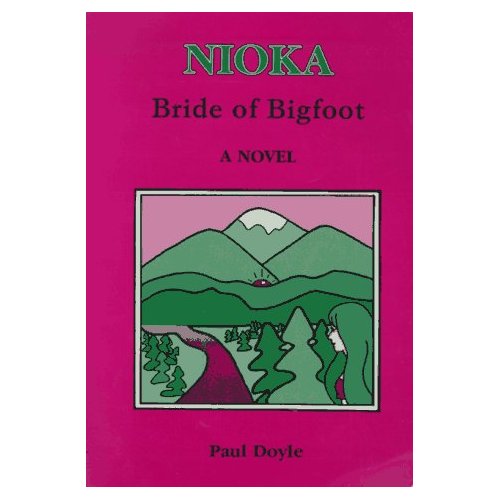
Who I Am Not

This came up recently and so I thought I would let everyone know I am not the author of this work, although I once owned a copy. I have no idea if it is any good because I never got around to reading it.

This isn't my book
This isn't my book

Spanish Poert Luis García Montero in Seattle 3/3/2010

LA SOLEDAD COMPARTIDA / A SHARED SOLITUDE
Please join us for a bilingual poetry reading with Spanish poet LUIS GARCÍA
MONTERO (Granada, 1958).  Widely considered the most important poet and critic
of his generation, García Montero is a leading proponent of the �Poetry of
Experience,� the dominant trend in Spanish poetry since the 1990s.  He has
received many prestigious awards, including the Adonais Prize and the Loewe
Prize, as well as the National Poetry Prize and the National Critics Award.
Students in Spanish 596 will read their translations of his poetry for this
event.

Wednesday, March 3
7 PM
Smith Hall 205 (UW Campus)
Free and open to the public

Review at TQC on Borges’ Lectures from the Argentine Master

Daniel Pritchard has written an interesting review at the Quarterly Conversation of Borges’ Lectures from the Argentine Master: Seven Nights. I’d been curious if the book was worth reading. Although it has his similar themes, they sound perceptive and erudite in a way that I find his late fiction isn’t. His latter stories, while continuing with his themes of the other and mirrors, often seem repetitive and don’t have the fictive sparkle of Ficiones, as if he just wanted to write philosophy. By the time 1977 rolls around, I think lectures might have been the best vehicle for him.

The assertion of Jorge Luis Borges’s literary genius is today assumed and completely unremarkable, and since many superior critics have elaborated it, I will refrain from boring you with redundancy. However, it is occasionally overlooked that Borges is also a philosophical genius—philosophical, that is, in that he is completely in love with knowledge, with the pleasure that knowledge for its own sake provides him—and although he is a lover of knowledge, he never declines into reverential pedagogy. Knowledge, to Borges, is not for the knowing, nor for the asserting over and condemnation of others, nor for proving others wrong, but for the pleasure of discovery.

In these lectures, Borges uses his genius to provide that gift of discovery, an experience akin to poetry, “something as evident, as immediate, as indefinable as love, the taste of fruit, of water.” Of the truths themselves, he is always humble. One believes or else one does not; the mind is a malleable thing so that, as he says in the lecture on nightmares, “we may draw two conclusions, at least tonight; later we may change our minds.” And besides, most of what is believed is only an illusion, “our ignorance of the complex machinery of causality.” Like Socrates, Borges is most sure only of the fact that we are mostly ignorant, that there are obscure mechanisms imperceptibly at work in our lives. Whether we decide to call these machinations magic, or God, or fate, each explanation is yet another expression of the consequences of unknown acts.

Javier Marias Interview on Bookworm

Michael Silverblatt interviewed Javier Marias about his trilogy Your Face Tomorrow for his most recent episode of Bookworm. It is an interesting conversation, although one gets the impression that Marías is brushing aside Silverblatt’s often baroque questions. The first part of the interview is here and the second part will be here.

Borges Lost Translations at the Guradian

The Guardian UK (via Words Without Borders) has a short bog post about some translations Borges put together with Norman Thomas di Giovanni of some of his works. It sounds like a true Borges-like project.

Nonetheless, what they produced during this period were not simple translations. Some of their time was given to the collaborative composition of original versions of Borges’s stories in English. Borges’s grandmother was from the Midlands, and he was consequently fluent in English, albeit in a reportedly antiquated turn-of-the-century style. So di Giovanni earned equal writing credit for versions of stories including Tlön, Uqbar, Orbis Tertius, The Library of Babel and The Lottery in Babylon.

48 Year Old Worker Becomes Literary Success in Spain

David Monteagudo, el obrero escritor (the writing worker), has become a literary success in Spain in the last few months. Coming from obscurity to publish the book Fin (End), he has become part triumph of the persistent and a publishing feel good story. The reviews I believe have been good. He has lived a hard life in a box factory but it has given him some humility about the arts. You can read an interview with him here.

Juan Rulfo Reading His Stories Luvina And Tell Them Not to Kill Me

Archivosonoro.org has two recordings of Juan Rulfo reading his two short stories, Luvina and Diles que no me maten (Tell Them Not to Kill Me). The way he reads them really gives a different color to the stories than I originally envisioned. Luvina is my favorite Rulfo story and it is great to hear him read it. The recordings are a little scratchy, but certainly listenable.

Celebrating the Indepedent Book Store – Madrid’s Short Story Only Shop

Some say that Spain has been enjoying a renaissance of the short story. You can see part of that in Madrid’s Tres Rosas Amarillas (Three Yellow Roses) which only carries short stories. It isn’t a big shop, but it looks interesting. It makes me almost wish I was going to Madrid this year. For those inclined, you can find a short story by Hipólito G. Navarro written for the shop (pdf). I haven’t read it yet. His page of recommended short stories is an interesting mix of Spanish and international.

Richard Hugo House to Host Writers Conference May 21-23

According to the Hugo House’s website they will be hosting a conference focusing on how one finds readers. This is a nice change to see, because while the Hugo House is a good resource (I am a member and read there occasionally) they typically only offer classes and if you are not interested in classes their program isn’t of much use.Looking forward to see if it will be interesting.

On the weekend of May 21-23, Richard Hugo House will be hosting its first writers’ conference. The topic will be: Finding Your Readers in the 21st Century.

Our focus will be on exploring the changing literary landscape and the options available to writers for getting their work out in the world and into the hands of readers. While we will certainly look at traditional publishing models, what we’re really interested in is showcasing new possibilities that writers in our community may not be aware of, from the traditional to the off-the-wall. We’ll look at ways writers can promote themselves and their work directly to their readers, and offer hands on practical workshops on basic tools of the writing business from creating a pre-pub platform to building your own website.

Registration for Finding Your Readers in the 21st Century will open on April 5 for Hugo House members and April 12 for the general public.

Elliott Bay Books Update at the Stranger – To Open on Tax Day

The Stranger has a quick review of the new Elliott Bay Books. They note that it will probably be opening on April 15, 2010. It will not be carrying used books, but I don’t think that was really their thing

The Comedian, Days of Wine and Roses, A Wind from the South – A Review

This post concludes my reviews of The Golden Age of Television (The Criterion Collection).

The Comedian

The Comedian is the most dynamic of all the plays in the collection and Mickey Rooney is impressive as a manic and selfish comedian who uses anyone he comes in contact with. The story follows a comedian as he works to put together his next show for television, and his head writer who is struggling to come up with new material and is quickly realizing that he no longer can write comedy. The characters offer two sides to the conflict between the relentless machine that is entertainment and the individual who is caught in the machine. Rooney’s comedian demands everything from those around him, at times manic, at others desperate and scared, but always demanding that everyone recognize him as the only thing anyone should be paying attention to. On the other hand, O’Brien’s character knows the comedian is the worst kind of human being, one he shouldn’t even be near. Each actor captures the essence of these positions, Rooney with his fast talking, and O’Brien with his noir like voice that suggests a world weary wisdom. In the middle of the two is Mel Torme who plays Rooney’s slavish brother that Rooney uses at ever chance he can. One wants to feel sorry for Torme, but to break free of the Comedian like O’Brien does, takes a will power he does not have. While O’Brien escapes the beast and regains his soul as happens in so many of these dramas, the conclusion, as Rooney leads Torme back to his dressing room, is anything but pleasing. While Requiem for a Heavyweight is the most well know of Serling’s works, the Comedian is probably his best and still feels fresh even though it was shot in 1957.

Days of Wine and Roses

While Days of Wine and Roses is obviously a problem story, a story designed to explain a problem, it is well produced and still interesting. While the framing device, a lecture at an Alcoholics Anonymous meeting works to give an over arching thread to the story, it also lends the show an air propaganda, as if the writer wanted to tell everyone how good AA is. While that is not true, addiction narratives so often have a triumphalest endings that celebrate the road to recovery. Days of Wine and Roses charts the well worn path to addiction: at first alcohol is fun; then it begins to interfere; then one looses a job and goes broke; finally, one hits rock bottom and after a few tries, recovers. What makes the story interesting more than the moments of alcoholic madness is the how the use of alcohol is presented. First, the couple is described as a couple who likes to drink. 50 years later and decades into the recognition that of addiction as an illness, to describe yourself as someone who likes to drink is awkward at best. Sure for many people it is socially acceptable to binge drink, but it is really only acceptable to say that you enjoy beer, wine or whatever. It isn’t the act you enjoy, but the beverage, and hopefully understand you should do it in moderation. Alcohol is everywhere. That one could be hired mostly to go out drinking with a client isn’t really acceptable, either. Days of Wine and Roses reflects well the two martini lunches you see in Mad Men or read about in the Man in the Gray Flannel Suit. The other thing that makes the story palatable, is the stark ending. Cliff Robertson, whose character battles addiction, finally is sober, but realizes he must give up his wife if she is going to continue to drink. The ending is not soft and though Robertson’s character has refused to be what we would call an enabler, the starkness of it, for its time, is startling and refreshing. Days of Wine and Roses doesn’t tread new ground, but it does show a bleakness that is even now can be difficult to get into a TV program.

A Wind from the South

A Wind from the South covers the 48 period when a young Irish woman in a tourist town realizes that she can be more than a little town lets her. At the same time a middle aged man in a loveless marriage realizes it is over. In an era of separate beds for married couples on TV this was probably ahead of the times. Yet it is also a little silly when the two characters declare their love for each other after a few days. Nevertheless, it does have some nice touches. For example, the young woman goes to the town dance and an old couple see her and report back to her brother how scandalous it was. When her lover asks how long the old couple has been married, she says, oh no, they are brother and sister, which makes her situation with her own brother just as perilous. Over all, A Wind from the South is a melodrama about finding yourself that is certainly enjoyable to watch, but wraps itself in ethereal poetry, such as, a wind from the south carries the scent of freedom,  but in the end feels route.
Voodoo Histories: The Role of the Conspiracy Theory in Shaping Modern History At Salon

Update: the NY Times has a glowing review of the book from MICHIKO KAKUTANI.

Salon has an interesting interview with British journalist and Times of London columnist David Aaronovitch about his  new book, “Voodoo Histories: The Role of the Conspiracy Theory in Shaping Modern History. As conspiracy theories abound, thanks in part to the power of the Internet, it is good to see a book that addresses the topic and takes apart the theories. Not that the true believers will change their minds.

In recent years, people like the birthers and the 9/11 truthers have gotten a lot of press coverage and pop-cultural play. Are we in a new golden age of conspiracy theories?

I think we live in a more conspiracist period. There’s no question there are more of them, and they’re more global, and they take off more quickly. They’re also more complex and relate to virtual communities rather than real ones. I think it’s because of global interdependence. We live a global period, and there’s a huge temptation among people to believe there is a master plan, because otherwise the suggestion is we’re interdependent and the world is chaotic — and that’s a mindfuck.

There are entire societies where the default position is to believe in conspiracy theories, like in Pakistan or Iran. There are very few people in the Pakistan military, for example, who don’t believe that Bush was behind 9/11. But they’re also probably more easily dispelled, especially in places like the U.S. or Britain. Maybe I’m a false optimist, but I think we have a good skeptics’ movement. My book has done quite well in the U.K. I do think there is some appetite amongst the skeptics that we’ve had enough of this shit and it’s time to fight back.

Mardy, Patterns, No Time For Sargents (Golden Age of TV) – A Review

In watching the programs in The Golden Age of Television (The Criterion Collection) you are quickly reminded how much has changed since these stories were first written and produced. Not only have styles, tastes changed, and concerns of TV viewers, but the cultural context in which these stories were first written. In general terms, they reflect a pre-suburban vision of America based in the great urban cities such as NY. They are time capsules of a time that only seems to exist now in mythic memories of the old ethnic neighborhoods of the European emigrants, something that has long passed into history.

Mardy

Is one of the most famous programs from the so called Golden Age of TV and even today the writing with its minute realism is still interesting. Chayefsky truly had a way with dialog and the scene where Mardy is on the phone calling a woman up for a date on Saturday night is as good as it gets when trying to write nervousness. He also knew how to write about people doing nothing quite well. As a story Mardy is also still interesting, but it also feels at this distance (almost 60 years) unreal.

Briefly, Mardy is the last unmarried son of an Italian American widow. He is a butcher and spends his time in the neighborhood bar with his friends worrying about when he’s going t get married. He thinks he’s a looser and so is set to give up on happiness, until he meets a less than attractive woman at a dance and decides, despite the ribbing of his friends, he is going to go out on a date with her again.

What makes the story so distant is the interaction with the mother, who worries that he is going to leave her to marry the young woman and she’ll die all alone. These days that doesn’t even seem like an issue, since it is common for children to leave home after school. It is a sign of failure among many that you are still at home after school. Moreover, this is New York of the neighborhood and everyone is constantly after him to say when he is going to get married. One could be forgiven for asking what’s the big deal? Just get married, of course nothing is ever that easy and Chayefsky is quite good and portraying that and it is in that the story still has its power. The working class world Mardy inhabits may have changed and like Last Exit to Brooklyn is a working class New York that is now part of a distant history, but the character of Mardy can still be found. If one is sympathetic to his struggle just to get along, then the show is worth watching.

Patterns

Patterns is Rod Serling’s take on corporate culture. The story is simple: a young executive is brought in to replace and old and worn out executive and in the ensuing power change the executive finds that he has a broader social conscience than the CEO. While this kind of corporate evil vs the young insider with a consciousness is a common theme (Wall Street for example), Serling’s climax is a little different than even a contemporary work like The Man in the Gray Flannel Suit. In the Gray Flannel the only option for the good is to leave the corporate world. For Serling the option is to continue to work, but try to not only work for change with in, but to oust the boss when you can. While that man work as a secret plot, Serling’s young executive tells the CEO this and the CEO is of the opinion that that is fine as long as the corporation continues on, since all that matters is the longevity of the corporation. The feed the beast argument is different and while it is satisfying to believe the young executive is going to change things in his titanic struggle with the CEO, his conclusion rings a little hollow. Perhaps it reflects some of the post war labor-management that existed in the 50’s, but the notion that one is going to bring change just for the sake of being nice to workers doesn’t usually happen. The problem with that kind of ending in a social work is that it doesn’t show the way forward, just makes everyone feel happy. That said, it is well acted and well written.

No Time For Sargents

No Time for Sargents is part of that long list of stories about yokels coming into the modern world and showing it as silly and easily to disturb. Andy Griffith plays a southern boy filled with back country wisdom who has no idea what the modern Army is like. Put the two of them together and hilarity ensues. The southern yokel jokes seem a little stereotypical now and lead right into that long line of silliness that finds is apex with the Beverly Hill Billies. Fortunately, No Time for Sargents still has some funny jokes and its take on the army as a kind of a place where average young men can over turn bureaucratic ineptitude and help make the Army the true reflection of America, a just meritocracy with a can do spirit.

Literary Life in North Korea at Publishing Perspectives

Publishing Perspectives has an interesting look at literary life in North Korea. While it may not be news, North Korea is not the Soviet Union with its underground of writers hoping to smuggle their work out to the west. North Korea is so controlled that even those risky moments of rebellion don’t exist. And naturally, the works are pure propoganda

B.R. Myers warns that “North Korea is country in which all cultural activity is subjugated to the needs of the Workers Party. Even a simple love story, for example, will carry a propaganda message — a man will fall in love with a woman because she has the right attitude toward working for the state.”

Another typical story might be: A solider is lazy and not sweeping the floor of his tent, so a comrade does it for him. The bad soldier comes in and sees what has been done and bursts into tears and says he’s sorry.

The author of the book The Cleanest Race: How North Koreans See Themselves and Why It Matters by B.R. Myers (Melville House) which is partly reviewed you may know as the author of attacks on modern literature that have appeared in The Atlantic.

Review of New Horacio Castellanos Moya Book at El Pais

El Pais gave a brief review of Horacio Castellanos Moya’s latest book Con la congoja de la pasada tormenta. It is a good review, if brief.

Even though he has not put the stories together with this purpose, the 22 stories in Con la congoja de la pasada tormenta (With the Grief of the Tormented Past), by the Salvadoran writer Horacio Castellanos Moya (Tegucigalpa, 1957), could serve one who does not know the rest of his books as an introduction to characters and themes that people them. Here one meets soldiers and journalists, professors and waiters, photographers and whores, revolutionaries and ex-prisoners, in addition to the endless supporting characters that with a  mere stroke acquire an immediate life (in this Castelanos is Cervantesque). As for the themes, over all of them is one: love, but not hevenly but the other urgent love that is the passion to posses, already seducing, cheating or believing cheated, paying or believing bought. In fact, some stories would fit well in a magazine with naked bodies if it were not for the literary quality, that style of sensual microsurgeon, that is as torrid as the subject mater. Also, because in the stories appear some complicated characters, insecure and anxious men, enfeebled by the testosterone that eroticises one with fantasies about what the rest do in their bed. Likewise alcohol occupies a place of honor – whiskey and beer most of all -, the public places where people drink and the alcoholics in general. And finally, the last of the short list is war, that conditions everything, manipulates and overturns so that the characters walk through the path of exile or brutalization. These three themes, nerveless, treat with unequal fortune and provoke disparate stories, something normal to keep in mind is the stories were written over 20 years. You can recognize two of stories, ‘Variaciones sobre el asesinato de Francisco Olmedo’ and ‘Con la congoja de la pasada tormenta’, that are really short novels. The first relates a trip into the past of a man who looks for the truth about the death of his friend in a gang, or that is what he believes, and fabricates the search with success until it leaves the reader convinced of all his uncertainties. The second uses for its title a quote from Don Quixote when the he found himself at the sale of prostitutes, drinkers and squabbles. Here the narrator is a waiter that becomes involved in a nightmaire at the hands of snobs of all types, and is also about the investigation of a murder. Both stories are near perfect and show that Castellanos dominates that rythm that is not easy to control.

Aunque él no los haya reunido con este propósito, los 22 cuentos de Con la congoja de la pasada tormenta, del escritor salvadoreño Horacio Castellanos Moya (Tegucigalpa, 1957), podrían servir a quien no conociera el resto de su obra literaria como introducción a los personajes y los asuntos que la pueblan. Aquí se encuentran militares y periodistas, profesores y camareros, fotógrafos y putas, revolucionarios y ex reclusos, además de un sinfín de secundarios que con un simple trazo adquieren vida inmediata (en esto Castellanos es cervantino). En cuanto a los asuntos, son sobre todo uno: el amor, pero no el celeste sino ese otro amor urgente que es la pasión por poseer, ya sea seduciendo, engañando o creyendo engañar, pagando o creyendo comprar. De hecho, algunos relatos encajarían bien en una revista con cuerpos desnudos si no fuera porque aquí la calidad literaria, ese estilo de microcirujano sensual, es tan tórrida como el contenido. Y también porque en ellos aparecen algunos personajes complejos, hombres inseguros y ansiosos, enfebrecidos por la testosterona que se erotizan con fantasías sobre lo que hacen los demás en la cama. Asimismo ocupan un lugar de honor el alcohol -sobre todo la cerveza y el whisky-, los lugares públicos en donde se consume y los dipsómanos en general. Y, por fin, el último de la terna es la guerra, que todo lo condiciona, lo manipula y lo trastoca para que los personajes caminen por la senda del exilio o del embrutecimiento. Los tres asuntos, sin embargo, se tratan con fortuna desigual y dan lugar a cuentos dispares, algo normal teniendo en cuenta que se trata de relatos escritos a lo largo de 20 años. Hay que destacar dos de las historias, ‘Variaciones sobre el asesinato de Francisco Olmedo’ y ‘Con la congoja de la pasada tormenta’, que en realidad son novelas cortas. La primera relata el viaje al pasado de un hombre que busca la verdad sobre la muerte de su amigo de pandilla, o eso cree, y que fabula esa búsqueda con éxito hasta dejar al lector convencido de todas sus incertidumbres. La segunda lleva por título una cita tomada del Quijote, cuando el caballero se encuentra en la venta, de nuevo lugar de putas, bebedores y trifulcas. Aquí el narrador es un camarero que se ve involucrado en una pesadilla a manos de señoritos de todos los pelajes, también a propósito de la investigación de una muerte. Ambos relatos rozan la perfección y vienen a demostrar que Castellanos domina ese ritmo nada fácil que exige el medio fondo.

Con la congoja de la pasada tormenta

Horacio Castellanos Moya

Tusquets. Barcelona, 2009

309 páginas. 18 euros

Spanish Authors Video Interviews – Canal-l.com

Moleskin Literario pointed me to this Canal-l which has dozens of interview with Spanish Language authors. There is quite a collection, although the quality suffers a bit. Alone with El Publico Lee from Canal Sur and Pagina 2 from RTVE, one can easily gorge themselves on interviews.

The BBC’s American Archive

Mark Athitakis’ American Fiction Notes points out that the has a series of shows on the BBC with interviews with American authors. The interviews were recorded over a ten year period and all shows are about 30 minutes long. Here are some of the authors featured.

  • Playwright Edward Albee discusses his career.
  • Patricia Cornwell discusses her life and her career as a crime writer.
  • Don DeLillo author of Libra, Underworld and Cosmopolis.
  • E L Doctorow talks about novels including Ragtime and Homer and Langley.
  • Dave Eggers author of A Heartbreaking Work of Staggering Genius talks to Mark Lawson.
  • Ellroy talks about Blood’s A Rover, which completes his Underworld USA Trilogy and why he has to shut himself away to write.
  • John Irving author of A Prayer for Owen Meany and The Cider House Rules.
  • Stephen King discusses writing horror
  • Norman Mailer speaking in the last major broadcast interview of his life.
  • Nobel prize winning author Toni Morrison talking to Mark Lawson at the Cheltenham Literary Festival.
  • Walter Mosley books include a series featuring Private Investigator Easy Rawlins.
  • Joyce Carol Oates author of over 50 novels including Blonde and Black Water.
  • Marilynne Robinson author of novels including Housekeeping and Gilead.
  • Philip Roth speaking as he published his last novel featuring the character Nathan Zuckerman Exit Ghost.
  • John Updike speaking on his 70th birthday.
  • John Updike speaking in his last recorded interview.
  • Gore Vidal discusses writing and politics.
  • Kurt Vonnegut, the author of Slaughterhouse Five, speaking as he publishes a memoir called A Man Without a Country.
  • Playwright August Wilson discusses his attitude to writing.
  • Tom Wolfe explains the ideas behind new journalism.
  • Tom Wolfe discusses new journalism and a novel depiciting sex amongst college kids; I Am Charlotte Simmons.

Banipal – New Egyptian Writing (Spring 2006)

I only found out about Banipal a week or two ago and thought of buying a copy, but at 18 pounds for 3 issues (not too bad) and 17 pounds for shipping (ridiculous) forget that. Fortunately, I live near a major university and they have a subscription. I read through issue 25, New Writing from Egypt. First, I was impressed with the quality of the writing. Too often I have read journals that are compendiums of authors and they aren’t particularly interesting. The authors who I found interesting and have books in English were Ahmed Alaidy’s Being Abbas el Abd (American University Cairo, 2006), which not only was an interesting story, but lexicographically interesting; and Hamdy Abowgliel’s Thieves of Retirement (Syracuse University Press, 2006). They bother were in the more seedy and criminal seeming vain but look worth perusing.

In addition to these writers, were several who were more playful in their stories, such as Haytham Al-Wardany’s Pissing on the World which is just about boys pissing on streets and seeing what they can get away with. Also of note was Ibrahim Farghali’s brief story The Monotonous Rhythm of the Years of Drought which describes the humiliation a man feels when he cheats on his fiancé with his old girlfriend. Safaa Ennagar’s Amoeba was about a woman who wears shapely cloths before her marriage, but after must wear baggy ones. One day in a private moment she again finds the freedom to wear the tighter clothes and has a moment of transcendence.

The collection is filled with interesting works, although having looked at a couple other issues, I do know they can be a little poetry heavy which isn’t bad, just something I don’t read much.

To finish I’ll quote Ennagar who comments on the state of Egyptian writing:

Literary production in Egypt today is either a way of releving the poetic situation of the writer or a kind of intellectual luxury that goes beyond reality. It is a literature of the “ghetto” that neither affects, nor is affected by, social and political movements. It is new on the levels of both form and content, but is presented only within the circle of the literati; there is no interest in spreading it outside the small elite. The print-run is limited (usually 1000 copies) as official institutions generally support works that are more traditional and lasting.

BTBA 2010 Fiction Longlist and My Review of News from the Empire by Fernando del Paso

Three Percent, as part of their Best Translated Book Award for 2010, has used my review of “News from the Empire” by Fernando del Paso In their post and gave it some nice comments.

I can’t do half the job summing up this mammoth book that Paul Doyle did for Quarterly Conversation. So rather than even try, I’m going to give all props to Paul and use his review to profile this particular BTBA title

Another book in their Best Translated Book Award 2010 long list that I read this year and thought was very good (and reviewed) was Vilnius Poker. You can read my review here.

The Long list is a great resource for translated books, especially since all of them are in print right now, so if you see one you like you can buy it. The full list is here.