Gomorrah – A Review

Gomorrah is not glamorous; it is the opposite of almost everything that one has come to expect from a gangster film. Gomorrah has one goal: point out that the mafia is anything but good, glamorous or culturally redeeming. And it does succeed quite well. Yet the opposite of glamor—poverty, the mundane, fear—are harder to make compelling and whereas the flashy crime life that is so common in films—Scar Face, Good Fellas, The Godfather—though ending in violence so often, have an allure that is hard to beat. What makes Gomorrah a good antidote to those films, is also what makes it less thrilling to watch. Simply said, problems aren’t as fun to watch as unrestrained luxury.

Gomorrah follows six characters whose lives are affected by the Naples mafia: a tailor who works for a mafia financed dress manufacturer; a man who delivers weekly money to the families of the mafia who have a family member in prison; a young boy who is just coming of age and wants to join the mafia; two boys who want to start their own mafia; a young man who has joined up with a Don who buys toxic waste and dumps it illegally. It is not obvious at first what is happening. The film is a series of interwoven stories and it cuts between each of the protagonists. For half the film the film is a series of snippets from the lives each and if you don’t know exactly what is happening, it is clear that the life they lead is not a good one. If the men are not dead or in jail they hang around the huge tenement on the outskirts of Naples that functions like a mafia housing complex. The tenement is not beautiful (although the architecture is so strange it worth it to see the movie just so you can see the building) and looks more like an Eastern Block apartment complex.

As the movie progresses the stories of the protagonists begin to take shape and if the confusion and seediness of the early part of the film served to undercut in glamor, the lives the protagonists actually live undercut any glamor one might find. It is obvious that those who join the mafia are destined to live at the edge of violence and the wealth they seek may exists for some, but it can disappear so quickly and isn’t that much anyways—€10,000 to kill someone, won’t last more than a week. Swirling through the film is an ever present war. It is not clear who is waring against who, and that, again, undercuts the glamor. All one knows is that someone could get killed at any time and the reasons are completely unknown. For the viewer there isn’t any one or group to bond to. Instead the arbitrariness makes the threat real and anxiety producing. The film is not about the audience bonding with characters, but pushing them away.

Some of the protagonists will survive, others will be killed; some will leave the mafia, some will become even more entrenched within it. Each, though, will find that they will loose something precious. Yet what they loose is in so many ways nothing worth having. One of the characters, Maria, when her husband joins the other side, refuses to leave the apartment the mafia has been paying for. She gets to keep it, but looses all her friends and lives in perpetual fear, and what does she have? An apartment in a decaying tenement that is surrounded by mafia lookouts where gunfire can start at a moments notice.

Gomorrah, as the end credits makes clear, wants to be everything a gangster film isn’t: cold, depressing, sad, fear inducing. It succeeds, yet that success comes at the price of a pleasing narrative, one that pulls you along in narrative bliss. Instead, it is more of a documentary full of uncertainties and the grim realities. While Gomorrah may be the best gangster film ever as our ticket taker said, it is not the most exhilarating one. That is the way it should be, but in a world where Tony Montana is someone to idolize, as the two boys do in the film, Gomorrah may only collect dust. I would hope, as the author seems to, that writing the book and making the movie helps deflate more of those mafia myths that continue to exist.

100% Arabica – A Review

If you want an insightful film that will explain the problems of Algerian immigrants in France, this is not the film. Yet it does have its moments and is a Raï fan’s attack on those problems, which gives it a certain weight. At the same time the film is a was a young persons film, one of those films that celebrates youth culture and asks why the adult world is so afraid of what the kids are doing these days.

The film follows a Raï band as they try to break out of their ghetto and make a living from their music. They are all former criminals and the temptation to steal is strong, especially since there are not too many opportunities in the ghetto. French discrimination of immigrants is quite well known and the film does not shy away from suggesting there isn’t much beyond the ghetto. While the band and the inhabits of the neighborhood try to live in peace, the local imam tries to get rich by imposing a fundamentalist form of Islam on the neighborhood. The imam is completely corrupt and is only interested in getting more people to support him. He works with the mayor, who is only interested in getting reelected and doesn’t care about what happens in the neighborhood, and takes his money to try and convince the neighborhood it should follow him.

The members of the band, fronted by Khaled, fight against all of these problems. They struggle to get money for a show, struggle against the imam who says music is forbidden, struggle with their parents who think they are bums. As in all musicals, though, the music is all powerful and everyone except the imam love the music. In the end, despite the machinations of the imam, the band celebrates with a triumphal show in the neighborhood and and the imam is driven from the neighborhood in a pork delivery truck. Music defeats intolerance.

The film is supposed to be a comedy and in a way it is, but it is seldom funny. Instead it comes off as a problem film with music. It is much better than Blackboard Jungle which is another problem film with young people’s music, because the musicians made the film. It shows the real preoccupations and problems the Algerian youth in France have. Every element, lack of jobs, corrupt officials, fundamentalist Imams, all have their bases in reality, and in this sense the movie is interesting. However, the narrative thread is week and so many characters come and go throughout the film that no character can develop very much. Everything in the film is for the insiders who can fill in the gaps, who know what it is like to live there. If you are an insider it makes for a pleasing film, if not, it makes for a film that is uneven.

The music, however, makes the film worth watching. There are several good performances by Khaled and Cheb Mami of some of their well known songs. The versions are not the album versions. Khaled has several good scenes where they show him working out a song and he is working with just one keyboard player and no mic. The performance is very intimate and well worth a watch.

In all, 100% Arabica is not one of the best movies but it if you have even a passing interest in Raï it is worth it.

I’d Like – A Review

I’d Like is not just a collection of stories, but a way telling them that is fresh and reinvigorates the form. Amanda Michalopoulou has constructed a reinforcing set of insights into story telling that is not consumed in the tediums of art about itself. The focus on reworking how stories are told does not hobble the stories, though, instead it adds an element of mystery and metaphysical shifting as if the epiphanies and narrative truths that so permeate the genre once reached are then undone as the story is revealed to be part of something different. The revelation shifts the meaning of the stories and ultimately the conclusions one can draw about the stories.

Michalopoulou, though, is writing neither theory nor dense esoteric investigations. Instead she uses a sparse prose that features fleating references to other stories or other characters. She seldom describes the environment her characters inhabit; description would distract from the multiplicity of voices and root them into conventional frames. She also uses first person only to make the stories float into each other. It is not always clear at first who is speaking. Is it a character in a story as it is in the eponymous I’d Like, or is it the character of the author who talks to her story—one surprisingly similar to I’d Like—in a restaurant and argues about whether it is full of clichés? It is an instant critique of what seemed like a good story of a marriage grown tiresome and an escape to New York. There is an air of disappointment in her thoughts

Ever since she was born I only read short stories. Novels are like murals would take a lifetime to finish one. And poetry makes my hormonal issues even worse. I sit there and cry because Hermes, who wanted to be a perfumer, suddenly dies at age twenty-seven, in a Syrian seaport. Or because the sy is a blue and gold mistake.

Short stories suit new mothers who love to read. They open the back door for you, let you peek in at reddish beards, chambermaids, women who turn into tables. You sign into an imaginary neck and it’s over.

Clearly, Michalopoulou is interested in story telling, yet there is a connection not only to the everyday experience of the reader, but the experience of the characters of her stories. The story is grounded in the actual, but still how the story is told is important.

I’d Like also uses reoccuring images to to work the conections between the stories into the reader’s mind. The connections are subtle and serve to add curiosity—didn’t that appear a couple stories ago—rather than function as clues to that weave a complete narrative together. A red barrette, for example, is stolen from the top of a corpse on a gurney. It is a impulsive act, but in most stories it would be just a stream of consciouses moment that doesn’t mean too much. Latter, though, the barrette appears as the trademark hat of a beloved sister. The sister though, is based on someone the writer knows. The barrette functions, then, as a narrative image for the stories that are written by the character of the author, the influence that links the character of the author’s reality with her stories, and a narrative image for the reader that links each of the different realties—the fiction and the meta fiction—to each other.

Thematically, Michalopoulou’s stories revolve around the lives of the character of the writer and two sisters and their family. The two sisters come and go through the stories at different ages and phases of life. The glimpses are brief and give just enough of the tensions that exist between siblings. The tensions, though, are not banal or insipid, but reveal the way siblings interact in simple every day ways. The writer’s theme is about writing, not so much about what makes good writing, but what it is from one’s own life that becomes writing. Michalopoulou, too, is interested in how the writing reflects back on to the writer. If a story effects the reader, can’t a story effect the writer. Again, it is the criss crossing of narrative realties that becomes one of the themes.

Michalopoulou can be a funny writer and Light is the best and funniest story in the collection. One of the sisters loses her sister in a car crash and the day she learns about the accident two Mormons come to her door. Feeling lonely, she invites them in and they talk. She doesn’t know anything about mormonism, but she keeps having the Mormons back to her home to talk and pray even though she doesn’t really care that much. At the end of the story her sister returns in a dream. She ask sher sister

“Did Moroni send you?”
“No, your gulability did.”

The levity underscores the tension between the sisters, whose separation has been much trouble for the survivor. The balance between the humor and the sadness is perfectly balanced and quite funny. It is part of the playfulness of the stories that make them so good.

I’d Like is a great collection of stories that blends genres and styles to create a unique collection of stories that moves short story writing past the problem becomes realization formula.

Two Lovers – A Review

Two Lovers is the latest retelling of Dostoevsky’s White Nights and although Visconti’s Le notti bianche so beautifully retold the story, Two Lovers is a welcome reworking of the subject. Where as Le notti bianche had the claustrophobic feel of post war Italy, with its impoverished inhabitants seemingly unable to even populate their own towns, but still feeling as if the narrow streets and years of tradition were constraining the oppressing the people, Two Lovers has the claustrophobic feel of a Jewish family with its community and traditions. In both films it is the tension between the main character’s desire to escape the constraints through an idealized love and the pressure to be part of some sort of ordinariness that drives the narrative.

As the film opens Leonard (Joaquin Pheonix) is crossing a dock and suddenly jumps into the water. It is a suicide attempt, but he is unwilling to go through it. He is unsure of suicide even though life hasn’t been what he wanted. His parents, concerned by his earlier mental health problems, introduce him to the daughter of his dad’s soon to be business partner. The business partner is Jewish like his family and also live in Brighton Beach, and though they are welcoming they offer a world he already has: middle class, but not exciting. He likes the daughter yet she is more of the same.

Shortly after Leonard meets Elizabeth who lives the life he has always wanted: full of night clubs and excitement, unattached to family, to questions of who she is. Yet the rootlessness comes at a cost. Elizabeth is a former addict and lives in an apartment that her married lover pays for, but she has to wait for her lover to make time away from his wife before he will see her.

Ultimately, it is not so much the choice between the two women, but how he makes the choice that shapes the tenor of the movie. Leonard is a romantic and neurotic and uncertain. He knows how to take a chance and when Elizabeth leaves her lover because he was not at her side when she miscarried, Leonard makes his move. Leonard and Elizabeth after a tearful and intense sex of the rooftop of their apartment building, plan to move to San Fransisco together. It is an impulsive move indicative of Elizabeth’s troubles and Leonard’s dreaming. Leonard, though, is alive—he is finally escaping the family. As a true romantic he buys a ring for Elizabeth. It is obvious that Elizabeth who has just broken up with her lover is not ready for this, she just wants to escape, but Leonard is too obtuse, a dreamer caught in his own world of romance and escape.

Elizabeth changes her mind at the last moment and goes back to her boyfriend. Leonard, devastated, considers suicide again and returning to that first attempt at the beginning of the movie, he walks down to the seashore and looks as if he is going to walk into the water. He turns, though, back to the claustrophobia of his family, of their friends and realizes their is more stability with his girlfriend. It is not a music swelling moment, nor is it pessimistic, it is realistic, as if his dreams have not so much disappeared, but receded into the distance. The bitterness of the moment, a mix of anguish and the promise that although now it all seems so terrible now and will always be a melancholic part of his persona he still will be able to look back with just enough joy that the moment will become the melancholic hope that so typifies Italian Neorealism.

The conclusion is not surprising, perhaps, but it is fitting. Leonard is too unbalanced to live a wild rootless life. The clausterphobia of the film, so artly filmed, is not only what pushes Leonard away, but what shapes him and holds him together. He may not want to be the son-in-law of a dry cleaner, but he at some level feels safe in that world, and if he left the opposition that defines him would abate and he would be lost. It is not a romantic ending, but an ending that may actually bring him so sort of peace. A copule made of two troubled couples will only end in more trouble.

Alias Nick Beal – A Review

Alias Nick Beal (1949) is a rare film noir that until recently was thought lost. Universal, though, has found the negative and a new print of this Faustian noir was show at Siff’s recent film noir festival. It is an excellent film that mixes mysterious cinematography, great acting and a good story to produce an atmospheric morality play with plenty of dark edges.

The film features Ray Milland as Nick Beal, the devil, who upon hearing a crusading DA say he’d give his soul to convict a big time criminal begins to tempt the DA. The DA is a good man only concerned with eradicating crime and helping kids with his foundation, but little by little Nick ingratiates himself in the DA’s life. First, he gives the DA the evidence he needs to convict the man even though he has to steal it. The theft is only the first step to loosing is soul. Along the way Nick arranges it so that the DA becomes Governor and has an affair with Audrey Totter. Totter’s character is a good woman who is seduced by the glamor Nick showers her with and the threat that Nick will tell the cops her where abouts, which scares her because she is wanted for something she didn’t do. Eventually, the DA, now the Governor, signs away his soul—not that he knows it. He only thinks he will go to the Isla de Almas Perdidas if he doesn’t keep Nick in the role of the Keeper of the State Seal. When Nick tries to collect on the bargin, the DA’s friend, a minister, accidently drops his bible on the contract. Nick, of course, can’t pick up the contract and so he cannot collect. The DA just barely escapes.

Ray Milland makes the movie work. His Nick is a malevelant man, always ready with an answer or money, cold, short tempered, and demanding. He doesn’t take no for an answer and seems to know everything. He almost seems to have the power to make one change their mind and what is worse, knows exactly what one is going to say. There is a particullarly brilliant scene where Nick tells Trotter how to convince the DA he should leave his wife. She is unconvinced it will work, but later he says exactly what Nick said he would. What makes the scene brilliant is the elment of commentary, as if the film makers were saying, this what they do in every film, of course it is going to work. Milland also gives Nick an unblinking stare and an expression that says he is ready to kill at a moment’s notice.When ever he enters a scene it becomes dark.

In true noir form, the DA battles between good and evil. His battle through most of the movie is one of little steps to damination. It isn’t so much the devil that makes him do it, but little compromises with his ideals. The DA, unfortunately, is a little too good, and his slide into darkness is a little too much. What makes it worse, though, is his sudden reversal. It is not his action, but divine intervention: the bible falls on the contract. Does this mean that to redemtion is a heavinly lottery that saves people from time to time? If the slide from good to bad was a little heavy handed, the sudden reversal undoes any responsibility one has to take. The DA had recanted the mistakes he had made, but he should have had to do more. The film, though, is more concernd with spiritual redemption and defeating the devil can only be done with the God’s help.

Despite the heavy handed morality play the film is solid. Every scene Milland is in is excellent and when he comes out of the havy fog that seems to permiate half the scenes he is the embodiment of evil. The cinemotography alone is worth watching. It is too bad the film isn’t available on DVD.

Night Editor – A Review

The more obscure the noir film, the more it adheres to the genre’s conventions and Night Editor is as obscure and as B as they get. As film noir it has the classic femme fatal and the good man gone wrong who must choose between keeping a secret that will ruin him and doing the right thing. A cop (William Gargan) and his married socialite lover (blond Janis Carter) witness a brutal murder while making out by the ocean. He tries to apprehend the murderer but is afraid he will ruin his marriage and career both of which he has been putting in jeopardy to have the affair. She doesn’t want him to tell the truth because it will ruin her too. Naturally, such inaction is never rewarded and the cops soon arrest another man and accuse him with the murder, eventually sentencing him to the chair. Gargan’s character is wracked with guilt and tries to figure out how to do the right thing while keeping out of trouble. Of course that is impossible because the basic premise of a noir is the conflict between doing the right thing and saving yourself. What makes his problem worse is his lover, now ex-lover, doesn’t want to go to the police. Instead, she has taken up with the killer and is now protecting him, partly as revenge because he left her and partly because she is intoxicated by the murder, and partly because she thinks the victim deserved it. Although she turns fatal quite quickly, she is the true fatal: cold, ruthless, selfish, and sexy. The cop gets more and more irritable until his partner, a wise and kindly German, gets him to tell him the truth. The cop realizes he has evidence that will corroborate his story so they go to his ex-lover’s home to confront her. He finds her alone in the kitchen and after he has told her she has no way out she stabs him with an ice pick.

Night Editor, though, is not an existential fable of the best noir, but a morality play and though Carter’s character gives the movie a trashy joy, it suffers from its earnestness. First, the cop’s family is in such stark opposition to the jaded and glamorous world his lover comes from, it is obvious that the cop has made a mistake. How could one leave such an ideal world? Moreover, the film is more concerned with the rightness or wrongness of the affair, not what led to it, which would make room for moral ambiguity.

However, what makes the film completely awkward is the frame story that surrounds the movie. The film takes the name Night Editor because the framing device is a news room where editors talk about old stories. As the film opens a young reporter walks into the news room and passes out at his desk. The wise old editor decides to tell the story of a cop who had a good family and went astray. At the end of the movie when the editor has told the story, the young report sees the light and renounces the parting he has been doing. He goes to the restroom to buy cigarettes and there he meets the cop who now works as a mens room attendant. The reporter is so overcome by this example of where a bad decision can lead he heads right home to apologize.

Night Editor is one of those noir films that show just how common place the conventions of noir were and just how the basic elements were used as a template for the most B films. In many ways, its as if a certain number of films need love scenes and a certain number needed to have vicious blonds. What does it say about an era that needed to use women as mirrors for men’s consciouses.

Review of Modern Arabic Fiction in Al-Ahram

There is a good review of the Modern Arabic Fiction: An Anthologyin Al-Ahram Weekly. Of particular interest is the process the editor used in having the stories translated. Instead of translating them all herself she uses a team.

Likewise, in her anthologies, she argues that only poets can render poetry and only fiction writers can render fiction from another language. Thus she is adamant about having two translators for each work: a scholar and a native speaker from the original to English, revised by a writer in the target language, with her editing the final version to make sure that no stylistic or semantic errors have crept in.

Jayyusi acquainted herself with the literary scene in the US and UK and got to know personally many English-speaking creative writers and convinced them to partake in her many projects of translation.

The article also comments on the selection of the authors and the quality of the translations. Since Gamal Al-Ghitani has just won the Zayed prize the reviewer’s descrption sounds even more intriguing.

Jayyusi’s approach to Arabic fiction is marked by an analysis of its content and technique. In content, she sees fiction as a reflection of the turbulent history of modern Arabs, with hopes and dreams followed by disappointments and breakdowns — what she calls a sense of the apocalyptic. She points to a few names that stand out as models of certain trends in Arabic fiction: the Saudi ‘Abd al-Rahman Munif for his petrofiction depicting how oil has changed the ecology and the culture of the Gulf; the Egyptian Gamal al-Ghitani for his sophisticated use of time — mythical time in Kitab al-Tajalliyat (Book of Revelations) and historical time in Zayni Barakat ; the Palestinian Ghassan Kanafani for his sense of space and loss of place; the Egyptian Edward al-Kharrat as a modernist and an experimentalist; the Palestinian Ibrahim Nasralla as venturing into postmodernism; and the Iraqis Gha’ib Tu’ma Farman and Fu’ad al-Takarli for depicting the individual struggling against prevailing moeurs. As for the short story, Jayyusi concentrates in her introduction on two figures, the Egyptian Yusuf Idris and the Syrian Zakaria Tamir. Needless to say dozens of others are mentioned, including Ibrahim al-Koni and Radwa Ashour.

Larry Wilmore at Elliott Bay Books

Larry Wilmore from the Daily Show was at Elliott Bay Books yesterday evening. He is on a book tour for his new book I’d Rather We Got Casinos, and Other Black Thoughts. The book is a collection of fake interviews, essays, radio shows that he wrote over the last year. He was inspired to write by Woody Allen’s early books, which Wilmore thinks are funny. It is an interesting influence and one I might not have guessed, I suppose because Allen is so unfunny now, but Take the Money and Run and Love and Death are quite funny.

Since Wilmore is a comedian the evening was very funny. You never know how an author who doesn’t primarily work through books will address a crowd in a bookstore. The last writer I saw like that was Johan Bruneel, the author of a book on bike racing, but usually I see novelists. Wilmore gave a short run down of his history as a writer and comedian, which most people probably don’t know, but is extensive and makes for some good stories. He then talked about his book and read through the table of contents finding titles he liked and explaining what the bit was about. I’ve never seen an author do that and if he wasn’t funny it would have painful. Eventually he read (and like a good reader, used voices for each character) and answered questions.

It was refreshing to see someone break the conventions of the reading a bit and do something a little different, even if it wouldn’t work for anyone else.

Vilnius Poker – A Brief Review

I just finished reading Vilnius Poker from Open Letter Press. It is a great book, the work of a great writer. When you read a book this good you think, I wonder how many other great books are locked away in the vaults of languages I don’t know and will never know.

I will have a full review at the Quarterly Conversation in April.

Waltz With Bashir – A Review

To use the word beautiful is obscene, and powerful is the over used cousin of interesting, and so the best word to describe Waltz With Bahir, the brilliant film from Ari Folman that captures the alienation and denial that comes with the savagery of war, is unsettling. From its blend of haunting images and music to its searing yet dispassionate exploration of one man’s participation in the Sabra and Shatila massacre, Waltz With Bashir is not just a simple war film, but a pained conscience from one of the more ugly episodes between Israel and Beirut.

From the outset as a pack of wild dogs run down an Israeli street, knocking over chairs and tables in outdoor cafés only to stop and look stare up at a haunted veteran, you know the film is going to mix the horrific and disturbed flash backs to not only explain the war itself, but its power to still haunt the survivors. At first images—the pack of dogs, men bathing under flare light—are shown without any explanation and they seem otherworldly, figments of an unsettled mind. All you have are the uncontextualized images as if to simulate the fragmentary nature of memory. Folman, though, can’t can’t remember what happened during the war. All he can remember is swimming on the Beirut sea shore at night while flares light sky. It is one of those hauntingly beautiful moments of cinematographic war that maybe shouldn’t exist, but gives one the impression of complete senselessness—why should one even have the chance to bathe as if it were your private beach, while bombs are falling else where? Yet like a similar scene in Apocolapse Now that makes beauty out of the perverse it shows the soldiers as they truly are: isolated in a world where beauty can become flares over a destroyed city.

To find recover his memory, Folman begins to interview his comrades. The men often talk for some time and through the interviews the film regains its documentary quality. The interviews give the story more than just one voice and let the soldiers have a chance to speak for themselves. They also help to illustrate Folman’s point that memory of war, especially the most traumatic incidents, are seldom remember accurately, if at all. Between the interviews Folman recreates the scenes the men describe. The scenes are typical of so many soldiers sent into modern, urban warfare—young men who are scared, who shoot at anything, and are more interested in drinking and going to clubs, and whose frustrated ambivalence only makes the lives of the populace worse. There are the heroic moments when a soldier swims to safety after all his comrades are killed, and the horrific when the men shoot up a family in a car.

Folman continues to weave scenes together, some adding more details, others countering what came before, but each succeeding scene showing the war in darker and darker terms, until he finally gets to the Sabra and Shatila massacre. It is here that the full weight of the move comes and it is clear that for Folman this was the worst part of the war for him and even though he didn’t remember the camps, he could remember an image that he shows over and over and only at the camps do we understand it. We understand that the movie, like the war itself, has been moving relentlessly towards the massacre and each of the interviewees, soldiers like himself, tell what little part they had, but how they knew or sensed that something was wrong or are just haunted by it now. And when the killing is done and the soldiers move back into the camps they describe what they see and at first it is drawn, an animation like the rest of the movie, but then Folman switches to actual fotage. Perhaps the animation is no longer subtule; perhaps it places too many layers between the actual and the viewer. It is strong stuff and he wisely ends the movie there with little comment.

For Folman the war was a senseless in so many ways and Israel deserves a great deal of blame for the massacre. The movie portrays the whole incursion into Beruit as a mistake that didn’t lead to anything positive. It lead to senseless deaths of Israelis and Beruitis and in Israel no one even seemed to care. In one of the more disillusioning moments, Folman returns home to Israel for a 48 hour leave and finds that life has gone on as if there wasn’t a war going on. He notes that in the 1973 war everyone stayed at home, but in this war they are at clubs. Folman, if he was not already uncertain about the war, now feels farther from its purpose and farther from the civilian world that doesn’t even care what is going on in its name. It is in these contrasts, between home and the front, massacres and soldiers on drinking bouts, that Folamn questions the war and suggests if it was so easy to ignore, so easy to get carried away, so easy to feel purposeless, then why did we fight it, and maybe this is why he had forgotten it.

Stylistically, Waltz With Bashir is impressive, blending what seems at times completely realistic with the unreal that only animation can provide. Although documentary suggests hard edged reality, the use of animation brings a greater realism to the story because it illustrates the perceptions and memories more than the flat realism that stock footage could provide. Moreover, animation lets the movie movie past pure documentary into the interpretive where the viewer sees the film maker’s interpretation of the scenes, even though the viewer is also hearing the narration from the participant. It creates a dual layer of story telling and one that checks the veracity of the other. The use of music, too, is more than just documentary filler, but a the subtle rejoinder to the hopelessness. The score itself is sparse, and in between are Enola Gay from OMD and This Is Not A Love Song from PIL that add a dark and disjointed feel to the film. The scene in the club when Folman is on leave uses PIL’s sarcastic sensability to underscore the futility of Folman’s experience.

All of these elements, the animation, the score, the interviews, make Waltz With Bashir a brilliant and troubling film that will stick with one for quite some time.

Revolutionary Road

Revolutionary Road is yet another in the long line of films and books that tries to blow the lid off the secrets of suburbia. The book comes from what might be called the first generation of suburbaphobia that one sees in books like The Man In the Gray Flannel Suit, and continues on still to this day as a solid genre of American fiction, most recently (and clinically slick) in Mad Men. Revolutionary Road, though, is more than a damning expose of the suburbs, it is a problem movie, a movie that tries to examine what is wrong with the world and, ideally, provide a solution. Like The Man In the Gray Flannel Suit, the movie creates stark and simple choices that almost 50 years latter look more like the warning 60’s counter culture headed, than a rich examination of the times.

Revolutionary Road follows April and Frank as they struggle to reconcile what they were as young people, which we glimpse briefly at the beginning of the movie, with what they have become now: two kids, a car, a house in the suburbs, and a life of boredom and dissatisfaction. Frank, who as a young man said he wanted something different, has become the 9 to 5 man who hates his job and cheats with the young secretary. It is clear from the outset that Frank is disappointed, but he is not unwilling to continue in the same way he has for some time, he just needs a small change. An affair might do it, but he is to tied to the middle class dream and holds on to the brief moments that we briefly see before the title credits.

April, though, has not forgotten what she once wanted to be, an actress, and in an early scene she is crying in a dressing room, aware that she will never be an actress, never be what has been her identity for over ten years. Frank, insensitive to the moment, can only say, “well that’s finally the end of the […] players.”  From this point on the relationship is a battle between the forces of normalcy, work,  friends, neighbors, the daily routine, that constantly pull Frank and April from the idyllic party where they first met, and the desire to be free, to live the life that one has always dreamed. The story will continually argue between the two points of view, and the choices are stark and unbendable. But since suburbia is so stultifying it is only to be expected.

Shortly after the failure of the play and the ensuing argument, April comes up with the idea of moving to Paris. She convinces Frank who is reluctant at first but does warm to the idea slowly even though all their friends and associates think it’s an impractical idea. The impracticality of it, though, is the point, because the dream has to be in such stark contrast to the world they live in that anything less would just be living the same life. It has a bohemian sensibility and a glamor that isn’t so much about a place for Frank to think about his future, but away live in a postcard reality where there are no obligations. The only person who thinks it is a good idea is the son of their realator who has just gotten out of the mental hospital. He is the fool, the jester, the conscience of the film and when he speaks you hear the brutal truth, which at first coincides with Frank and April’s ideas, but soon becomes an accusation that they are unable to withstand because he is correct. The fool always shows one how to escape the madness if you are only willing to listen.

Madness of the suburban life begins to become oppressive when April becomes pregnant and Frank doesn’t want to move to Paris with a baby nor does he want her to have an abortion. Until this moment the film has argued between the two tropes of suburbaphobia—conformity and freedom—and the dialog and arguments feel as if one is reliving 50 years of this kind of story. To resolve the problem all one has to do, as occurs in The Man in the Gray Flannel Suit, is quit your Manhattan job, which most likely is at an ad agency since they are the most soulless of all jobs, and move out of the city to real life. Revolutionary Road, of course, uses Paris, but the affect is the same.

In Revolutionary Road, though, the stakes are higher because Frank has been offered a great job and doesn’t want to quit. Perhaps he thinks this is the thing he really wanted to do; perhaps it is just what one should do. What ever the reason Frank insists on taking the job and they begin fighting at every turn until they have a grand battle that is one of those cinematic explosions of rage that no matter how old the sentiments of the film are still feels powerful. The day after the fight April is calm and seems to have accepted the reality that they cannot move to Paris. It is an eerie acceptance, almost robotic. When Frank goes to work, though, she tries to giver herself an abortion and she bleeds to death. The choice has become a choice between the suburbs and death. There is horror greater than that of the suburbs. True, the abortion is not an explicit suicide, but the pregnancy represents just more of the same: another child and another tie to what April wants to leave, and what everyone should fear—the suburban hell.

Heartbroken, Frank moves the kids back to New York and everyone in the suburbs forgets about them since they are a disturbing memory. It is the final element of the suburban legend: the shallow, unforgiving conformity that can not have any deviants within it. Perhaps Frank who is now devoted to the kids has learned the lesson—you must value those you are with, not the material—for the last shot of him is sitting on a park bench watching the kids.  A cautionary scene one should not forget.

Despite the suburbaphoiba the film is solid and once April’s pregnancy is revealed, the suburbia debate recedes into the background and the film is less concious of its roots. And the final scene of the film with its slight comic reliefe may truely be the answer that cuts between the two polls. Tuning out the hearing aide might, in the end, be more practical than dropping out.

The Reader

When working with the Holocaust in a film or book the question that inevitably comes up is, can one make art from the Holocaust? And if so, to what end? The Reader, even its complexities, cannot escape the difficulty of these questions and stumbles even as it seems to try to question how one should approach the Holocaust. The subtleties of the film undercut its overt statements about the subject, and it’s these subtleties that makes The Reader, although excellent and never uneven in terms of acting or story, unable to completely resolve the needs of the story and the questions of suitability.

The Reader tells the story of Michael and Anna who meet in the early 50’s when Michael is 15 or 16 and Anna is in her late 30’s. They begin a passionate affair that is filled with sex and long reading sessions when Michael would read to Anna from his school books. Michael distances himself from his family and his friends as he and Anna spend more time together, finally culminating in a bicycle trip through the country side. Suddenly, though, Anna is offered a promotion where she works and instead of taking it, moves out and says nothing to Michael. Naturally, Michael is devastated but life goes on and the move cuts to show him as a law student in the early 60’s. He is a law student without any particular convictions until his professor takes him to the trial of 6 women SS concentration camp guards. One of the guards turns out to be Anna, and not only is she implicated in the mass killing of prisoners in a fire in a church, but she is said to have been the leader of the guards. Anna seems emotionless and does not deny anything like the other women. Instead, her only defense seems to be is that it was a good job, a better one than the one at Siemens. At one point in the questioning she asks the Judge, what would you done? Implying it was perfectly natural to take the job as a guard. During the trial, though, Michael realizes that she is illiterate and that she could not have written the confession where she takes responsibility for not freeing the prisoners in the burning church. Michael wants to tell her that she shouldn’t take the blame, but he can’t and she is sentenced to the maximum time in prison. Michael forgets about her and marries and has a daughter, but haunted by her he cannot relate to other women and lives a solitary life until, one day, he sees one of his old books and decides to read to her again using cassettes. He reads book after book as he rekindles a forgotten love and she receives the tapes which she listens to at first, but then uses to learn to read. After years of this, she is set to be released, but Michael still wants to keep his distance and the day before leaving the prison hangs herself. She doesn’t explain why she did it, but she does will all her money and possessions to Michael. The movie then cuts to New York sometime latter. Michael goes to meet one of the survivors from the camp who had written the book that implicated Anna. She won’t take Anna’s money, which Michael says Anna wanted to give her. She says nothing good ever came from the camps, yet she does take a little tin tea box that Anna had stored the money in and which looked like one her father had given her when she was a child. This pleases Michael and he returns to Germany satisfied. The closing scene is of Michael and his daughter at Anna’s grave just before he tells her about Anna.

It is clear even from the above that Anna is a difficult charter to understand. It is even more so because the film is not Anna’s story, but Michael’s story about Anna. Yet it is clear that she is either cold and callous or someone who has so compartmentalized her life that her role in the Holocaust has little meaning to her. When she tells the judge, what would you have done, she makes it clear that she does not see much in the way of the moral dimensions of her choice. Her choice has the physical consequences—jail, poverty—but not the moral. It is possible she even believed in the process of murder. Whatever the case, there is no Poe-like Tell Tale Heart to redeem her, only her history. (Is it even possible to believe someone like her has recanted? But that is a different issue.) When she dies she gives her money only to Michael, not to any one else, as the warden makes clear when she says, “she left everything to you (Michael).” Michael, however, says to the survivor in New York that Anna wanted her to have the money. Most likely, since this is Michael’s story, Anna said nothing. Anna did what she did and the greater shame was to admit she couldn’t read—a truly unbalanced view of what is shameful.

If the complexity of the film were to end there, the film would be another addition to the literature of the banality of evil. The story, though, adds two redemptive elements: Anna learns to read; and Michael is able to feel good about her. When Anna learns to read the thing that shamed her most is now gone. She has reached beyond her failures. Yet the triumph in light of her past is not a triumph, but a trick: look she can change. But what has changed? There is no redemption here, just an obfuscation of the past. Could any thing redeem her? The Reader leaves plenty of room to understand that the tendency to see redemption when a character has overcome some hardship is easily misplaced. And Michael’s need to redeem her, too, is a false redemption. He doesn’t want her to be redeemed for her sake, but so that he can feel that his never ending love for her is not the love for a monster. He is the one who insists in giving the money to a Jewish cause; he is the one who insists on seeing the survivor. The redemption for him, then, is a way to redeem himself, to make up for what he couldn’t do for her, for what he has done to his daughter. In short, Michael deludes himself, because delusion is pleasing.

None of these redemptive issues would matter much if the film wasn’t about the Holocaust. The Holocaust, though, adds a further layer, because playing with ideas of redemption while using the history of mas murder can easily diminish the horror. Can the Holocaust be used as a backdrop or as Jacob Heilbrunn recently wrote, “the further the Holocaust recedes into the past, the more it’s being exploited to create a narrative of redemption.”  While Heilbrunn’s article doesn’t examine The Reader in depth, it does raise the question, can such huge crimes be the materials for ethical delemas? The reason it is important to ask the question is because The Reader does not stop with the two moments of redemption above. While one could mistake this as a redemptive movie, its complexities do lead to a wider, more nuanced reading. It is when Michael goes to New York the problems start. When Michael talks to the survivor she tells him, “nothing good ever comes of the camps,” and yet when Michael leaves the movie shows her placing the tea tin in a place of honor, as if something great has been recovered. Yet isn’t the tin something good coming of the camps? Moreover, the tin carries another act of redemption: from Anna to Michael to the survivor. A nice tidy ending. It is when Michael makes the visit, the film begins to blur the lines between the complexities of Michael’s reactions and how the Holocaust is perceived and can be contemplated. The survivor says nothing good can come of the camps, and yet one of the last images of the film is something good coming of the story, and by extension, the camps. It is a tricky thing to on the one had show Michael’s delusion, yet not sentimentalize the return of the tin, as if that made everything whole. Unfortunately, The Reader chooses to wrap the film with a tidy resolution that can make one feel good, but resolves nothing.

To return to the question that opened the article: can one make art from the Holocaust? Of course, and Imre Kertez’s Fatelessness is a perfect example, but as The Reader shows, even the best works can easily loose focus and bring resolutions to where there are none, only the longing for the end of a story whose backdrop even 60 years latter is not just a forgotten ruin.

Posters For The People: The Art of The WPA

Posters for the People: The Art of the WPA is a beautiful book from Social Arts which collects hundreds of Works Progress Administration (WPA) posters in one volume. The posters range from work place safety to public health campaigns to war information and show the wide range of ideas and initiatives the government used to tackle the Great Depression. Contrasting the initiatives and the scope of government implicit in the initiatives to today’s government, the government had not only desired a larger reach, but had a some what paternalistic stance or an uncritical belief if progress. However, it is clear the government was willing to try many different approaches to dealing with the depression and one can marvel at the range of ideas.

The art of the posters is a large part of the value of the book. The WPA employed out of work artists and they attempted to add their skills to the effort to end the depression. Seldom are the posters simple instructions using only text, but a mix of graphic styles using techniques from commercial art and fine art to create illustrations that range from the abstract to to the pictorial. In many of the posters there is a clear understanding of the power of the image and little text to clutter the message. Often the posters play on national themes and use the imagery of national icons to give one a sense of pride. The strongest posters are those that make an image iconic and use few words to describe it.

Below are a sample of some of the most interesting photos. These are from the Library of Congress collection which has hundreds of posters in its collection. The book also has a web site, www.postersforthepeople.com.

Elephant
Elephant
R.U.R. (Rossum's Universal Robots)
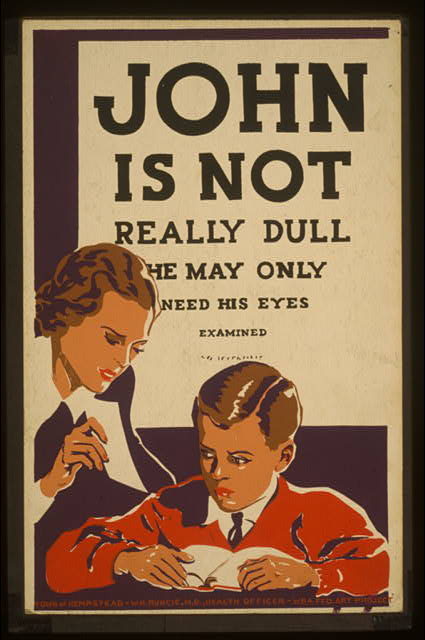
John is not really dull - he may only need his eyes examined.
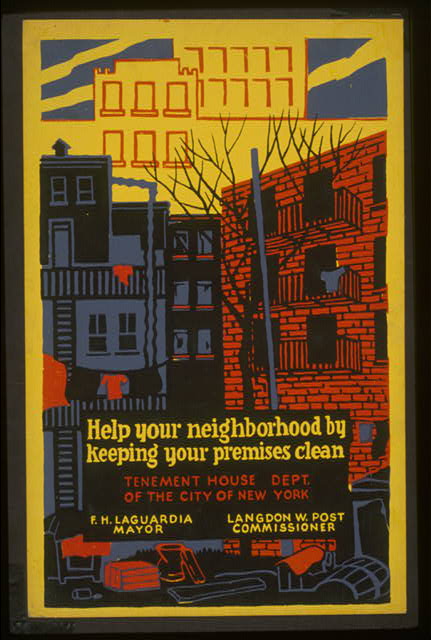
Who uses the word Tenement any more?
Dedication ceremonies--Ida B. Wells Homes, a development that would be sonomous with the failure of urban development
Outwitted by community sanitation
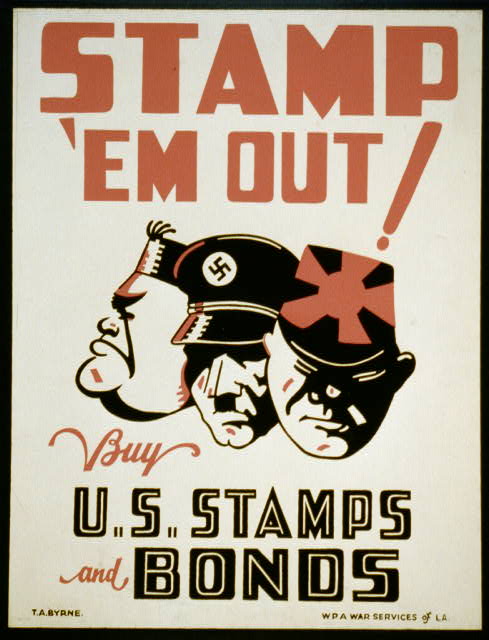
Stamp 'Em Out - Propaganda at its best
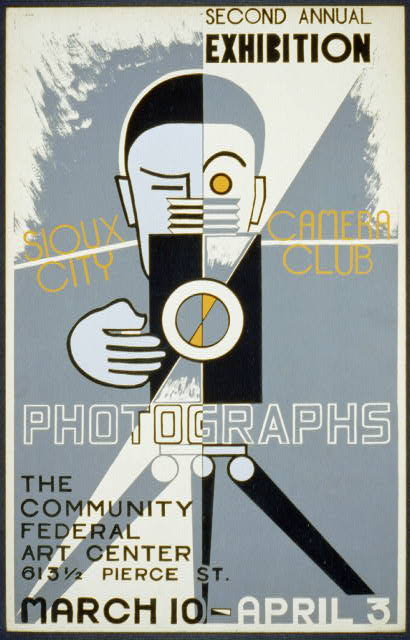
Photographs, second annual exhibition, Sioux City Camera Club
The Dinosaurs had syphilis too?

New Books on Mexican American Culture

The LA Times has an interesting review of two new books on Mexican American culture.Mexican American Mojo: Popular Music, Dance, and Urban Culture in Los Angeles, 1935-1968 (Refiguring American Music)
as the title says is about music in LA during the middle of the century and The World of Lucha Libre: Secrets, Revelations, and Mexican National Identity about the Mexican form of wrestling. The review also includes a quick overview of some of the literature on Music and Mexican American culture that is quite useful and I wish more reviews did this.

Yet after digesting this book, I still felt something lacking. Though “Mexican American Mojo” does a great job of proving its point, Macías ends at 1968, just when the Chicano movement took hold and a new generation emerged along with its music. He clips his thesis just as it’s about to truly take off. (For a better accounting of what followed, I recommend “Barrio Rhythm: Mexican American Music in Los Angeles,” “Land of a Thousand Dances: Chicano Rock ‘n’ Roll from Southern California” and “An Oral History of DJ Culture from East Los Angeles.”) As it is, “Mexican American Mojo” can very well be Los Angeles’ version of Robert Caro’s “The Power Broker” — a volume everyone should own but few will ever read.

And about Lucha Libre

Heather Levi’s entertaining “The World of Lucha Libre: Secrets, Revelations and Mexican National Identity” assumes the role of engaged anthropologist. Levi takes the novice into the world of lucha libre, veering between explaining the basics (moves, traditions, the difference between rudos and técnicos — bad and good guys, respectively) and recounting a thorough history of the sport, touching on major fighters, developments and its frequent intersections with Mexican politics and identity.

The Day the Earth Stood Still

Or, if space aliens see we love our children they won’t kill us. Keanu Reeves comes to destroy the earth because humans are ruining it. Naturally (because that is how these movies always go), the government over reacts and tries to kill him, which doesn’t help the case for the survival of human kind. Reeves meets a good doctor who takes care of a her late husband’s son, a boy who is still traumatized by his death in Iraq. Through a couple hours of chase and dialog, Reeves realizes that humans are almost unredeemable, but when he sees the doctor holding the boy who hates her as metallic swarm comes to destroy them he decides human kind is worth saving. Then he leaves the earth because humans have learned their lesson and will behave.

The weakness of the film makes one wish for the moral complexity of the original.

Bolaño in La Jornada

There was a good article about Bolaño in La Jornada’s Sunday supplement this week talking about Bolaño’s views of exile. According to Gustavo Ogarrio, Bolaño didn’t really believe in political exile because it made him a victim, which he was not. He also thought it was pointless to be nostalgic about the old country

“Can you be nostalgic for a country where you were about to die? Can you be nostalgic for the poverty, the intolerance, the arrogance, the injustice? The refrain intoned by Latin Americans and also by other writers in other poor or traumatized zones carries on the nostalgia, the return to the country of birth, and to me this has always sounded like a lie.”

“¿Se puede tener nostalgia por la tierra en donde uno estuvo a punto de morir? ¿Se puede tener nostalgia de la pobreza, de la intolerancia, de la prepotencia, de la injusticia? La cantinela, entonada por latinoamericanos y también por escritores de otras zonas depauperadas o traumatizadas, insiste en la nostalgia, en el regreso al país natal, y a mí eso siempre me ha sonado a mentira.”

The article goes on to talk about the novel Amuleto which takes place in Mexico during one of the darker times in recent Mexican history. The link between the dictatorships of Latin America are clear.

The exile, though, is not just political, but literary, yet the literary exile is, too, often over done.

If the novel The Savage Detectives is interpreted and read as the parodic and tragic dissolution of a certain narrative vanguard in Latin America, represented by the search for one of the founding poets of Visceral Realism—Cesárea Tinajero— and the motive for the wild detective investigation of the poets Ulises Lima y Arturo Belano, Amuleto allows another paralel reading, concentrating a parody of the post vanguard in the voice of a melodramatic and earthy poet, Auxilio Lacouture.

Si la novela Los detectives salvajes acepta ser leída e interpretada como la disolución paródica y trágica de cierta narrativa vanguardista en América Latina, representada en la búsqueda de una de las poetas fundadoras del real visceralismo –Cesárea Tinajero–, motivo de la pesquisa detectivesca y salvaje de los poetas Ulises Lima y Arturo Belano, Amuleto admite otra lectura paralela, al concentrar esta parodia postvanguardista en la voz de una poetisa melodramática y telúrica, Auxilio Lacouture.

Roberto Bolaño: los exilios narrados is well worth the read.

New German Literature in the TLS

The TLS recently had a review of some new German novels. All of these were published this year and, of course, are not available in English yet (I hope they are some day). Three of them deal with the GDR and the third, from Switzerland, deals with the Rawandan Genocide and Swiss complicity.

Three of the books sound very intriguing. ADAM UND EVELYN by Ingo Schulze, DER TURM by Uwe Tellkamp, and HUNDERT TAGE by Lukas Bärfuss.

Schulze’s novel is formally impressive. It consists almost entirely of snappy, naturalistic dialogues, portioned out in tasty little morsels in chapters of a few pages each: that the reader is able to deduce the plot events is in itself no small feat.

And the Bärfuss sounds tough but intriguing.

In a final childish burst, wanting to prove to Agathe that he isn’t like the other white people and won’t run away at the first sign of trouble, he hides in his garden as the last foreigners are evacuated. The horrors of the ensuing hundred days are born of order, not chaos: “I know now that perfect order rules the perfect hell”, David says. Bärfuss takes the reader step by step down the path to genocide. He emphasizes the role of Western – and particularly Swiss – aid in supplying the modern tools of organization and communication that made atrocities on such a scale possible: “we gave them the pencil with which they wrote the death lists . . . we laid the telephone lines over which they gave the murder commands . . . we built the streets upon which the murderers drove to their victims”.

Bolaño Reviewed in the TLS

The TLS has a good review of 2666. The review isn’t as fawning as some and tries to locate the source of Bolañomania. Like a previous El País article, the review finds similarities between Bolaño and the American literary tradition.

The author’s exuberant, informal voice echoed that of several American classics; while he cited Huckleberry Finn as an inspiration, the book clearly bore the imprint of On the Road and The Catcher in the Rye. In addition, many of his themes resonated with the puritan and romantic impulses of the American literary tradition. Bolaño’s world is open to self-invention and redemption, but also pervaded by ineradicable evil. It is bracingly egalitarian in its range of cultural references: The Savage Detectives borrows from the science fiction writer Theodore Sturgeon as well as from Mark Twain; 2666 references both Herman Melville and David Lynch; figures in his poems include Anacreon, Juan Ramón Jiménez, Sam Peckinpah and Godzilla. Readers of all tastes could thus feel at ease with this disquieting writer, and many sought his other translated works.

If you are still on the fence about 2666, the review is worth a read.

Embroideries

Embroideries
Marjane Satrapi

Embroideries is no Persepolis, but that is not to say it is without the same humor that Persepolis had. What makes this book funny are not Satrapi’s adventures, but those of her grandmother and her friends. The women range in ages from their 60’s to their 20’s and the book takes place after a meal when all the women sit together and talk and complain and laugh at the way their marriages and love affairs have gone. Although some of the women have been forced into arranged marriages (in one the man was 69 and the girl 13) and the men have used their power to have affairs, the women have an irrepressible spirit that allows them to laugh at the men and talk about their own fantasies and adventures. The stories are not just ribald humor, but a means to exercise power where there is little. On the first page it is clear what the role of women in society is when Satrapi notes that her grandmother always called her husband by his last name because one should respect one’s husband. Yet once the stories begin, the respect disappears and the verbal vengeance begins. For the reader the conversations are not just humor and power relationships, but a chance to see the hidden lives of Iranian women. It shows there is more to the Iran then just the mullahs.

Graphically speaking, the book doesn’t have quite the style as Persepolis. The black and white line drawings are still there, but at times pages are almost completely filled with words and perhaps a head to indicate who is speaking. The lack of drawings is a shame because her almost block print style is an effective way to tell an understated story. Let’s hope the next book has more drawings.

In One Story: Groff, Jodzio, Grattan

I finished reading several issues of One Story the other day. I tend to let them stack up and then read them all at once as if they were in a collection of short stories. Four stories caught my eye and I thought it would be good to mention them here since usually its books that get all the press (and so I can remember the authors two months from now).

Sir Fleeting by Lauren Groff was the best of those that I read. Filled with excellent turns of phrase and a story that winds through 40 years, it describes the love affair that never was between two people. I particularly thought the narrator was well drawn with a cosmopolitan sensibility that doesn’t make one like the character, but at least respect her. Given that Groff has several published books, she is worth reading more.

Flight Path by John Jodzio and Foreign Girls by Thomas Grattan were both well written and did not have those coying ephinanic I-learned-that moments at the end of stories, which can be a little tiring.  Grattan had some nice moments and left plenty unsaid, and was able to brining a story about cultural alienation of Gorgian emigrants to a close in a way that related that alienation to something most Americans have experienced.

If you haven’t checked out One Story, I recommend you do. It is a refreshing way to present short stories.