The authors of Istanbul Noir (Akashic Noir)
Author: bythefirelight
Scenes from Yoshihiro Tatsumi’s From A Drifting Life
Words Without Borders has a short section from the Manga master Yoshihiro Tatsumi’s new book From A Drifting Life, which is forthcoming from Drawn and Quarterly. As usual, Tatsumi mixes a bit of manga history with everyday life in Japan after the war. Even if you don’t read graphic novels, it is interesting.
Waltz With Bashir at Words Without Borders
Words Without borders is featuring graphic novels this month and included in collection are several pages from the graphic novel of Waltz With Bashir. The pages capture the same fearfulness as the film and are a good taste if you haven’t seen the movie yet.
They also include an interview with David Polonsky, the artist behind the film. Of particular interest to me were so of his stylisic choices.
“The script said there were flares over the camp,” said Polonsky. “I remembered the flares from Haifa, where I grew up. The navy would always hold maneuvers, and they would shoot up these flares into the sky that painted the whole town dark orange. So this was my starting point, this memory. I later developed it into a motif, with the same orange flame appearing in the eyes of the mad dogs and in the sky. Then, in the end, when the flares burst out and take over everything in Sabra and Shatila, it’s like a repressed memory of violence erupting and burning everything underneath the sky.”
A Sad Telegram
Speaking of the darker sides of life, the LA Time’s Daily Mirror blog had this short and sad piece. It reminds me of the Hemingway’s 6 word short story: For sale, baby shoes. Never used.

Tribute to El Caso – Spain’s Crime Paper
El País has an interesting article about El Caso, a trashy crime tabloid from the Franco period. It is not the material they covered that is so unique, but how popular it was within Spain and how it carved out a space for the salacious in the Catholic Dictatorship.
The film director Pere Costa, one of the editors of El Caso, explained how at the hands of Eugenio Suárez its inclusion as a section of the daily Marid came to an end, and became a weekly “with the condition to no publish more than one Spanish assassination a week.” The 12,000 issues of its first run grew to 100’s of thousands, and its readership was even greater because it was normal for it to be read out loud to a group.
El director de cine Pere Costa, uno de los redactores de El Caso, explicó como de sección fija del diario Madrid pasó, de la mano de Eugenio Suárez, a semanario “con la condición de no publicar más de un asesinato español por semana”. Los 12.000 ejemplares semanales del primer número fueron creciendo a cientos de miles, aunque su audiencia fue mucho mayor, pues era normal que se leyera en voz alta y en grupo.
It is worth a read if you are interested in crime fiction.
Waltz With Bashir – A Review
 To use the word beautiful is obscene, and powerful is the over used cousin of interesting, and so the best word to describe Waltz With Bahir, the brilliant film from Ari Folman that captures the alienation and denial that comes with the savagery of war, is unsettling. From its blend of haunting images and music to its searing yet dispassionate exploration of one man’s participation in the Sabra and Shatila massacre, Waltz With Bashir is not just a simple war film, but a pained conscience from one of the more ugly episodes between Israel and Beirut.
From the outset as a pack of wild dogs run down an Israeli street, knocking over chairs and tables in outdoor cafés only to stop and look stare up at a haunted veteran, you know the film is going to mix the horrific and disturbed flash backs to not only explain the war itself, but its power to still haunt the survivors. At first images—the pack of dogs, men bathing under flare light—are shown without any explanation and they seem otherworldly, figments of an unsettled mind. All you have are the uncontextualized images as if to simulate the fragmentary nature of memory. Folman, though, can’t can’t remember what happened during the war. All he can remember is swimming on the Beirut sea shore at night while flares light sky. It is one of those hauntingly beautiful moments of cinematographic war that maybe shouldn’t exist, but gives one the impression of complete senselessness—why should one even have the chance to bathe as if it were your private beach, while bombs are falling else where? Yet like a similar scene in Apocolapse Now that makes beauty out of the perverse it shows the soldiers as they truly are: isolated in a world where beauty can become flares over a destroyed city.
To find recover his memory, Folman begins to interview his comrades. The men often talk for some time and through the interviews the film regains its documentary quality. The interviews give the story more than just one voice and let the soldiers have a chance to speak for themselves. They also help to illustrate Folman’s point that memory of war, especially the most traumatic incidents, are seldom remember accurately, if at all. Between the interviews Folman recreates the scenes the men describe. The scenes are typical of so many soldiers sent into modern, urban warfare—young men who are scared, who shoot at anything, and are more interested in drinking and going to clubs, and whose frustrated ambivalence only makes the lives of the populace worse. There are the heroic moments when a soldier swims to safety after all his comrades are killed, and the horrific when the men shoot up a family in a car.
Folman continues to weave scenes together, some adding more details, others countering what came before, but each succeeding scene showing the war in darker and darker terms, until he finally gets to the Sabra and Shatila massacre. It is here that the full weight of the move comes and it is clear that for Folman this was the worst part of the war for him and even though he didn’t remember the camps, he could remember an image that he shows over and over and only at the camps do we understand it. We understand that the movie, like the war itself, has been moving relentlessly towards the massacre and each of the interviewees, soldiers like himself, tell what little part they had, but how they knew or sensed that something was wrong or are just haunted by it now. And when the killing is done and the soldiers move back into the camps they describe what they see and at first it is drawn, an animation like the rest of the movie, but then Folman switches to actual fotage. Perhaps the animation is no longer subtule; perhaps it places too many layers between the actual and the viewer. It is strong stuff and he wisely ends the movie there with little comment.
For Folman the war was a senseless in so many ways and Israel deserves a great deal of blame for the massacre. The movie portrays the whole incursion into Beruit as a mistake that didn’t lead to anything positive. It lead to senseless deaths of Israelis and Beruitis and in Israel no one even seemed to care. In one of the more disillusioning moments, Folman returns home to Israel for a 48 hour leave and finds that life has gone on as if there wasn’t a war going on. He notes that in the 1973 war everyone stayed at home, but in this war they are at clubs. Folman, if he was not already uncertain about the war, now feels farther from its purpose and farther from the civilian world that doesn’t even care what is going on in its name. It is in these contrasts, between home and the front, massacres and soldiers on drinking bouts, that Folamn questions the war and suggests if it was so easy to ignore, so easy to get carried away, so easy to feel purposeless, then why did we fight it, and maybe this is why he had forgotten it.
Stylistically, Waltz With Bashir is impressive, blending what seems at times completely realistic with the unreal that only animation can provide. Although documentary suggests hard edged reality, the use of animation brings a greater realism to the story because it illustrates the perceptions and memories more than the flat realism that stock footage could provide. Moreover, animation lets the movie movie past pure documentary into the interpretive where the viewer sees the film maker’s interpretation of the scenes, even though the viewer is also hearing the narration from the participant. It creates a dual layer of story telling and one that checks the veracity of the other. The use of music, too, is more than just documentary filler, but a the subtle rejoinder to the hopelessness. The score itself is sparse, and in between are Enola Gay from OMD and This Is Not A Love Song from PIL that add a dark and disjointed feel to the film. The scene in the club when Folman is on leave uses PIL’s sarcastic sensability to underscore the futility of Folman’s experience.
All of these elements, the animation, the score, the interviews, make Waltz With Bashir a brilliant and troubling film that will stick with one for quite some time.
Wolf Totem Becomes Management Handbook
Bruce Humes notes that the Chinese novel Wolf Totem
[…] the idea that Chinese people ought to “discard their submissive character and assume a more aggressive, or wolf-like, outlook on life and the world at large” (Poon’s words) has caught on like wild-fire in certain circles in China: Featured at business forums, a popular new year’s present for military types — and an inspiration to China’s business publishers.
It is always fascinating what bit of culture can inspire the latest bit of management nonsense.
Revolutionary Road
 Revolutionary Road is yet another in the long line of films and books that tries to blow the lid off the secrets of suburbia. The book comes from what might be called the first generation of suburbaphobia that one sees in books like The Man In the Gray Flannel Suit, and continues on still to this day as a solid genre of American fiction, most recently (and clinically slick) in Mad Men. Revolutionary Road, though, is more than a damning expose of the suburbs, it is a problem movie, a movie that tries to examine what is wrong with the world and, ideally, provide a solution. Like The Man In the Gray Flannel Suit, the movie creates stark and simple choices that almost 50 years latter look more like the warning 60’s counter culture headed, than a rich examination of the times.
Revolutionary Road follows April and Frank as they struggle to reconcile what they were as young people, which we glimpse briefly at the beginning of the movie, with what they have become now: two kids, a car, a house in the suburbs, and a life of boredom and dissatisfaction. Frank, who as a young man said he wanted something different, has become the 9 to 5 man who hates his job and cheats with the young secretary. It is clear from the outset that Frank is disappointed, but he is not unwilling to continue in the same way he has for some time, he just needs a small change. An affair might do it, but he is to tied to the middle class dream and holds on to the brief moments that we briefly see before the title credits.
April, though, has not forgotten what she once wanted to be, an actress, and in an early scene she is crying in a dressing room, aware that she will never be an actress, never be what has been her identity for over ten years. Frank, insensitive to the moment, can only say, “well that’s finally the end of the […] players.” From this point on the relationship is a battle between the forces of normalcy, work, friends, neighbors, the daily routine, that constantly pull Frank and April from the idyllic party where they first met, and the desire to be free, to live the life that one has always dreamed. The story will continually argue between the two points of view, and the choices are stark and unbendable. But since suburbia is so stultifying it is only to be expected.
Shortly after the failure of the play and the ensuing argument, April comes up with the idea of moving to Paris. She convinces Frank who is reluctant at first but does warm to the idea slowly even though all their friends and associates think it’s an impractical idea. The impracticality of it, though, is the point, because the dream has to be in such stark contrast to the world they live in that anything less would just be living the same life. It has a bohemian sensibility and a glamor that isn’t so much about a place for Frank to think about his future, but away live in a postcard reality where there are no obligations. The only person who thinks it is a good idea is the son of their realator who has just gotten out of the mental hospital. He is the fool, the jester, the conscience of the film and when he speaks you hear the brutal truth, which at first coincides with Frank and April’s ideas, but soon becomes an accusation that they are unable to withstand because he is correct. The fool always shows one how to escape the madness if you are only willing to listen.
Madness of the suburban life begins to become oppressive when April becomes pregnant and Frank doesn’t want to move to Paris with a baby nor does he want her to have an abortion. Until this moment the film has argued between the two tropes of suburbaphobia—conformity and freedom—and the dialog and arguments feel as if one is reliving 50 years of this kind of story. To resolve the problem all one has to do, as occurs in The Man in the Gray Flannel Suit, is quit your Manhattan job, which most likely is at an ad agency since they are the most soulless of all jobs, and move out of the city to real life. Revolutionary Road, of course, uses Paris, but the affect is the same.
In Revolutionary Road, though, the stakes are higher because Frank has been offered a great job and doesn’t want to quit. Perhaps he thinks this is the thing he really wanted to do; perhaps it is just what one should do. What ever the reason Frank insists on taking the job and they begin fighting at every turn until they have a grand battle that is one of those cinematic explosions of rage that no matter how old the sentiments of the film are still feels powerful. The day after the fight April is calm and seems to have accepted the reality that they cannot move to Paris. It is an eerie acceptance, almost robotic. When Frank goes to work, though, she tries to giver herself an abortion and she bleeds to death. The choice has become a choice between the suburbs and death. There is horror greater than that of the suburbs. True, the abortion is not an explicit suicide, but the pregnancy represents just more of the same: another child and another tie to what April wants to leave, and what everyone should fear—the suburban hell.
Heartbroken, Frank moves the kids back to New York and everyone in the suburbs forgets about them since they are a disturbing memory. It is the final element of the suburban legend: the shallow, unforgiving conformity that can not have any deviants within it. Perhaps Frank who is now devoted to the kids has learned the lesson—you must value those you are with, not the material—for the last shot of him is sitting on a park bench watching the kids. A cautionary scene one should not forget.
Despite the suburbaphoiba the film is solid and once April’s pregnancy is revealed, the suburbia debate recedes into the background and the film is less concious of its roots. And the final scene of the film with its slight comic reliefe may truely be the answer that cuts between the two polls. Tuning out the hearing aide might, in the end, be more practical than dropping out.
Milk
 Milk is a solid bio-pic from Gus Van Sant that depicts the life of Harvey Milk as a political activist and elected official.What interested me, though, is neither the veracity of the story nor the acting, but how Van Sant approached the story. Milk is unlike some of his more experimental films such as Elephant in that it presents the story in a very chronological format. Interspersed throughout the film are scenes of Milk dictating the history of his life. The scenes repeatedly remind the viewer that this isn’t some writer’s idea of Milk’s life, but it is Milk’s life through Milk’s eyes. Why, though, does the viewer need the perpetual repetition? Is Van Sant afraid one will forget that Milk suffered the private life a lonely fighter, aware of his impending doom, but bravely ready to push onward? Whatever the reason, it does add an element of contemplation that slows the historic and ordained march towards the conclusion that most bio-pics tend to have. Instead, the story pauses for just a moment and injects a moment of foreboding, in case one has forgotten. The technique is effective, if used a little too often.
In a similar manner, Van Sant used the opening credits to make it clear the film and its central charachter are fighters. Using films of police raids durring the 50’s and 60’s, Van Sant shows there is more to this film than just a narration of events, but a reflection of a real struggle. It adds a rawness that bio-pics can lack because they are too focused on getting the details right.
Unless a bio-pic is particularly egregious in terms of script or accuracy, I have little to say about them. The only thing I do know is that a bio-pic is just another form of fiction no matter how true it is.
Chinese Muslim’s Pilgrimage to al-Andalus – Synopsis Posted
Bruce Hume posted his synopsis of a Chinese Muslim’s Pilgrimage to al-Andalus. Well worth the read if you are interested in Spanish culture. It is also interesting to see how someone from China manifests their hispanofilism.
Written over several years and six visits to al-Andalus (Morocco, Portugal and southern Spain), we see how Zhang Cheng-Zhi discovers the links between the Moors and China, from the Uighurs in Xinjiang to the port of Quanzhou in Fujian, to the prevalence of fig trees in China’s northwest. Increasingly fascinated by the spirit of the Muslim conquerors, their irrigation technology, and the olive trees so prevalent in southern Spain, he actually tries to transplant them to northwest China. His experiment fails, but his clumsy efforts to somehow grow the olive in China, a fruit rendered sacred by its mention in an oft-repeated Koranic verse (see Chapter 17, below), is an almost desperate attempt to bring part of his beloved al-Andalus back home.
The Reader
 When working with the Holocaust in a film or book the question that inevitably comes up is, can one make art from the Holocaust? And if so, to what end? The Reader, even its complexities, cannot escape the difficulty of these questions and stumbles even as it seems to try to question how one should approach the Holocaust. The subtleties of the film undercut its overt statements about the subject, and it’s these subtleties that makes The Reader, although excellent and never uneven in terms of acting or story, unable to completely resolve the needs of the story and the questions of suitability.
The Reader tells the story of Michael and Anna who meet in the early 50’s when Michael is 15 or 16 and Anna is in her late 30’s. They begin a passionate affair that is filled with sex and long reading sessions when Michael would read to Anna from his school books. Michael distances himself from his family and his friends as he and Anna spend more time together, finally culminating in a bicycle trip through the country side. Suddenly, though, Anna is offered a promotion where she works and instead of taking it, moves out and says nothing to Michael. Naturally, Michael is devastated but life goes on and the move cuts to show him as a law student in the early 60’s. He is a law student without any particular convictions until his professor takes him to the trial of 6 women SS concentration camp guards. One of the guards turns out to be Anna, and not only is she implicated in the mass killing of prisoners in a fire in a church, but she is said to have been the leader of the guards. Anna seems emotionless and does not deny anything like the other women. Instead, her only defense seems to be is that it was a good job, a better one than the one at Siemens. At one point in the questioning she asks the Judge, what would you done? Implying it was perfectly natural to take the job as a guard. During the trial, though, Michael realizes that she is illiterate and that she could not have written the confession where she takes responsibility for not freeing the prisoners in the burning church. Michael wants to tell her that she shouldn’t take the blame, but he can’t and she is sentenced to the maximum time in prison. Michael forgets about her and marries and has a daughter, but haunted by her he cannot relate to other women and lives a solitary life until, one day, he sees one of his old books and decides to read to her again using cassettes. He reads book after book as he rekindles a forgotten love and she receives the tapes which she listens to at first, but then uses to learn to read. After years of this, she is set to be released, but Michael still wants to keep his distance and the day before leaving the prison hangs herself. She doesn’t explain why she did it, but she does will all her money and possessions to Michael. The movie then cuts to New York sometime latter. Michael goes to meet one of the survivors from the camp who had written the book that implicated Anna. She won’t take Anna’s money, which Michael says Anna wanted to give her. She says nothing good ever came from the camps, yet she does take a little tin tea box that Anna had stored the money in and which looked like one her father had given her when she was a child. This pleases Michael and he returns to Germany satisfied. The closing scene is of Michael and his daughter at Anna’s grave just before he tells her about Anna.
It is clear even from the above that Anna is a difficult charter to understand. It is even more so because the film is not Anna’s story, but Michael’s story about Anna. Yet it is clear that she is either cold and callous or someone who has so compartmentalized her life that her role in the Holocaust has little meaning to her. When she tells the judge, what would you have done, she makes it clear that she does not see much in the way of the moral dimensions of her choice. Her choice has the physical consequences—jail, poverty—but not the moral. It is possible she even believed in the process of murder. Whatever the case, there is no Poe-like Tell Tale Heart to redeem her, only her history. (Is it even possible to believe someone like her has recanted? But that is a different issue.) When she dies she gives her money only to Michael, not to any one else, as the warden makes clear when she says, “she left everything to you (Michael).” Michael, however, says to the survivor in New York that Anna wanted her to have the money. Most likely, since this is Michael’s story, Anna said nothing. Anna did what she did and the greater shame was to admit she couldn’t read—a truly unbalanced view of what is shameful.
If the complexity of the film were to end there, the film would be another addition to the literature of the banality of evil. The story, though, adds two redemptive elements: Anna learns to read; and Michael is able to feel good about her. When Anna learns to read the thing that shamed her most is now gone. She has reached beyond her failures. Yet the triumph in light of her past is not a triumph, but a trick: look she can change. But what has changed? There is no redemption here, just an obfuscation of the past. Could any thing redeem her? The Reader leaves plenty of room to understand that the tendency to see redemption when a character has overcome some hardship is easily misplaced. And Michael’s need to redeem her, too, is a false redemption. He doesn’t want her to be redeemed for her sake, but so that he can feel that his never ending love for her is not the love for a monster. He is the one who insists in giving the money to a Jewish cause; he is the one who insists on seeing the survivor. The redemption for him, then, is a way to redeem himself, to make up for what he couldn’t do for her, for what he has done to his daughter. In short, Michael deludes himself, because delusion is pleasing.
None of these redemptive issues would matter much if the film wasn’t about the Holocaust. The Holocaust, though, adds a further layer, because playing with ideas of redemption while using the history of mas murder can easily diminish the horror. Can the Holocaust be used as a backdrop or as Jacob Heilbrunn recently wrote, “the further the Holocaust recedes into the past, the more it’s being exploited to create a narrative of redemption.” While Heilbrunn’s article doesn’t examine The Reader in depth, it does raise the question, can such huge crimes be the materials for ethical delemas? The reason it is important to ask the question is because The Reader does not stop with the two moments of redemption above. While one could mistake this as a redemptive movie, its complexities do lead to a wider, more nuanced reading. It is when Michael goes to New York the problems start. When Michael talks to the survivor she tells him, “nothing good ever comes of the camps,” and yet when Michael leaves the movie shows her placing the tea tin in a place of honor, as if something great has been recovered. Yet isn’t the tin something good coming of the camps? Moreover, the tin carries another act of redemption: from Anna to Michael to the survivor. A nice tidy ending. It is when Michael makes the visit, the film begins to blur the lines between the complexities of Michael’s reactions and how the Holocaust is perceived and can be contemplated. The survivor says nothing good can come of the camps, and yet one of the last images of the film is something good coming of the story, and by extension, the camps. It is a tricky thing to on the one had show Michael’s delusion, yet not sentimentalize the return of the tin, as if that made everything whole. Unfortunately, The Reader chooses to wrap the film with a tidy resolution that can make one feel good, but resolves nothing.
To return to the question that opened the article: can one make art from the Holocaust? Of course, and Imre Kertez’s Fatelessness
Posters For The People: The Art of The WPA
Posters for the People: The Art of the WPA 
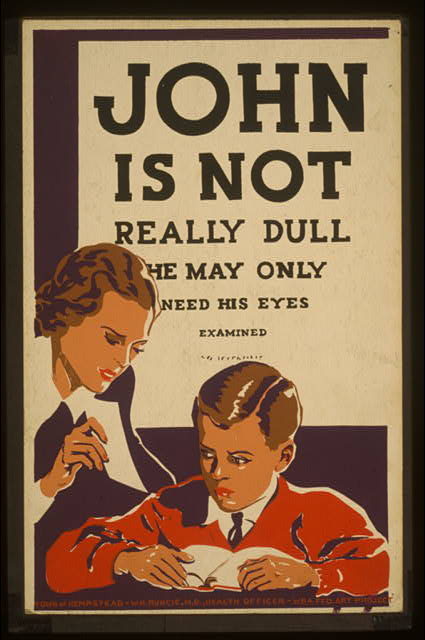
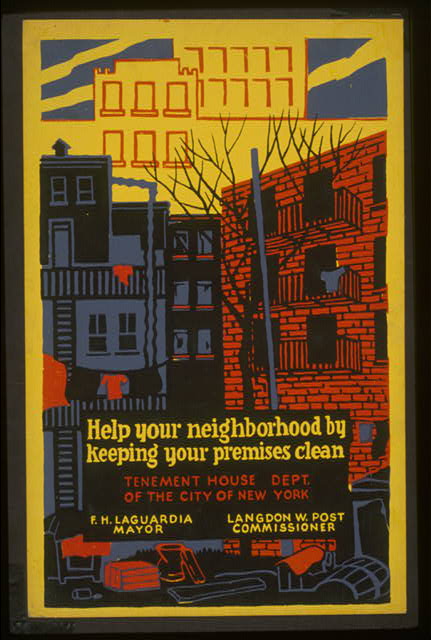
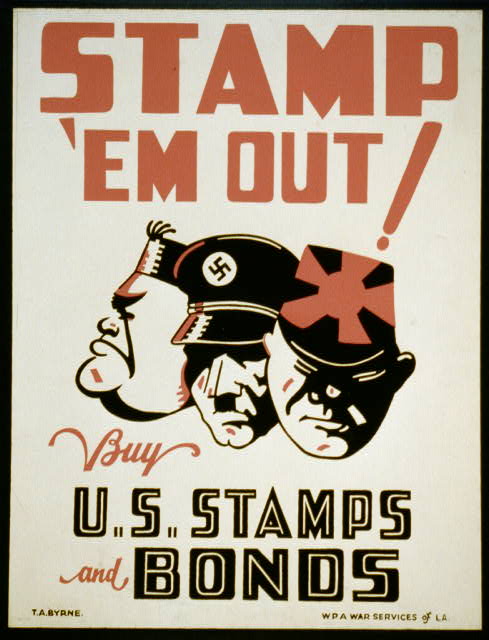
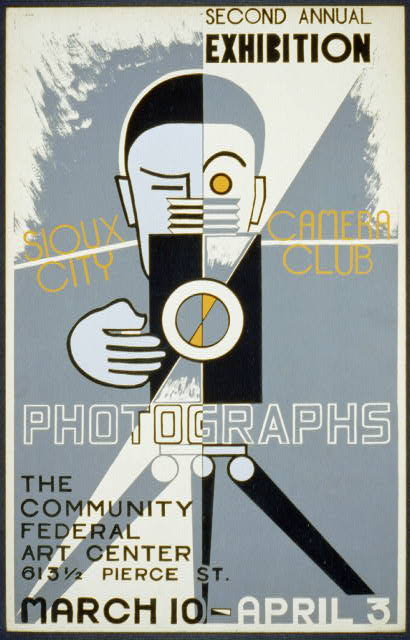
The art of the posters is a large part of the value of the book. The WPA employed out of work artists and they attempted to add their skills to the effort to end the depression. Seldom are the posters simple instructions using only text, but a mix of graphic styles using techniques from commercial art and fine art to create illustrations that range from the abstract to to the pictorial. In many of the posters there is a clear understanding of the power of the image and little text to clutter the message. Often the posters play on national themes and use the imagery of national icons to give one a sense of pride. The strongest posters are those that make an image iconic and use few words to describe it.
Below are a sample of some of the most interesting photos. These are from the Library of Congress collection which has hundreds of posters in its collection. The book also has a web site, www.postersforthepeople.com.





New Books on Mexican American Culture
The LA Times has an interesting review of two new books on Mexican American culture.Mexican American Mojo: Popular Music, Dance, and Urban Culture in Los Angeles, 1935-1968 (Refiguring American Music)
as the title says is about music in LA during the middle of the century and The World of Lucha Libre: Secrets, Revelations, and Mexican National Identity

Yet after digesting this book, I still felt something lacking. Though “Mexican American Mojo” does a great job of proving its point, Macías ends at 1968, just when the Chicano movement took hold and a new generation emerged along with its music. He clips his thesis just as it’s about to truly take off. (For a better accounting of what followed, I recommend “Barrio Rhythm: Mexican American Music in Los Angeles,” “Land of a Thousand Dances: Chicano Rock ‘n’ Roll from Southern California” and “An Oral History of DJ Culture from East Los Angeles.”) As it is, “Mexican American Mojo” can very well be Los Angeles’ version of Robert Caro’s “The Power Broker” — a volume everyone should own but few will ever read.
And about Lucha Libre
Heather Levi’s entertaining “The World of Lucha Libre: Secrets, Revelations and Mexican National Identity” assumes the role of engaged anthropologist. Levi takes the novice into the world of lucha libre, veering between explaining the basics (moves, traditions, the difference between rudos and técnicos — bad and good guys, respectively) and recounting a thorough history of the sport, touching on major fighters, developments and its frequent intersections with Mexican politics and identity.
Yalo & Khirbet Khizeh in Three Percent
Three Percent has two good reviews of Yalo and Khirbet Khizeh as part of their best translated book of 2008. I read both and thought their take on the books were excelent.
They also link to an interview with Elais Khoury in Seattle. I’m a little mad that I didn’t have a chance to see him when he was in town.
New Issue of Under Hwy 99 Out Now
The new issue of Under Hwy 99 is out now. Isses 1.2 features my short non-fiction, Just a Handshake Is Enough, about the time I met Cuauhtémoc Cárdenas in Mexico City. There are also short fictions from Evan Cleveland, Danny Brophy, Billie Louise Jones, Tara Brichetto, Ellie Keller, and Jim Bellarosa. It is worth the checking out this young literary magazine.
I also rebuilt the website which makes it much easier to read and use.
Best Sellers in China 2008
Paper Republic pointed me to Bruce Hume’s list of Chinese best sellers. Most are not in English and won’t make much of an impression. There are some interesting books that sound a little odd.
The Tibet Code (4)—He Ma: Latest volume in long-winded tale of mysterious Tibet which begins with sighting of rare Tibetan mastiff. All four volumes best sellers.
The Unbearable Lightness of Being was number 25 this year, too.
Chinese Muslim’s Pilgrimage to Al-Andalus
Bruce Hume’s blog on Chinese writing notes a new book in China that sounds interesting. He is giving out English synopsis if you email him.
Zhang Cheng-Zhi (张承志), the white-hot Red Guard who mastered Mongolian and Japanese — and then converted to Islam — has just launched En las Ruinas de la Flor: Viajes por Al-Andalus (鲜花的废墟). His new Chinese-language travelogue takes us throughout Moorish Spain, Portugal and Morocco in search of the spirit of Islam in its golden age (8th-15th centuries).
Cipher Journal
Cipher Journal is a journal dedicated to translation. The magazine is a bit of a mishmash but there are some interesting items in translation from India and China.The links page is definately worth a look.
The website, though, leaves a little to be desired. Who puts the primary navigation at the bottom of the page anymore?
Eudora Welty in El País
El País has some nice Eudora Welty photos.
The Day the Earth Stood Still
Or, if space aliens see we love our children they won’t kill us. Keanu Reeves comes to destroy the earth because humans are ruining it. Naturally (because that is how these movies always go), the government over reacts and tries to kill him, which doesn’t help the case for the survival of human kind. Reeves meets a good doctor who takes care of a her late husband’s son, a boy who is still traumatized by his death in Iraq. Through a couple hours of chase and dialog, Reeves realizes that humans are almost unredeemable, but when he sees the doctor holding the boy who hates her as metallic swarm comes to destroy them he decides human kind is worth saving. Then he leaves the earth because humans have learned their lesson and will behave.
The weakness of the film makes one wish for the moral complexity of the original.
 By The Firelight