Revolutionary Road

Revolutionary Road is yet another in the long line of films and books that tries to blow the lid off the secrets of suburbia. The book comes from what might be called the first generation of suburbaphobia that one sees in books like The Man In the Gray Flannel Suit, and continues on still to this day as a solid genre of American fiction, most recently (and clinically slick) in Mad Men. Revolutionary Road, though, is more than a damning expose of the suburbs, it is a problem movie, a movie that tries to examine what is wrong with the world and, ideally, provide a solution. Like The Man In the Gray Flannel Suit, the movie creates stark and simple choices that almost 50 years latter look more like the warning 60’s counter culture headed, than a rich examination of the times.

Revolutionary Road follows April and Frank as they struggle to reconcile what they were as young people, which we glimpse briefly at the beginning of the movie, with what they have become now: two kids, a car, a house in the suburbs, and a life of boredom and dissatisfaction. Frank, who as a young man said he wanted something different, has become the 9 to 5 man who hates his job and cheats with the young secretary. It is clear from the outset that Frank is disappointed, but he is not unwilling to continue in the same way he has for some time, he just needs a small change. An affair might do it, but he is to tied to the middle class dream and holds on to the brief moments that we briefly see before the title credits.

April, though, has not forgotten what she once wanted to be, an actress, and in an early scene she is crying in a dressing room, aware that she will never be an actress, never be what has been her identity for over ten years. Frank, insensitive to the moment, can only say, “well that’s finally the end of the […] players.”  From this point on the relationship is a battle between the forces of normalcy, work,  friends, neighbors, the daily routine, that constantly pull Frank and April from the idyllic party where they first met, and the desire to be free, to live the life that one has always dreamed. The story will continually argue between the two points of view, and the choices are stark and unbendable. But since suburbia is so stultifying it is only to be expected.

Shortly after the failure of the play and the ensuing argument, April comes up with the idea of moving to Paris. She convinces Frank who is reluctant at first but does warm to the idea slowly even though all their friends and associates think it’s an impractical idea. The impracticality of it, though, is the point, because the dream has to be in such stark contrast to the world they live in that anything less would just be living the same life. It has a bohemian sensibility and a glamor that isn’t so much about a place for Frank to think about his future, but away live in a postcard reality where there are no obligations. The only person who thinks it is a good idea is the son of their realator who has just gotten out of the mental hospital. He is the fool, the jester, the conscience of the film and when he speaks you hear the brutal truth, which at first coincides with Frank and April’s ideas, but soon becomes an accusation that they are unable to withstand because he is correct. The fool always shows one how to escape the madness if you are only willing to listen.

Madness of the suburban life begins to become oppressive when April becomes pregnant and Frank doesn’t want to move to Paris with a baby nor does he want her to have an abortion. Until this moment the film has argued between the two tropes of suburbaphobia—conformity and freedom—and the dialog and arguments feel as if one is reliving 50 years of this kind of story. To resolve the problem all one has to do, as occurs in The Man in the Gray Flannel Suit, is quit your Manhattan job, which most likely is at an ad agency since they are the most soulless of all jobs, and move out of the city to real life. Revolutionary Road, of course, uses Paris, but the affect is the same.

In Revolutionary Road, though, the stakes are higher because Frank has been offered a great job and doesn’t want to quit. Perhaps he thinks this is the thing he really wanted to do; perhaps it is just what one should do. What ever the reason Frank insists on taking the job and they begin fighting at every turn until they have a grand battle that is one of those cinematic explosions of rage that no matter how old the sentiments of the film are still feels powerful. The day after the fight April is calm and seems to have accepted the reality that they cannot move to Paris. It is an eerie acceptance, almost robotic. When Frank goes to work, though, she tries to giver herself an abortion and she bleeds to death. The choice has become a choice between the suburbs and death. There is horror greater than that of the suburbs. True, the abortion is not an explicit suicide, but the pregnancy represents just more of the same: another child and another tie to what April wants to leave, and what everyone should fear—the suburban hell.

Heartbroken, Frank moves the kids back to New York and everyone in the suburbs forgets about them since they are a disturbing memory. It is the final element of the suburban legend: the shallow, unforgiving conformity that can not have any deviants within it. Perhaps Frank who is now devoted to the kids has learned the lesson—you must value those you are with, not the material—for the last shot of him is sitting on a park bench watching the kids.  A cautionary scene one should not forget.

Despite the suburbaphoiba the film is solid and once April’s pregnancy is revealed, the suburbia debate recedes into the background and the film is less concious of its roots. And the final scene of the film with its slight comic reliefe may truely be the answer that cuts between the two polls. Tuning out the hearing aide might, in the end, be more practical than dropping out.

Milk

Milk is a solid bio-pic from Gus Van Sant that depicts the life of Harvey Milk as a political activist and elected official.What interested me, though, is neither the veracity of the story nor the acting, but how Van Sant approached the story. Milk is unlike some of his more experimental films such as Elephant in that it presents the story in a very chronological format. Interspersed throughout the film are scenes of Milk dictating the history of his life. The scenes repeatedly remind the viewer that this isn’t some writer’s idea of Milk’s life, but it is Milk’s life through Milk’s eyes. Why, though, does the viewer need the perpetual repetition? Is Van Sant afraid one will forget that Milk suffered the private life a lonely fighter, aware of his impending doom, but bravely ready to push onward? Whatever the reason, it does add an element of contemplation that slows the historic and ordained march towards the conclusion that most bio-pics tend to have. Instead, the story pauses for just a moment and injects a moment of foreboding, in case one has forgotten. The technique is effective, if used a little too often.

In a similar manner, Van Sant used the opening credits to make it clear the film and its central charachter are fighters. Using films of police raids durring the 50’s and 60’s, Van Sant shows there is more to this film than just a narration of events, but a reflection of a real struggle. It adds a rawness that bio-pics can lack because they are too focused on getting the details right.

Unless a bio-pic is particularly egregious in terms of script or accuracy, I have little to say about them. The only thing I do know is that a bio-pic is just another form of fiction no matter how true it is.

Chinese Muslim’s Pilgrimage to al-Andalus – Synopsis Posted

Bruce Hume posted his synopsis of a Chinese Muslim’s Pilgrimage to al-Andalus. Well worth the read if you are interested in Spanish culture. It is also interesting to see how someone from China manifests their hispanofilism.

Written over several years and six visits to al-Andalus (Morocco, Portugal and southern Spain),  we see how Zhang Cheng-Zhi discovers the links between the Moors and China, from the Uighurs in Xinjiang to the port of Quanzhou in Fujian, to the prevalence of fig trees in China’s northwest. Increasingly fascinated by the spirit of the Muslim conquerors, their irrigation technology, and the olive trees so prevalent in southern Spain, he actually tries to transplant them to northwest China. His experiment fails, but his clumsy efforts to somehow grow the olive in China, a fruit rendered sacred by its mention in an oft-repeated Koranic verse (see Chapter 17, below), is an almost desperate attempt to bring part of his beloved al-Andalus back home.

The Reader

When working with the Holocaust in a film or book the question that inevitably comes up is, can one make art from the Holocaust? And if so, to what end? The Reader, even its complexities, cannot escape the difficulty of these questions and stumbles even as it seems to try to question how one should approach the Holocaust. The subtleties of the film undercut its overt statements about the subject, and it’s these subtleties that makes The Reader, although excellent and never uneven in terms of acting or story, unable to completely resolve the needs of the story and the questions of suitability.

The Reader tells the story of Michael and Anna who meet in the early 50’s when Michael is 15 or 16 and Anna is in her late 30’s. They begin a passionate affair that is filled with sex and long reading sessions when Michael would read to Anna from his school books. Michael distances himself from his family and his friends as he and Anna spend more time together, finally culminating in a bicycle trip through the country side. Suddenly, though, Anna is offered a promotion where she works and instead of taking it, moves out and says nothing to Michael. Naturally, Michael is devastated but life goes on and the move cuts to show him as a law student in the early 60’s. He is a law student without any particular convictions until his professor takes him to the trial of 6 women SS concentration camp guards. One of the guards turns out to be Anna, and not only is she implicated in the mass killing of prisoners in a fire in a church, but she is said to have been the leader of the guards. Anna seems emotionless and does not deny anything like the other women. Instead, her only defense seems to be is that it was a good job, a better one than the one at Siemens. At one point in the questioning she asks the Judge, what would you done? Implying it was perfectly natural to take the job as a guard. During the trial, though, Michael realizes that she is illiterate and that she could not have written the confession where she takes responsibility for not freeing the prisoners in the burning church. Michael wants to tell her that she shouldn’t take the blame, but he can’t and she is sentenced to the maximum time in prison. Michael forgets about her and marries and has a daughter, but haunted by her he cannot relate to other women and lives a solitary life until, one day, he sees one of his old books and decides to read to her again using cassettes. He reads book after book as he rekindles a forgotten love and she receives the tapes which she listens to at first, but then uses to learn to read. After years of this, she is set to be released, but Michael still wants to keep his distance and the day before leaving the prison hangs herself. She doesn’t explain why she did it, but she does will all her money and possessions to Michael. The movie then cuts to New York sometime latter. Michael goes to meet one of the survivors from the camp who had written the book that implicated Anna. She won’t take Anna’s money, which Michael says Anna wanted to give her. She says nothing good ever came from the camps, yet she does take a little tin tea box that Anna had stored the money in and which looked like one her father had given her when she was a child. This pleases Michael and he returns to Germany satisfied. The closing scene is of Michael and his daughter at Anna’s grave just before he tells her about Anna.

It is clear even from the above that Anna is a difficult charter to understand. It is even more so because the film is not Anna’s story, but Michael’s story about Anna. Yet it is clear that she is either cold and callous or someone who has so compartmentalized her life that her role in the Holocaust has little meaning to her. When she tells the judge, what would you have done, she makes it clear that she does not see much in the way of the moral dimensions of her choice. Her choice has the physical consequences—jail, poverty—but not the moral. It is possible she even believed in the process of murder. Whatever the case, there is no Poe-like Tell Tale Heart to redeem her, only her history. (Is it even possible to believe someone like her has recanted? But that is a different issue.) When she dies she gives her money only to Michael, not to any one else, as the warden makes clear when she says, “she left everything to you (Michael).” Michael, however, says to the survivor in New York that Anna wanted her to have the money. Most likely, since this is Michael’s story, Anna said nothing. Anna did what she did and the greater shame was to admit she couldn’t read—a truly unbalanced view of what is shameful.

If the complexity of the film were to end there, the film would be another addition to the literature of the banality of evil. The story, though, adds two redemptive elements: Anna learns to read; and Michael is able to feel good about her. When Anna learns to read the thing that shamed her most is now gone. She has reached beyond her failures. Yet the triumph in light of her past is not a triumph, but a trick: look she can change. But what has changed? There is no redemption here, just an obfuscation of the past. Could any thing redeem her? The Reader leaves plenty of room to understand that the tendency to see redemption when a character has overcome some hardship is easily misplaced. And Michael’s need to redeem her, too, is a false redemption. He doesn’t want her to be redeemed for her sake, but so that he can feel that his never ending love for her is not the love for a monster. He is the one who insists in giving the money to a Jewish cause; he is the one who insists on seeing the survivor. The redemption for him, then, is a way to redeem himself, to make up for what he couldn’t do for her, for what he has done to his daughter. In short, Michael deludes himself, because delusion is pleasing.

None of these redemptive issues would matter much if the film wasn’t about the Holocaust. The Holocaust, though, adds a further layer, because playing with ideas of redemption while using the history of mas murder can easily diminish the horror. Can the Holocaust be used as a backdrop or as Jacob Heilbrunn recently wrote, “the further the Holocaust recedes into the past, the more it’s being exploited to create a narrative of redemption.”  While Heilbrunn’s article doesn’t examine The Reader in depth, it does raise the question, can such huge crimes be the materials for ethical delemas? The reason it is important to ask the question is because The Reader does not stop with the two moments of redemption above. While one could mistake this as a redemptive movie, its complexities do lead to a wider, more nuanced reading. It is when Michael goes to New York the problems start. When Michael talks to the survivor she tells him, “nothing good ever comes of the camps,” and yet when Michael leaves the movie shows her placing the tea tin in a place of honor, as if something great has been recovered. Yet isn’t the tin something good coming of the camps? Moreover, the tin carries another act of redemption: from Anna to Michael to the survivor. A nice tidy ending. It is when Michael makes the visit, the film begins to blur the lines between the complexities of Michael’s reactions and how the Holocaust is perceived and can be contemplated. The survivor says nothing good can come of the camps, and yet one of the last images of the film is something good coming of the story, and by extension, the camps. It is a tricky thing to on the one had show Michael’s delusion, yet not sentimentalize the return of the tin, as if that made everything whole. Unfortunately, The Reader chooses to wrap the film with a tidy resolution that can make one feel good, but resolves nothing.

To return to the question that opened the article: can one make art from the Holocaust? Of course, and Imre Kertez’s Fatelessness is a perfect example, but as The Reader shows, even the best works can easily loose focus and bring resolutions to where there are none, only the longing for the end of a story whose backdrop even 60 years latter is not just a forgotten ruin.

Posters For The People: The Art of The WPA

Posters for the People: The Art of the WPA is a beautiful book from Social Arts which collects hundreds of Works Progress Administration (WPA) posters in one volume. The posters range from work place safety to public health campaigns to war information and show the wide range of ideas and initiatives the government used to tackle the Great Depression. Contrasting the initiatives and the scope of government implicit in the initiatives to today’s government, the government had not only desired a larger reach, but had a some what paternalistic stance or an uncritical belief if progress. However, it is clear the government was willing to try many different approaches to dealing with the depression and one can marvel at the range of ideas.

The art of the posters is a large part of the value of the book. The WPA employed out of work artists and they attempted to add their skills to the effort to end the depression. Seldom are the posters simple instructions using only text, but a mix of graphic styles using techniques from commercial art and fine art to create illustrations that range from the abstract to to the pictorial. In many of the posters there is a clear understanding of the power of the image and little text to clutter the message. Often the posters play on national themes and use the imagery of national icons to give one a sense of pride. The strongest posters are those that make an image iconic and use few words to describe it.

Below are a sample of some of the most interesting photos. These are from the Library of Congress collection which has hundreds of posters in its collection. The book also has a web site, www.postersforthepeople.com.

Elephant
Elephant
R.U.R. (Rossum's Universal Robots)
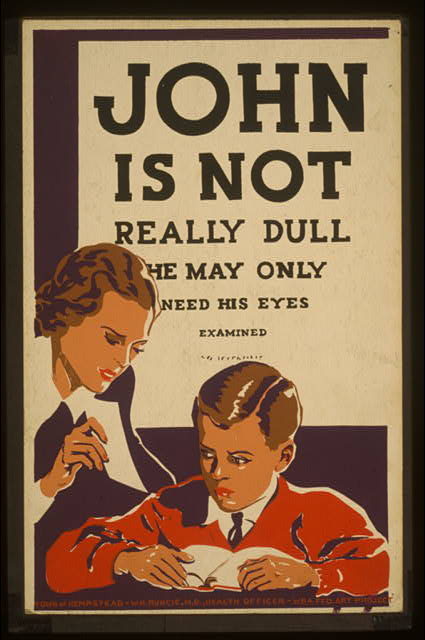
John is not really dull - he may only need his eyes examined.
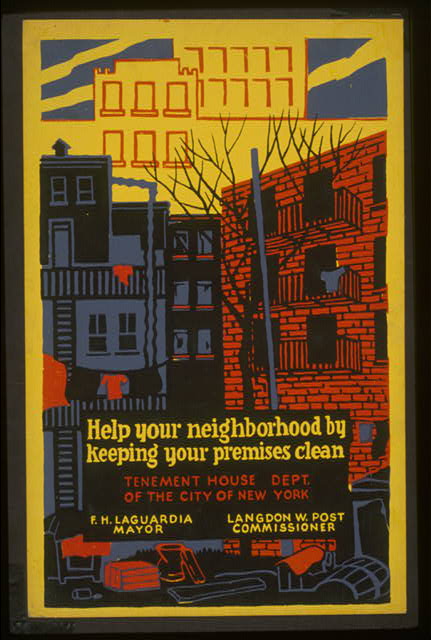
Who uses the word Tenement any more?
Dedication ceremonies--Ida B. Wells Homes, a development that would be sonomous with the failure of urban development
Outwitted by community sanitation
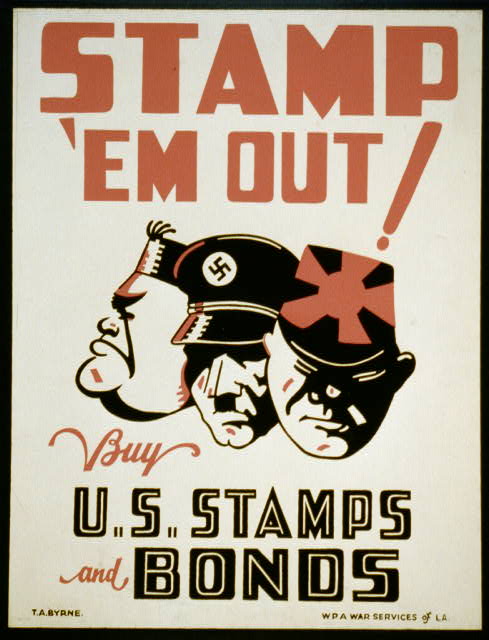
Stamp 'Em Out - Propaganda at its best
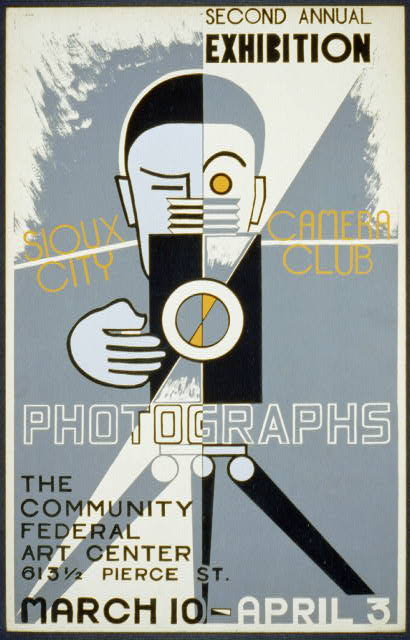
Photographs, second annual exhibition, Sioux City Camera Club
The Dinosaurs had syphilis too?

New Books on Mexican American Culture

The LA Times has an interesting review of two new books on Mexican American culture.Mexican American Mojo: Popular Music, Dance, and Urban Culture in Los Angeles, 1935-1968 (Refiguring American Music)
as the title says is about music in LA during the middle of the century and The World of Lucha Libre: Secrets, Revelations, and Mexican National Identity about the Mexican form of wrestling. The review also includes a quick overview of some of the literature on Music and Mexican American culture that is quite useful and I wish more reviews did this.

Yet after digesting this book, I still felt something lacking. Though “Mexican American Mojo” does a great job of proving its point, Macías ends at 1968, just when the Chicano movement took hold and a new generation emerged along with its music. He clips his thesis just as it’s about to truly take off. (For a better accounting of what followed, I recommend “Barrio Rhythm: Mexican American Music in Los Angeles,” “Land of a Thousand Dances: Chicano Rock ‘n’ Roll from Southern California” and “An Oral History of DJ Culture from East Los Angeles.”) As it is, “Mexican American Mojo” can very well be Los Angeles’ version of Robert Caro’s “The Power Broker” — a volume everyone should own but few will ever read.

And about Lucha Libre

Heather Levi’s entertaining “The World of Lucha Libre: Secrets, Revelations and Mexican National Identity” assumes the role of engaged anthropologist. Levi takes the novice into the world of lucha libre, veering between explaining the basics (moves, traditions, the difference between rudos and técnicos — bad and good guys, respectively) and recounting a thorough history of the sport, touching on major fighters, developments and its frequent intersections with Mexican politics and identity.

Yalo & Khirbet Khizeh in Three Percent

Three Percent has two good reviews of Yalo and Khirbet Khizeh as part of their best translated book of 2008. I read both and thought their take on the books were excelent.

They also link to an interview with Elais Khoury in Seattle. I’m a little mad that I didn’t have a chance to see him when he was in town.

New Issue of Under Hwy 99 Out Now

The new issue of Under Hwy 99 is out now. Isses 1.2 features my short non-fiction, Just a Handshake Is Enough,  about the time I met Cuauhtémoc Cárdenas in Mexico City. There are also short fictions from Evan Cleveland, Danny Brophy, Billie Louise Jones, Tara Brichetto, Ellie Keller, and Jim Bellarosa. It is worth the checking out this young literary magazine.

I also rebuilt the website which makes it much easier to read and use.

Best Sellers in China 2008

Paper Republic pointed me to Bruce Hume’s list of Chinese best sellers. Most are not in English and won’t make much of an impression. There are some interesting books that sound a little odd.

The Tibet Code (4)—He Ma: Latest volume in long-winded tale of mysterious Tibet which begins with sighting of rare Tibetan mastiff. All four volumes best sellers.

The Unbearable Lightness of Being was number 25 this year, too.

Chinese Muslim’s Pilgrimage to Al-Andalus

Bruce Hume’s blog on Chinese writing notes a new book in China that sounds interesting. He is giving out English synopsis if you email him.

Zhang Cheng-Zhi (张承志), the white-hot Red Guard who mastered Mongolian and Japanese — and then converted to Islam — has just launched En las Ruinas de la Flor: Viajes por Al-Andalus (鲜花的废墟). His new Chinese-language travelogue takes us throughout Moorish Spain, Portugal and Morocco in search of the spirit of Islam in its golden age (8th-15th centuries).

Cipher Journal

Cipher Journal is a journal dedicated to translation. The magazine is a bit of a mishmash but there are some interesting items in translation from India and China.The links page is definately worth a look.

The website, though, leaves a little to be desired. Who puts the primary navigation at the bottom of the page anymore?

The Day the Earth Stood Still

Or, if space aliens see we love our children they won’t kill us. Keanu Reeves comes to destroy the earth because humans are ruining it. Naturally (because that is how these movies always go), the government over reacts and tries to kill him, which doesn’t help the case for the survival of human kind. Reeves meets a good doctor who takes care of a her late husband’s son, a boy who is still traumatized by his death in Iraq. Through a couple hours of chase and dialog, Reeves realizes that humans are almost unredeemable, but when he sees the doctor holding the boy who hates her as metallic swarm comes to destroy them he decides human kind is worth saving. Then he leaves the earth because humans have learned their lesson and will behave.

The weakness of the film makes one wish for the moral complexity of the original.

Bolaño in La Jornada

There was a good article about Bolaño in La Jornada’s Sunday supplement this week talking about Bolaño’s views of exile. According to Gustavo Ogarrio, Bolaño didn’t really believe in political exile because it made him a victim, which he was not. He also thought it was pointless to be nostalgic about the old country

“Can you be nostalgic for a country where you were about to die? Can you be nostalgic for the poverty, the intolerance, the arrogance, the injustice? The refrain intoned by Latin Americans and also by other writers in other poor or traumatized zones carries on the nostalgia, the return to the country of birth, and to me this has always sounded like a lie.”

“¿Se puede tener nostalgia por la tierra en donde uno estuvo a punto de morir? ¿Se puede tener nostalgia de la pobreza, de la intolerancia, de la prepotencia, de la injusticia? La cantinela, entonada por latinoamericanos y también por escritores de otras zonas depauperadas o traumatizadas, insiste en la nostalgia, en el regreso al país natal, y a mí eso siempre me ha sonado a mentira.”

The article goes on to talk about the novel Amuleto which takes place in Mexico during one of the darker times in recent Mexican history. The link between the dictatorships of Latin America are clear.

The exile, though, is not just political, but literary, yet the literary exile is, too, often over done.

If the novel The Savage Detectives is interpreted and read as the parodic and tragic dissolution of a certain narrative vanguard in Latin America, represented by the search for one of the founding poets of Visceral Realism—Cesárea Tinajero— and the motive for the wild detective investigation of the poets Ulises Lima y Arturo Belano, Amuleto allows another paralel reading, concentrating a parody of the post vanguard in the voice of a melodramatic and earthy poet, Auxilio Lacouture.

Si la novela Los detectives salvajes acepta ser leída e interpretada como la disolución paródica y trágica de cierta narrativa vanguardista en América Latina, representada en la búsqueda de una de las poetas fundadoras del real visceralismo –Cesárea Tinajero–, motivo de la pesquisa detectivesca y salvaje de los poetas Ulises Lima y Arturo Belano, Amuleto admite otra lectura paralela, al concentrar esta parodia postvanguardista en la voz de una poetisa melodramática y telúrica, Auxilio Lacouture.

Roberto Bolaño: los exilios narrados is well worth the read.

New German Literature in the TLS

The TLS recently had a review of some new German novels. All of these were published this year and, of course, are not available in English yet (I hope they are some day). Three of them deal with the GDR and the third, from Switzerland, deals with the Rawandan Genocide and Swiss complicity.

Three of the books sound very intriguing. ADAM UND EVELYN by Ingo Schulze, DER TURM by Uwe Tellkamp, and HUNDERT TAGE by Lukas Bärfuss.

Schulze’s novel is formally impressive. It consists almost entirely of snappy, naturalistic dialogues, portioned out in tasty little morsels in chapters of a few pages each: that the reader is able to deduce the plot events is in itself no small feat.

And the Bärfuss sounds tough but intriguing.

In a final childish burst, wanting to prove to Agathe that he isn’t like the other white people and won’t run away at the first sign of trouble, he hides in his garden as the last foreigners are evacuated. The horrors of the ensuing hundred days are born of order, not chaos: “I know now that perfect order rules the perfect hell”, David says. Bärfuss takes the reader step by step down the path to genocide. He emphasizes the role of Western – and particularly Swiss – aid in supplying the modern tools of organization and communication that made atrocities on such a scale possible: “we gave them the pencil with which they wrote the death lists . . . we laid the telephone lines over which they gave the murder commands . . . we built the streets upon which the murderers drove to their victims”.

Bolaño Reviewed in the TLS

The TLS has a good review of 2666. The review isn’t as fawning as some and tries to locate the source of Bolañomania. Like a previous El País article, the review finds similarities between Bolaño and the American literary tradition.

The author’s exuberant, informal voice echoed that of several American classics; while he cited Huckleberry Finn as an inspiration, the book clearly bore the imprint of On the Road and The Catcher in the Rye. In addition, many of his themes resonated with the puritan and romantic impulses of the American literary tradition. Bolaño’s world is open to self-invention and redemption, but also pervaded by ineradicable evil. It is bracingly egalitarian in its range of cultural references: The Savage Detectives borrows from the science fiction writer Theodore Sturgeon as well as from Mark Twain; 2666 references both Herman Melville and David Lynch; figures in his poems include Anacreon, Juan Ramón Jiménez, Sam Peckinpah and Godzilla. Readers of all tastes could thus feel at ease with this disquieting writer, and many sought his other translated works.

If you are still on the fence about 2666, the review is worth a read.

Castellanos Moya in Words Without Borders

There is a short story by Castellanos Moya in Words Without Borders (via, Conversational Reading). It is a funy story about a three way trist in Madrid with a good twist ending, and usually I don’t like twists too much. The more I read of Castellanos Moya, the more I appreciate his humor.

Penguin Book Covers

There is a great flicker sited with over 800 cover photos of Penguin books. If you like books it is worth a look.

Embroideries

Embroideries
Marjane Satrapi

Embroideries is no Persepolis, but that is not to say it is without the same humor that Persepolis had. What makes this book funny are not Satrapi’s adventures, but those of her grandmother and her friends. The women range in ages from their 60’s to their 20’s and the book takes place after a meal when all the women sit together and talk and complain and laugh at the way their marriages and love affairs have gone. Although some of the women have been forced into arranged marriages (in one the man was 69 and the girl 13) and the men have used their power to have affairs, the women have an irrepressible spirit that allows them to laugh at the men and talk about their own fantasies and adventures. The stories are not just ribald humor, but a means to exercise power where there is little. On the first page it is clear what the role of women in society is when Satrapi notes that her grandmother always called her husband by his last name because one should respect one’s husband. Yet once the stories begin, the respect disappears and the verbal vengeance begins. For the reader the conversations are not just humor and power relationships, but a chance to see the hidden lives of Iranian women. It shows there is more to the Iran then just the mullahs.

Graphically speaking, the book doesn’t have quite the style as Persepolis. The black and white line drawings are still there, but at times pages are almost completely filled with words and perhaps a head to indicate who is speaking. The lack of drawings is a shame because her almost block print style is an effective way to tell an understated story. Let’s hope the next book has more drawings.

In One Story: Groff, Jodzio, Grattan

I finished reading several issues of One Story the other day. I tend to let them stack up and then read them all at once as if they were in a collection of short stories. Four stories caught my eye and I thought it would be good to mention them here since usually its books that get all the press (and so I can remember the authors two months from now).

Sir Fleeting by Lauren Groff was the best of those that I read. Filled with excellent turns of phrase and a story that winds through 40 years, it describes the love affair that never was between two people. I particularly thought the narrator was well drawn with a cosmopolitan sensibility that doesn’t make one like the character, but at least respect her. Given that Groff has several published books, she is worth reading more.

Flight Path by John Jodzio and Foreign Girls by Thomas Grattan were both well written and did not have those coying ephinanic I-learned-that moments at the end of stories, which can be a little tiring.  Grattan had some nice moments and left plenty unsaid, and was able to brining a story about cultural alienation of Gorgian emigrants to a close in a way that related that alienation to something most Americans have experienced.

If you haven’t checked out One Story, I recommend you do. It is a refreshing way to present short stories.